
I've been installing, selling and servicing these machines for two decades, and the single most useful thing I can do for someone starting out is explain the system in the order it actually makes sense — rather than the order a brochure presents it.
So: no jargon that isn't defined, no assumed knowledge, and the honest version of every tradeoff.
What a standby generator actually is
A home standby generator is a permanently installed engine that makes electricity, wired into your house, connected to a fuel supply, that starts by itself when the power goes out.
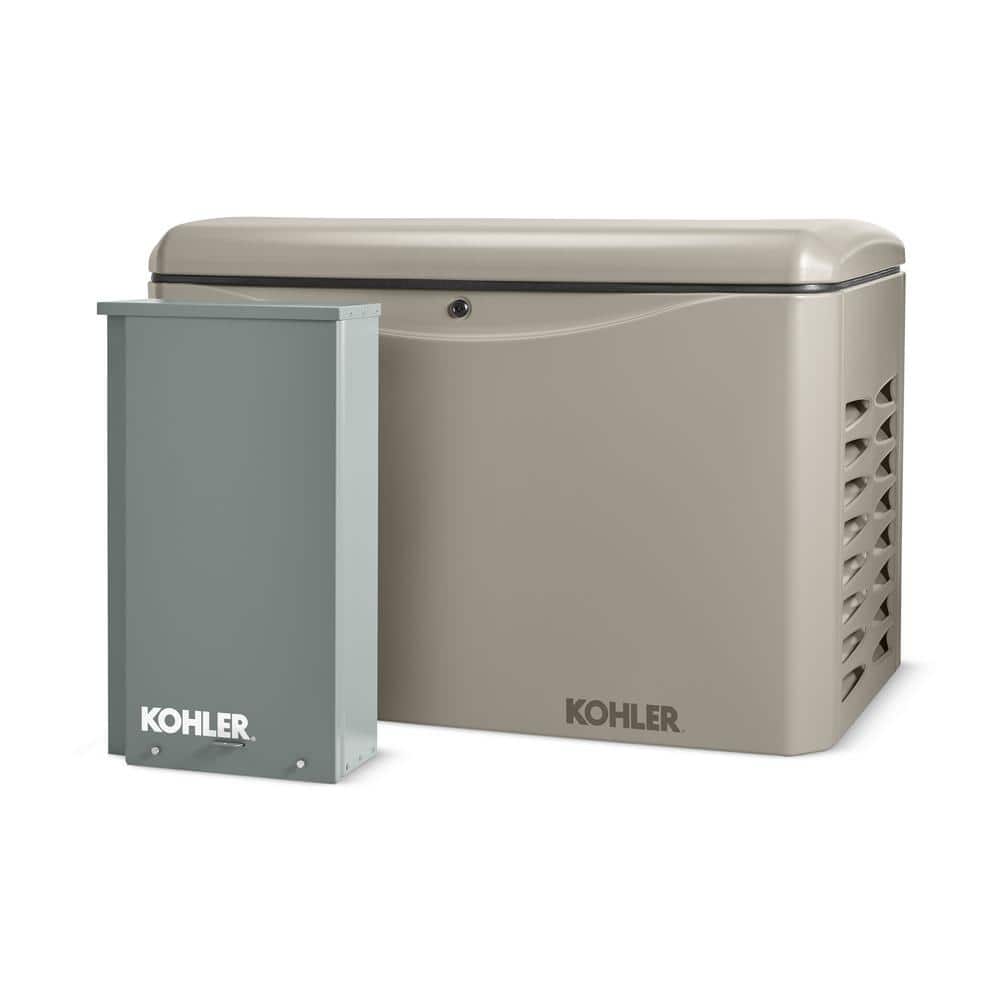
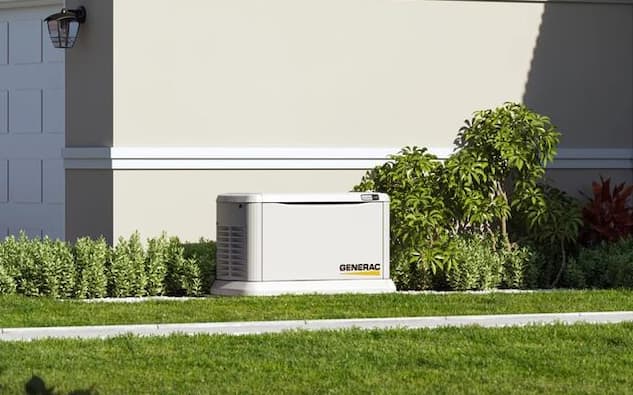
The important word is permanently. Unlike a portable generator, you don't drag it out, run extension cords, or stand outside in a storm pulling a starter rope. It lives on a pad beside your house — most look like a large air conditioning unit — and it does its job whether you're home or not.
Here's what that means practically. The power fails at 2 a.m. while you're asleep or on vacation. About ten seconds later, the generator starts, the house switches over, and everything comes back. You may notice the clocks blinked. That's the entire experience.
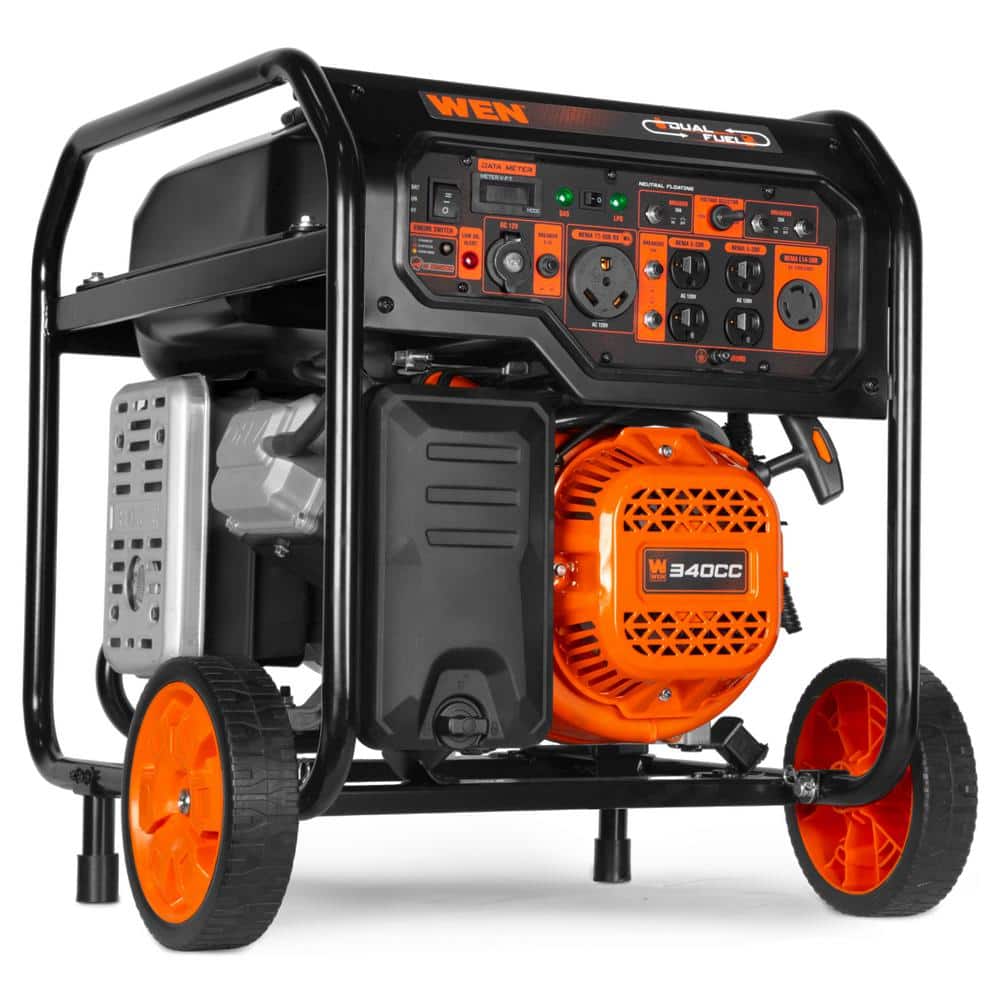
Compare that with a portable: you wake up, get dressed, go outside in whatever weather caused the outage, wheel the generator out, start it, run cords, and prioritize which three things get power. Then you do it again with a gas can every eight hours.
That difference — automatic, permanent, unattended — is what you're buying.
The parts, and what each one does
Four things make up the system.
1. The generator itself
Inside the enclosure: an internal combustion engine (in the residential sizes, an air-cooled V-twin, similar in character to a large lawn tractor engine) coupled to an alternator that converts rotation into electricity.
The engine runs at 3,600 rpm, which — through a two-pole alternator — produces the 60 Hz alternating current your house expects. Everything else in the enclosure exists to support that: cooling fan, air filter, oil system, muffler, and acoustic lining to keep it in the 62–67 dBA range.
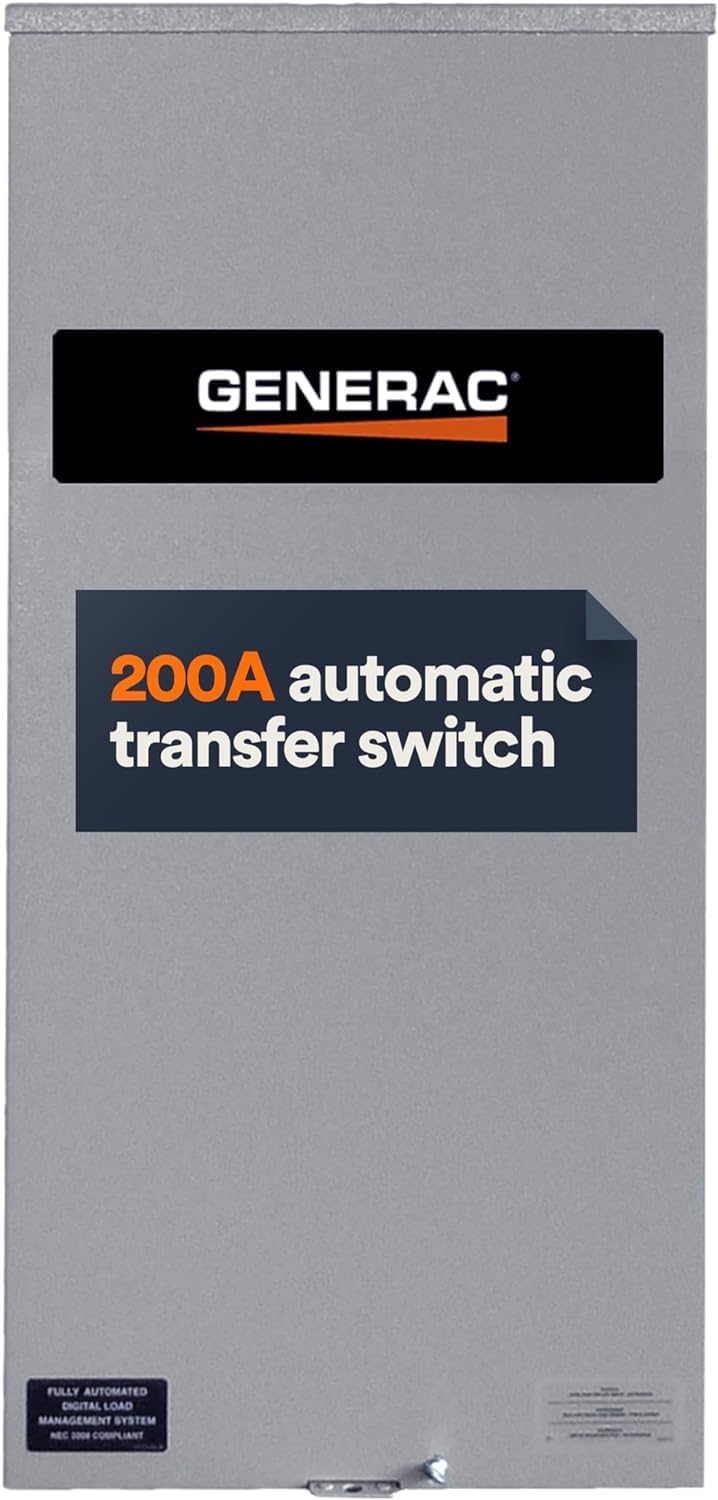
2. The automatic transfer switch
This is the part that matters most, and the part nobody thinks about.
The transfer switch sits between the utility service and your electrical panel. It has two jobs:
- Sense when utility power fails, and signal the generator to start.
- Switch your house from utility power to generator power, and back again.
Critically, it's mechanically incapable of connecting both sources at once. That prevents backfeeding — pushing generator power out onto the utility lines, which can electrocute a lineman working to restore your service. This is not a theoretical hazard; it's the reason improvised generator connections are illegal and dangerous.
A transfer switch is required by code for any permanently connected generator, and it is the single most important safety component in the system.
3. The fuel connection
A pipe from your natural gas meter, or from a propane tank. That's it — no fuel storage in the machine, no refueling, no gas cans. Set up once at installation.
4. The controller
The brain. A small computer that monitors utility voltage, decides when to start and stop, runs the weekly exercise cycle, tracks maintenance intervals, logs faults, and on modern units talks to an app on your phone.
What happens when the power goes out
The sequence, second by second:
- T+0 — Utility power fails.
- T+2 to 5 seconds — The controller confirms it's a genuine outage rather than a momentary dip. (This delay is deliberate; you don't want the generator starting for every flicker.)
- T+5 — The controller signals the engine to start.
- T+8 to 10 — Engine reaches operating speed, and the controller verifies voltage and frequency are stable.
- T+10 — The transfer switch moves your house from utility to generator. Power returns.
- Throughout — The generator runs as long as needed. On natural gas, indefinitely. On propane, until the tank runs low.
- Utility returns — The controller confirms it's stable (typically 30 seconds to a few minutes, so a flickering restoration doesn't bounce you back and forth).
- Transfer back — The switch returns your house to utility power.
- Cooldown — The engine runs unloaded for a few minutes to cool, then shuts down.
- Standby — Back to waiting.
The ten-second gap is normal and unavoidable in a standby system. Lights go out, then come back. Computers reboot. If you need genuinely uninterrupted power for a computer or medical device, add a small UPS — see power quality.
The weekly exercise cycle
Once a week, at a time you set, the generator starts and runs for about 10–20 minutes without transferring your house over. This circulates oil, charges the battery, keeps seals from drying and confirms it still works.
It's not optional, and it's the reason a standby generator is far more reliable than a portable that sat in a shed for two years. If it bothers a neighbor, move it to a weekday mid-morning — see noise levels.
Fuel: natural gas, propane and the rest
Natural gas — piped from the utility main. If you have it, this is almost always the answer: lowest running cost, and it never runs out. Underground gas distribution generally survives the weather that takes down power lines.
Propane — from a tank on your property. Works anywhere, stores indefinitely without degrading, but costs roughly 3–5× more per hour to run and is finite. A 500-gallon tank gives most of a week at meaningful load.
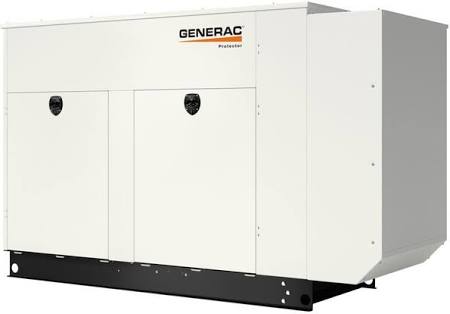
Diesel — commercial and large-estate territory. Efficient under heavy load, but the fuel degrades in storage and needs a treatment program, and it's louder and dirtier.
Gasoline — portables only. Degrades in months, requires refueling a hot engine during the storm, and dominates carbon monoxide fatality statistics.
The full comparison, with numbers: gas vs propane vs diesel.
One detail worth knowing early: the same engine makes slightly less power on natural gas than on propane — usually 5–10%. Manufacturers publish both ratings. Size from the fuel you'll actually use.
Sizing, in plain English
Generators are rated in kilowatts (kW). One kilowatt is 1,000 watts. Your house's demand at any moment is the sum of what's running.
Two numbers matter for every appliance:
- Running watts — what it draws continuously.
- Starting watts — the surge when a motor starts, often 2–3× running watts, lasting a second or two.
That starting surge is what actually sizes a generator. An air conditioner drawing 3,500 running watts may demand 10,000 for an instant at startup. Miss this and the generator trips on overload every time the AC cycles.
Typical sizes:
| Generator | Roughly covers |
|---|---|
| 7–10 kW | Essential circuits — fridge, furnace blower, some lights, well pump |
| 11–17 kW | Most of a small-to-medium home including one AC |
| 18–22 kW | Whole home, average size, with load management |
| 24–26 kW | Larger homes, multiple AC units |
| 30 kW+ | Very large homes, multiple buildings — liquid-cooled territory |
The most useful thing I can tell a beginner about sizing is that load management usually beats buying more kilowatts. A smart management module watches generator output and temporarily sheds a big load — say, the second air conditioner — when demand peaks, then restores it. A few hundred dollars of modules routinely lets a 22 kW unit run a house someone was quoted 32 kW for.
Read sizing myths debunked before you accept any quote, and use the sizing calculator for a starting point.
Whole-home versus essential circuits
Two configurations, and the difference is the transfer switch:
Whole-home (service-rated transfer switch). The switch handles your entire electrical service. Everything in the house is on the generator, and load management sequences the big items. Simpler to live with, more expensive, and what most people mean by "whole house generator."
Essential circuits (load-center transfer switch). A subpanel with 8–16 selected circuits — furnace, fridge, some lights, well pump, a few outlets. Cheaper, smaller generator, but you decide in advance what matters and everything else stays dark.
For most people buying a permanent system, whole-home is worth the difference. If budget is the binding constraint, essential circuits with a well-chosen list is a perfectly good system. See transfer switches explained.
Standby, portable, inverter and battery compared
| Standby | Portable | Inverter | Battery + solar | |
|---|---|---|---|---|
| Starts automatically | Yes | No | No | Yes |
| Works when you're away | Yes | No | No | Yes |
| Refueling during outage | Never (NG) | Every 8–12 hr | Every 8–12 hr | None |
| Runtime | Unlimited on NG | While fuel lasts | While fuel lasts | Hours to a day |
| Noise | 62–67 dBA | 70–80 dBA | 50–60 dBA | Silent |
| Power quality | Under 5% THD | 8–15% THD | Under 3% THD | Excellent |
| Installed cost | $9,500–$15,000 | $500–$2,000 | $800–$2,500 | $10,000–$25,000+ |
| CO risk | Low (permanent siting) | High | High | None |
Standby if outages are long, frequent, or consequential — medical equipment, well water, sump pump, deep freezes, remote work.
Portable if outages are rare and short and you accept the manual work. Get an interlock kit or a small transfer switch installed by an electrician — never a "suicide cord."
Inverter if you want clean, quiet portable power for electronics and camping.
Battery plus solar if you want silent, zero-emission backup for short outages and daily value from the system. Limited on capacity — it won't run a house for a week.
The detailed version: generator types compared and solar vs standby.
What installation involves
A standard installation is one to two days on site, though the whole process from signing to inspection commonly runs four to twelve weeks.
- Site assessment — where the unit can legally and practically go, what the gas system can supply, what the electrical service will support.
- Permits — electrical and mechanical/gas, sometimes zoning. Your installer should handle this.
- Pad — poured concrete or a composite base.
- Set the unit and mount the transfer switch beside the panel.
- Gas connection by a licensed gas fitter, often including upsizing the line.
- Electrical connection by a licensed electrician — generator to switch, switch to panel, grounding.
- Inspection by the jurisdiction.
- Commissioning — the dealer starts it, verifies the transfer, sets the exercise cycle, and walks you through operation.
Placement is governed by code, not preference. NFPA 37 and manufacturer instructions set minimum clearances from the house, from openings, and around the unit for airflow and service access.
What it costs
To buy and install, natural gas, whole-home, typical conditions: $9,500–$15,000. The generator is only 30–40% of that — the rest is the transfer switch, electrical work, gas piping, pad and permits.
Common cost surprises: gas line upsizing ($800–$3,000), long runs and trenching ($500–$3,000), electrical service upgrade ($1,500–$4,000), propane tank ($1,000–$3,500).
To own: roughly $500–$900 a year — annual service, exercise fuel, a battery every few years, monitoring if it's a subscription, and averaged out-of-warranty repairs.
Over fifteen years, most homes land around $17,000–$26,000 all in.
One 2026 note: the federal Section 25D clean energy credit terminated for property placed in service after December 31, 2025. Standby generators were never broadly eligible, but if you were counting on it for battery storage, that math has changed.
Full breakdown: the real cost of a whole-house generator. Financing options: loans, dealer plans and leasing.
Living with one
Weekly: it exercises itself. Glance at the controller occasionally — a green "ready" light or equivalent.
Monthly: walk out and look at it. Clear leaves and snow from the clearance envelope. Check that nothing has grown or been stacked against it.
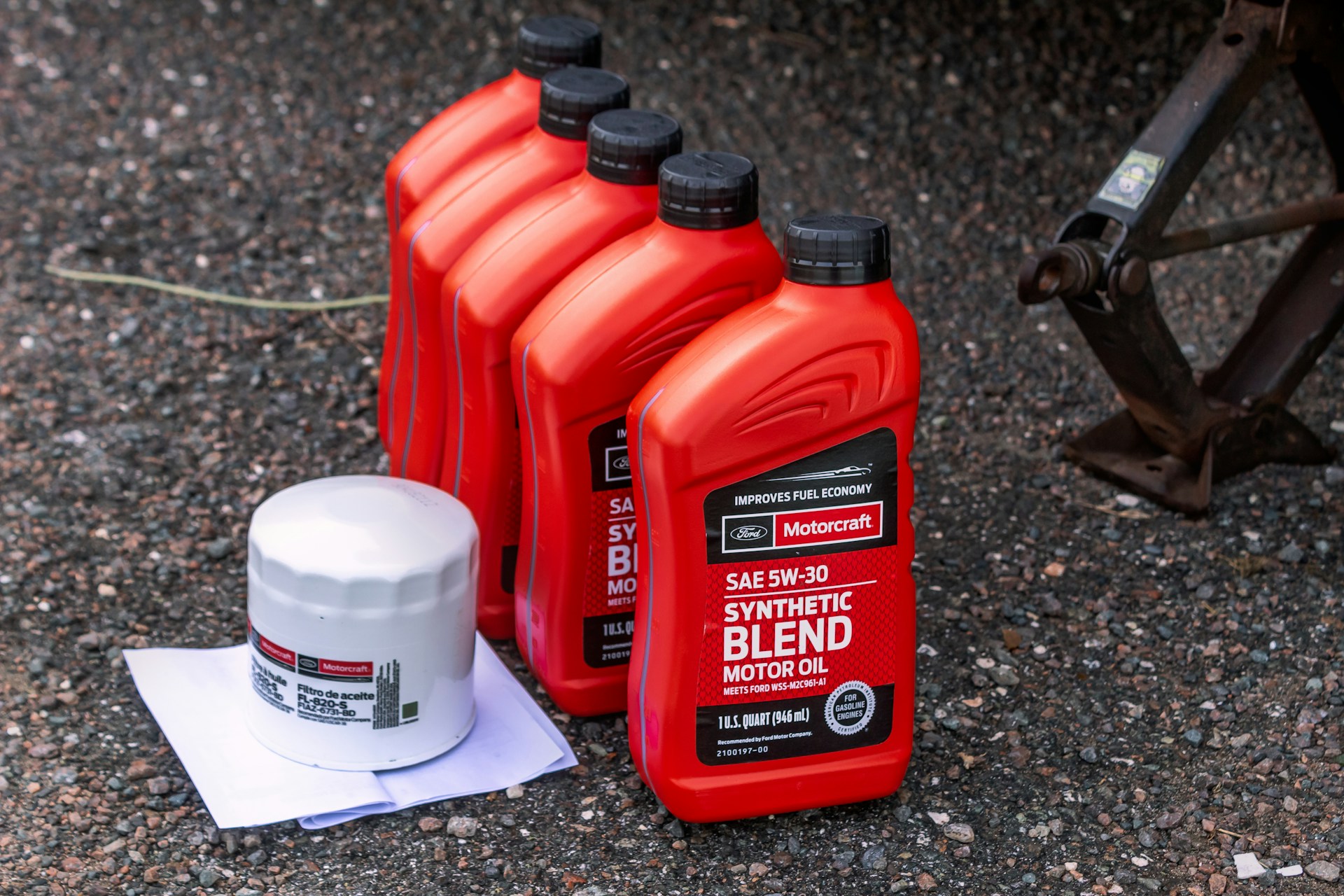
Annually: oil and filter, air filter, spark plugs on schedule, battery test. Either a dealer service visit ($200–$500) or DIY on an air-cooled unit ($60–$120 in parts).
Every 2–4 years: replace the battery. Batteries cause more no-starts than anything else — don't wait for it to fail.
The single most common self-inflicted failure is a generator left in OFF after service. It looks completely normal and does nothing during the next outage. If your unit has monitoring, turn on the "not in AUTO" alert; it's the most valuable notification available.
Details: maintenance checklist and the maintenance and care guide.
Safety: the two things that actually kill people
Everything else on this page is about convenience and money. This section is about neither.
Carbon monoxide
Generator exhaust contains carbon monoxide — colorless, odorless, and lethal. Portable generators run in garages, on porches, in basements or too close to windows kill people every storm season. A running generator belongs outdoors, well away from the house, with exhaust directed away from any opening.
Permanently installed standby units are sited at code clearances specifically to manage this, which is a genuine safety advantage of a permanent installation. Install CO alarms on every level of your home regardless.
Read carbon monoxide safety — it's the most important article on this site.
Backfeeding
Connecting a generator to your house without a transfer switch — most notoriously through a double-male "suicide cord" into a dryer outlet — can energize the utility lines outside and kill a lineman working to restore your power. It can also destroy your equipment when utility power returns.
Always use a proper transfer switch or interlock, installed by a licensed electrician. This applies to portables too, and it's not expensive to do correctly.
Where to go next
You now know how the system works. The natural next steps:
- Installation and sizing — how sizing is really done and what a good quote looks like.
- Brand comparisons — Generac, Kohler, Briggs, Cummins, Champion and Honeywell, honestly compared.
- Maintenance and care — the full program for getting twenty years out of it.
- FAQs — forty direct answers to the questions people ask next.
- Sizing calculator — a starting number for your house.
And when you're ready for quotes, get three, itemized, from dealers who did a real load calculation. The dealer matters as much as the brand — how to choose one.
Standby generators and transfer switchesAd
Whole-home units in the common sizes, plus a service-rated automatic transfer switch.
Paid links · As an Amazon Associate, GenDealers earns from qualifying purchases.