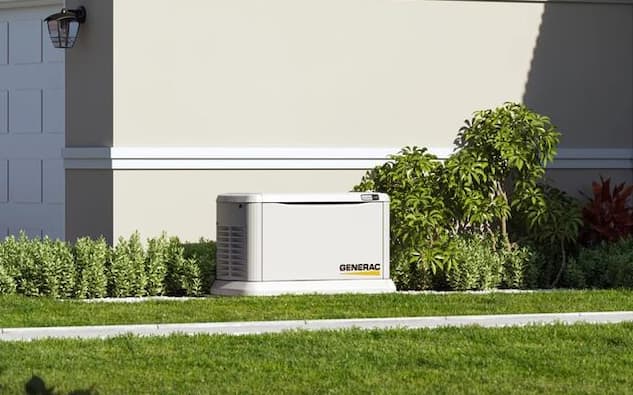


A whole-home standby system runs $9,500–$15,000 installed in 2026 (the full cost breakdown is here). That's a real number, and most homeowners finance at least part of it.
I've watched customers take every one of the paths below. A few observations before the details:
- The differences between financing options are often larger than the differences between generator brands. People agonize over Generac vs Kohler and then accept a 17% dealer loan without blinking.
- The offers that look best in the showroom — 0%, no payments for a year — are the ones with the most fine print.
- This is general information, not financial advice. Your rates, your tax situation and your state's rules vary. Talk to a lender or a CPA about your specifics.
The options, roughly cheapest to most expensive
1. Cash — 0%
If you have the money and an intact emergency fund, this is the cheapest path and there's nothing more to say about it. Some dealers offer a small discount for cash or check, since they avoid card processing fees. Ask.
The counterargument: if you'd have to drain your emergency reserve to do it, don't. A financed generator and an intact reserve beats an owned generator and no cushion.
2. HELOC or home equity loan — typically the cheapest financing
For homeowners with equity, this is usually the best borrowing option available:
- Lower rates than unsecured consumer credit, because the loan is secured by the house.
- Longer terms available, so payments are manageable.
- Possible tax deductibility — interest on home equity debt used to "buy, build or substantially improve" the home securing the loan may be deductible, subject to limits. A permanently installed generator is a plausible improvement, but this is exactly the question to put to a CPA rather than a generator salesperson.
The tradeoff is real: your house secures the loan. That's why the rate is low, and it's why you should only borrow an amount you're confident you can service.
A HELOC is also flexible — draw what the project actually costs rather than a fixed lump sum, which is useful when the final invoice depends on how much gas piping you needed.
3. Genuine 0% promotional financing — free money, with a catch
Manufacturers and dealers run promotional financing regularly, often 0% for 12–24 months, sometimes longer. When these are genuine and you can clear the balance within the promotional window, they're excellent — you get an interest-free loan.
Two things to check, carefully:
Is it 0% interest, or deferred interest? These are not the same, and the distinction matters enormously. With true 0% promotional financing, you pay no interest during the promo period and any remaining balance converts to the standard rate going forward. With deferred interest, interest accrues from day one in the background — and if you don't pay the full balance by the end of the promotional period, you're charged all of that accrued interest retroactively, on the original amount. The Consumer Financial Protection Bureau has written about this specifically because it catches so many people.
Is the equipment price the same as the cash price? Sometimes promotional financing is subsidized by a higher purchase price. Ask what the cash price would be. If the financed price is $1,200 higher, the 0% isn't free.
My rule: promotional financing is worth taking only if you have a concrete plan to pay it off within the window, and you've confirmed in writing which of the two types it is.
4. Personal loan or credit union loan — predictable and unsecured
An unsecured installment loan from a bank or credit union. Rates are higher than a HELOC and depend heavily on credit, but:
- No lien on your home.
- Fixed rate and fixed term, so you know the total.
- Fast — often funded in days.
- Credit unions are frequently meaningfully cheaper than banks for this. If you belong to one, start there.
Reasonable middle ground for someone without equity or who doesn't want their home involved.
5. Dealer or manufacturer financing (non-promotional) — convenient, usually pricier
Most dealers offer financing through a third-party lender. It's easy — signed at the kitchen table, no separate application process — and that convenience is what you pay for. Standard (non-promo) rates in this channel are frequently well above what a credit union would quote the same borrower.
Use it if the rate genuinely competes with your alternatives. Don't use it because it's the form that's already in front of you. Get a credit union quote first so you know what you're comparing against.
6. PACE financing — read this section twice
Property Assessed Clean Energy financing repays through an assessment on your property tax bill. It's available in some states for some measures, and it has genuine advantages: often no credit-score-driven approval, long terms, and it stays with the property.
But understand what it is:
- It creates a lien on your property, generally senior to your mortgage.
- It can complicate refinancing or selling. Some mortgage lenders will require it paid off first.
- Total costs including fees can be high, and the payment structure obscures the effective rate.
- Residential PACE has been the subject of significant consumer-protection concern and CFPB rulemaking, precisely because homeowners have ended up in obligations they didn't fully understand.
I'm not saying never. I am saying: read every page, understand the effective interest rate, and confirm with your mortgage servicer how it affects you before signing.
7. Leasing — almost always the worst option
Leasing is common for commercial generators, uncommon for residential, and when it does appear it's typically the most expensive path available.
The structural problem: a home standby generator is permanently attached to your house. It's bolted to a pad, hard-piped to gas, hard-wired to your panel. Unlike a car, there's no meaningful market in returning it at the end of a term. So you make payments for years, and at the end you either own nothing, or you pay a buyout that puts your total well above the purchase price.
Situations where it might make sense: a business, or a homeowner who genuinely cannot access any other financing and urgently needs backup power for a medical reason. Otherwise, this is the option I'd push back on hardest.
The tax credit question
An important 2026 correction to advice you'll still find online: the Section 25D Residential Clean Energy Credit terminated for property placed in service after December 31, 2025.
Standby generators were never broadly eligible for it in the first place — it covered solar, wind, geothermal, fuel cells and, from 2023, battery storage. But a lot of published advice conflated backup power generally with the credit, and homeowners weighing solar-plus-storage against a generator were legitimately factoring it in.
That's gone. Do not build a budget around a federal credit for backup power.
What may still exist:
- State and utility incentives, particularly for battery storage. These vary enormously by state and change frequently — check your state energy office and your utility directly.
- Medical necessity programs, offered by some utilities and nonprofits for households dependent on electrically powered medical equipment. Worth asking about if that describes you.
- Business use. If you have a legitimate home office or the generator serves a business, depreciation treatment may apply. CPA question, not a website question.
What I'd actually recommend
If you have the cash and a healthy emergency fund: pay cash. Ask for a cash discount.
If you have home equity: HELOC. Lowest rate, possible tax benefit, flexible draw. Just be disciplined about repayment.
If you have neither but good credit: get a credit union quote first, then compare it against any promotional dealer offer. Take the promo only if you'll clear it in the window and you've confirmed it isn't deferred interest.
If your credit is limited: a credit union is still your best first call — they're often more flexible than banks for members. If PACE is your only realistic path, read the terms in full and talk to your mortgage servicer before signing.
Leasing: almost certainly not, for a residential installation.
Five questions to ask before signing anything
- What is the APR, and what is the total amount I will pay over the full term? Get a dollar figure, not a monthly payment.
- Is this 0% interest or deferred interest? If deferred: what is the rate that applies retroactively, and on what balance?
- Is there a prepayment penalty?
- Is the price the same as your cash price? If not, what is the cash price?
- What fees are included — origination, documentation, processing?
Get all five in writing. A dealer who won't put the total cost in writing is telling you something.
One more thing
The financing conversation tends to push people toward a bigger generator than they need, because a larger unit is "only $40 more a month." Resist that. Size the system to the house with load management, buy the right machine, and finance the right amount — sizing myths covers why most homes are quoted more kilowatts than they need.
And once it's installed, the ongoing costs continue: budget $500–$900 a year to own it. That's in the real cost of a whole-house generator.
Current equipment pricingAd
Whole-home units and a service-rated transfer switch — useful reference points when reviewing a financed quote.
Paid links · As an Amazon Associate, GenDealers earns from qualifying purchases.