
I’ve installed, sold, and — more to the point — fixed home standby generators from every brand on this list. That last part is what shapes a ranking. Any generator runs beautifully at the dealer open house. What matters is what it does in year six, at 2 a.m., in an ice storm, when the nearest tech is forty miles away.
So this is not a spec-sheet beauty contest. I weighed six things, roughly in this order:
- How the units actually hold up — what I saw fail, and how often, on service calls.
- What the warranty really pays for — headline years mean little if labor and travel drop out after year two.
- Dealer and parts network — can you get a controller board or a stepper motor next week, not next month?
- Monitoring — because a generator you don’t know has faulted is a generator that won’t start.
- Noise, enclosure and cold-weather behavior — the livability stuff.
- Installed price — the number that matters, not the box price.
If you want the one-paragraph answer: for most houses, buy a 14–22 kW air-cooled unit on natural gas with a 200-amp service-entrance transfer switch, from whichever of the top three brands has the strongest service dealer within a short drive of you. Everything below is the reasoning.
What changed in 2025–2026
Three things moved this year, and they’re why an article written in 2024 will point you wrong.
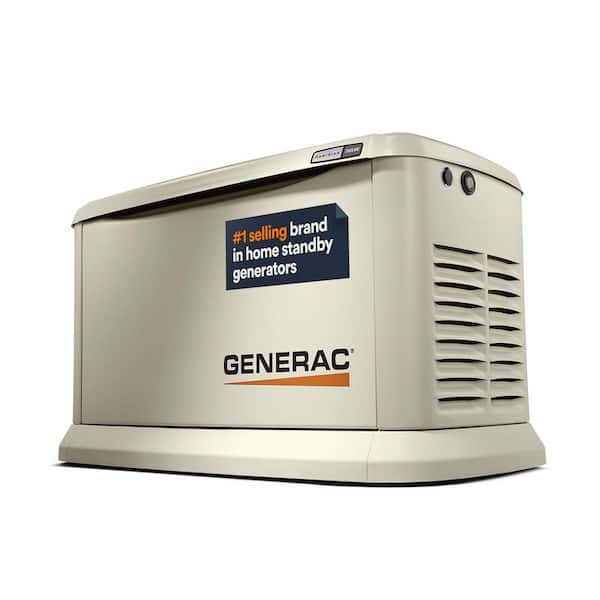
Generac finally built connectivity in. The 2025 “Next Generation” Guardian units (model numbers like 7323 for 14 kW and 7325 for 22 kW) ship with cellular, Wi-Fi and Bluetooth in the controller. For years, the honest complaint about Generac was that Mobile Link was a bolt-on the homeowner had to keep alive; now it’s standard, and the controller confirms utility transfers back to the app.
Briggs & Stratton got serious about warranty. Every PowerProtect unit now carries a seven-year comprehensive warranty — parts, labor and technician travel — and the PowerProtect+ line launched in May 2026 (18, 22 and 26 kW) with a dealer-exclusive 10-year option. That is, on paper, the strongest coverage of the big brands.
The value tier grew up. Champion’s aXis 14 kW, at 62 dBA and with a 10-year limited warranty, is no longer a curiosity. It’s a legitimate answer for a modest house on a budget — with one caveat I’ll get to.
Kohler didn’t change much, and it didn’t need to. Cummins is Cummins: quiet, well-built, and sold through a smaller network.
The 2026 lineup at a glance
| Brand / series | Sizes (kW, LP) | Standard warranty | Noise (dBA @ 23 ft) | Monitoring | Enclosure | Typical installed, 22 kW class |
|---|---|---|---|---|---|---|
| Generac Guardian (Next Gen) | 10, 14, 18, 22, 24, 26 | 5 yr limited (labor + travel yrs 1–2) | ~66–67 | Cellular + Wi-Fi built in | Aluminum | $10,000–$14,000 |
| Kohler RCA | 10, 14, 20, 26 | 5 yr / 2,000 hr, parts + labor + travel | ~64–66 | OnCue Plus (Wi-Fi/Ethernet) | Aluminum, corrosion-resistant | $11,000–$15,000 |
| Briggs & Stratton PowerProtect / + | 13, 18, 22, 26 | 7 yr comprehensive (10 yr dealer option) | ~62–66 | InfoHub (cellular) | Galvanneal steel, powder-coated | $10,000–$14,000 |
| Cummins QuietConnect RS | 13, 17, 20 (air-cooled) | 5 yr / 2,000 hr (labor + travel yrs 1–2) | 65 | Cummins Connect Cloud (cellular) | Aluminum | $11,000–$15,000 |
| Honeywell (built by Generac) | 10–26 | 5 yr limited | ~66–67 | Mobile Link (via Generac) | Aluminum | $9,500–$13,500 |
| Champion aXis | 12.5, 14 | 10 yr limited | 62 | aXis app (Wi-Fi) | Steel | $8,000–$11,000 (14 kW) |
Installed prices are 2026 ranges for a natural-gas install with a 200-amp SE-rated automatic transfer switch, permits and a standard gas run — pulled from current cost surveys and what I see on quotes. Long trenches, panel upgrades and propane tanks push every one of these up.
1. Generac Guardian — best overall, because of everything around the box
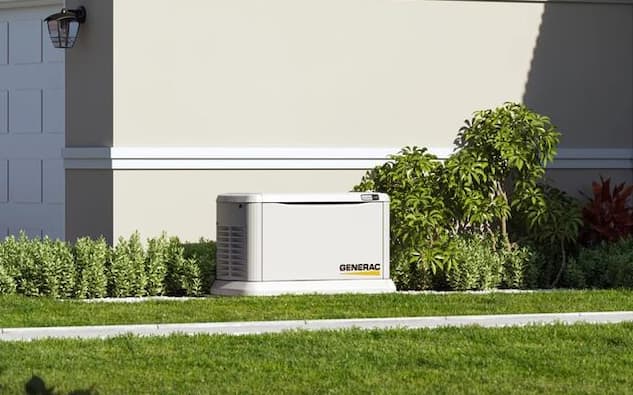
Generac sells more home standby generators than everyone else combined, and that fact is worth more than it sounds. It means the dealer network is deepest, parts are on the shelf, and every generator tech in America knows the platform. When your unit throws a fault code, the person who shows up has seen it before.
The machine itself is fine. The 999cc twin in the 22 kW and up units is a workhorse; the smaller 460cc–816cc engines are adequate. The aluminum enclosure resists rust well, the True Power alternator delivers clean output (under 5% total harmonic distortion, which matters for modern electronics), and the Evolution controller — now the Next Gen version — is the most refined interface in the category. Cellular monitoring being standard closes the biggest gap.
Where I’d push back on the marketing: the five-year warranty is limited — parts, labor and travel only in years one and two, parts in year three, major components in four and five. Compare that to Kohler and Briggs, who cover labor and travel for the full term. In year four, a bad stepper motor is on Generac’s dime; the two hours to swap it are on yours.
Field notes. The units I service most are Generacs, because there are more of them — but proportionally, the failure pattern is boring: batteries, valve lash on early-hour units that never got their 25-hour break-in service, and the occasional controller board. Keep the annual service honest and a Guardian is a 20-year machine.
Right for: anyone who wants the widest choice of local service, especially in areas where Kohler or Cummins dealers are thin. Wrong for: homeowners who won’t stay on top of maintenance and expect the warranty to carry them past year two.
2. Kohler RCA — the best machine, if a good dealer is nearby
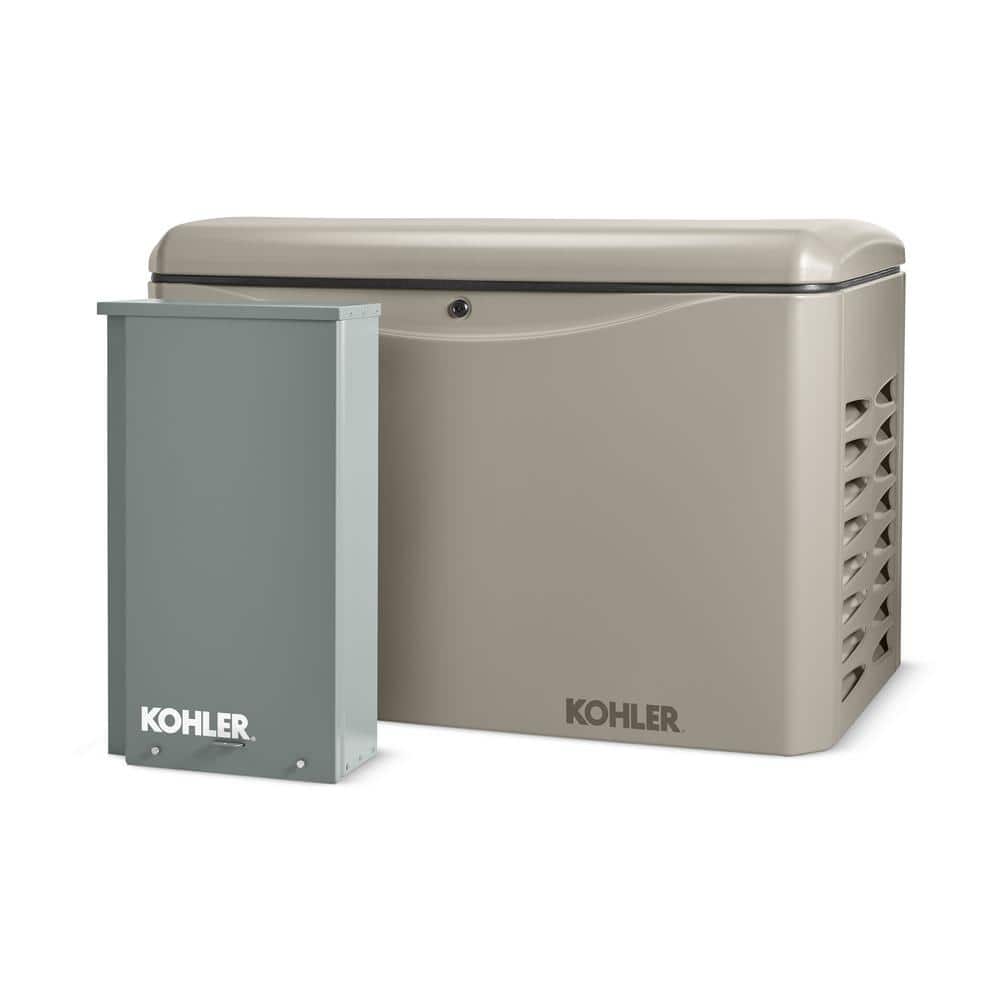
If you handed me the check and told me to pick a generator for my mother, it would be a Kohler. The RCA series is simply better assembled: heavier-gauge enclosure with real corrosion resistance, tidier internal wiring, a controller that’s slower to fault on marginal fuel pressure, and Kohler’s PowerBoost feature that handles the starting surge of a central air compressor better than its competitors at the same nameplate kW.
Kohler’s warranty is five years or 2,000 hours, and it covers parts, labor and travel for the whole term. That’s the term Generac charges extra for. Extended coverage to ten years is available through dealers.
The catch is distribution. Kohler’s dealer network is good but roughly a third the size of Generac’s, and Kohler dealers skew toward higher-end installers who quote accordingly. Installed prices typically run $500–$1,500 above a comparable Generac. OnCue Plus monitoring works well but relies on Wi-Fi or Ethernet rather than built-in cellular, so a detached install with poor Wi-Fi needs an extender.
Field notes. I service far fewer Kohlers per hundred installed than Generacs. When they do fault it’s usually fuel-supply related — a marginal natural-gas line pressure that a Generac shrugs off will trip a Kohler’s protection first. That’s a feature, not a bug, but it does mean the gas fitter needs to do the job right.
Right for: homeowners who want the best-built air-cooled unit and have a solid Kohler dealer within reach. Wrong for: rural buyers with the nearest Kohler tech two hours away.
3. Briggs & Stratton PowerProtect / PowerProtect+ — the warranty leader
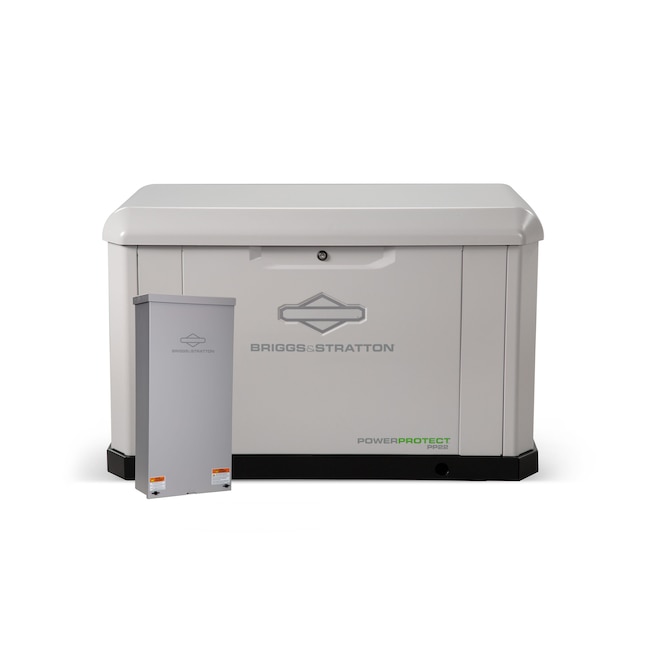
Briggs has quietly become the brand I mention when a homeowner’s first question is “what happens when it breaks?” Every PowerProtect unit carries a seven-year comprehensive warranty — parts, labor and travel — and the PowerProtect+ generators introduced in May 2026 (18, 22 and 26 kW) add a dealer-exclusive 10-year option along with a long list of engineering revisions.
The 26 kW PowerProtect is a real 26 on propane and one of the more capable air-cooled units for a large house or a home with two AC compressors. Symphony II power management (up to eight managed loads) is mature and lets a smaller unit run a bigger house sensibly. InfoHub cellular monitoring is a paid subscription after the trial period, which I count against it.
The enclosure is powder-coated galvanneal steel rather than aluminum — perfectly durable inland, but I’d think twice within a couple of miles of salt water. Sound levels are competitive.
Field notes. Fewer Briggs units in the field means fewer techs fluent in them; when I get one it usually comes down to controller firmware or a subscription lapse that turned monitoring off. Neither is a reliability issue. The engines are Vanguard-derived and I’ve seen no pattern of trouble.
Right for: buyers who value warranty coverage above all, and larger homes that want a true 26 kW air-cooled unit. Wrong for: coastal sites, and anyone who won’t keep the monitoring subscription current.
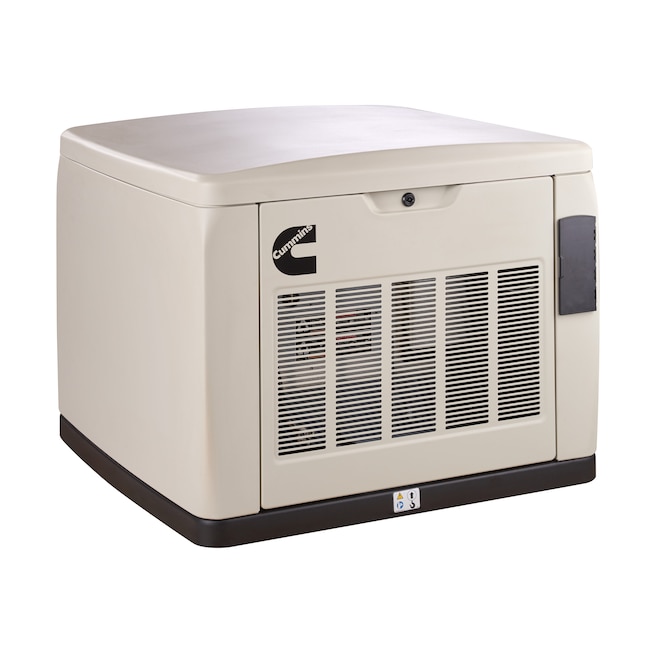
4. Cummins QuietConnect — quiet, well-built, and harder to find
Cummins makes the RS13A, RS17A and RS20A air-cooled units (with liquid-cooled models above 25 kW), and the RS20A is a genuinely nice generator: 65 dBA at 23 feet at normal load, a hardware-and-software package designed to start a 5-ton air conditioner, and Cummins Connect Cloud cellular monitoring. The five-year/2,000-hour warranty covers travel and labor for two years and parts for five — Generac’s structure, in other words.
Cummins’ problem is the same as Kohler’s, only more so: the dealer network is small and concentrated in certain regions. Where a strong Cummins dealer exists, these are excellent buys, and Cummins parts availability through its commercial and truck-engine network is a quiet advantage. Where one doesn’t, you may end up with a general electrician who’s never opened one.
Right for: homeowners with a solid Cummins dealer nearby who prioritize quiet. Wrong for: most rural markets, unless the dealer situation is verified first.
5. Honeywell — the Generac you buy at Costco
Honeywell home standby generators are built by Generac under license, and mechanically they are Generacs — same engines, same controller architecture, same aluminum enclosure, Mobile Link monitoring. Where they differ is distribution and price: they’re sold through warehouse clubs, big-box channels and online, often at very sharp prices, with installation arranged separately.
That’s the whole calculation. If you can buy the unit at a warehouse-club price and you already have a trusted installer, the Honeywell route can shave $1,000–$2,000 off a comparable dealer-supplied Generac. If you don’t have an installer, the dealer route buys you a single throat to choke when something goes wrong, and that is worth real money.
I wrote a full review of the Costco Honeywell 18 kW if you’re weighing that specific unit.
The value pick: Champion aXis 14 kW
Champion is a portable-generator company that decided to compete in standby, and it did the smart thing: one small unit (12.5 kW and 14 kW), a 62 dBA rating that is the quietest in its size class, and a 10-year limited warranty — double the standard. The aXis controller uses power-line carrier communication to talk to its own transfer switch over the house wiring, which simplifies installation.
The caveat is that 14 kW is the top of the range. If your load calculation lands above that, Champion has nothing to sell you, and if you’re running a big house on 14 kW you’re relying on load management to make it work. Dealer coverage is thinner still. But for a modest home, on a budget, with an installer who’ll do it right — this is a rational choice, and one I’d have laughed at five years ago.
Which size for which house
Nameplate kilowatts are the least useful number on the spec sheet until you’ve done a load calculation. As a rough map:
| Home | Typical pick | Notes |
|---|---|---|
| Small home, gas heat, no central AC | 10–14 kW | Essentials plus most of the house |
| 1,800–2,800 sq ft, one AC compressor (3–4 ton) | 14–18 kW | 14 kW usually needs a load-management module for the AC |
| 2,800–4,000 sq ft, one large or two small AC units | 20–22 kW | The most common install I did |
| 4,000+ sq ft, two AC units, well pump or pool | 24–26 kW | Consider load management even here |
| Above that | Liquid-cooled 30 kW+ | Different class of equipment and price |
Two things people get wrong: they size for total connected load instead of realistic simultaneous load, and they forget that natural gas derates the same unit by roughly 8–10% versus propane. Run the numbers in the sizing calculator, then read Kilowatts vs Amps if you want to understand what it did.
What the spec sheet won’t tell you
A few things I learned with a wrench in my hand that no brochure mentions:
- The battery is the number one cause of “it didn’t start.” Every brand. A standby generator battery lives outdoors, cycles weekly, and lasts three to four years. If yours is older than that, replace it before hurricane season, not after.
- Enclosure material matters within two miles of salt water. Aluminum (Generac, Kohler, Cummins, Honeywell) outlasts coated steel there. Inland, it doesn’t matter.
- Natural-gas pressure is the silent killer of new installs. An undersized gas line or a meter that can’t deliver the cubic feet per hour the unit needs will run fine at the dealer test and starve under full load in a real outage. Insist on a gas-load calculation, in writing.
- Cold-weather kits aren’t optional north of roughly the Mason–Dixon line. A battery warmer and an oil heater are $200–$300 and prevent the exact failure the whole system exists to avoid.
- The first oil change comes early. Most manufacturers want it at 25 hours or the first year — break-in metal in the oil is real. Skipping it is how you meet me in year three.
- Monitoring is a maintenance tool, not a gadget. The units that get serviced on time are the ones whose owners see the “maintenance due” banner every time they open the app.
How to buy one well
- Get a load calculation, not a guess. Any dealer who sizes your house from the driveway is guessing.
- Get two or three installed quotes that itemize the unit, transfer switch type and amperage, gas work, electrical work, pad, permits, startup and first service. Compare line by line — “22 kW installed” isn’t a quote.
- Ask who services it and how many they have in the field. A dealer with a real service department and a parts shelf is worth a premium.
- Ask about the warranty in years three through five. Get the labor and travel answer in writing.
- Check the dealer’s manufacturer tier and reviews — our directory lists authorization tier and customer ratings for authorized dealers by city.
The verdict
If you can only remember one line: buy the dealer as much as the generator. With that said —
- Best overall: Generac Guardian Next Gen (14–22 kW), because the network and parts availability are unmatched and the 2025 controller fixed the connectivity gap.
- Best-built: Kohler RCA (14–26 kW), if a strong dealer is within reach.
- Best warranty: Briggs & Stratton PowerProtect+ (18–26 kW), 7 years comprehensive, 10 with the dealer option.
- Quietest of the big names: Cummins QuietConnect, where you can get service.
- Best value: Champion aXis 14 kW, for smaller homes — and Honeywell for anyone with an installer and a Costco membership.
Whichever you pick, put a real service contract behind it. The generator you maintain is the one that starts.
Current listings for the models aboveAd
Generac, Kohler and Honeywell whole-home units on Amazon.
Paid links · As an Amazon Associate, GenDealers earns from qualifying purchases.