
Every few weeks someone asks me some version of “which brand is the most reliable?” and expects a one-word answer. I used to give one. Then I spent enough years on service calls to notice that the units I was called out to fix had far more in common with each other than their nameplates suggested: a dead battery, a gas line that couldn’t deliver full-load pressure, an oil change that got skipped, a unit sitting under a deck where its exhaust recirculated. Brand was rarely the story.
So this comparison is going to disappoint anyone hoping to hear that Brand X is junk. None of the six brands below is junk. What differs — and it does matter — is how they’re built, how they’re warranted, how they’re monitored, and above all how deep the service network is in your county. That last one is the real reliability variable, and it’s the one no spec sheet lists.
How I judge a brand’s reliability
When I say “reliable” I mean five things, weighted roughly in this order:
- Failure pattern in the field. Not the marketing MTBF — what actually goes wrong on the units I’ve opened, and whether it repeats.
- Time-to-repair. How fast can a dealer get a controller, a stepper motor, an alternator? Same-week parts availability is worth more than a fractionally better engine.
- Warranty that pays for labor and travel. Parts are cheap. Two hours of a tech’s time plus a truck roll is where the money goes.
- Monitoring that keeps the owner engaged. A homeowner who sees “maintenance due” every time they open an app is a homeowner whose generator gets serviced.
- Build quality that survives the site — enclosure metal, wiring, weather sealing, and how the unit behaves on marginal fuel.
Installed price is a factor in what to buy, but not in what’s reliable, so it lives in the cost guide rather than here.
The six brands at a glance
| Brand | Owner / origin | Air-cooled range | Standard warranty | Labor + travel covered | Monitoring | Dealer network |
|---|---|---|---|---|---|---|
| Generac | Generac Power Systems, Wisconsin (founded 1959) | 10–26 kW | 5 yr limited | Years 1–2 | Cellular + Wi-Fi built in (Next Gen) | Largest, nationwide |
| Kohler | Rehlko (formerly Kohler Energy), Wisconsin | 10–26 kW (RCA) | 5 yr / 2,000 hr | Full term | OnCue Plus (Wi-Fi / Ethernet) | Mid-size, quality-skewed |
| Briggs & Stratton | Briggs & Stratton Energy Solutions, Wisconsin | 13–26 kW (PowerProtect / +) | 7 yr comprehensive | Full term (10 yr dealer option) | InfoHub (cellular, subscription) | Mid-size |
| Cummins | Cummins Inc., Indiana | 13–20 kW (RS series) | 5 yr / 2,000 hr | Years 1–2 | Connect Cloud (cellular) | Smaller, regional |
| Honeywell | Built and warranted by Generac under license | 10–26 kW | 5 yr limited | Years 1–2 | Mobile Link | Sold via clubs/retail; serviced by Generac dealers |
| Champion | Champion Power Equipment, California | 12.5–14 kW (aXis) | 10 yr limited | See warranty terms | aXis app (Wi-Fi) | Small, growing |
A note on names: Kohler’s power business was spun out of Kohler Co. and renamed Rehlko in late 2024. The generators still carry the KOHLER badge and are supported by the same dealer network — nothing changed for owners, but you’ll see both names on paperwork.
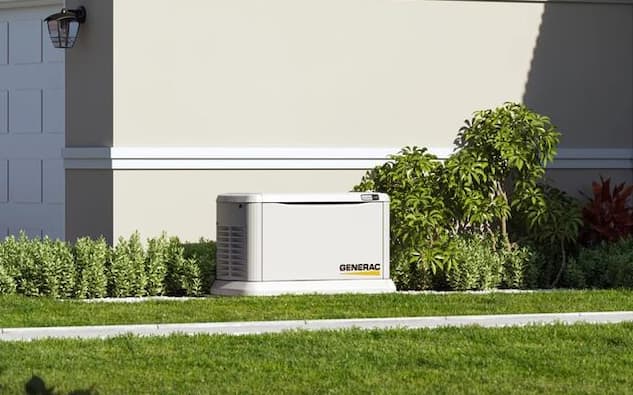
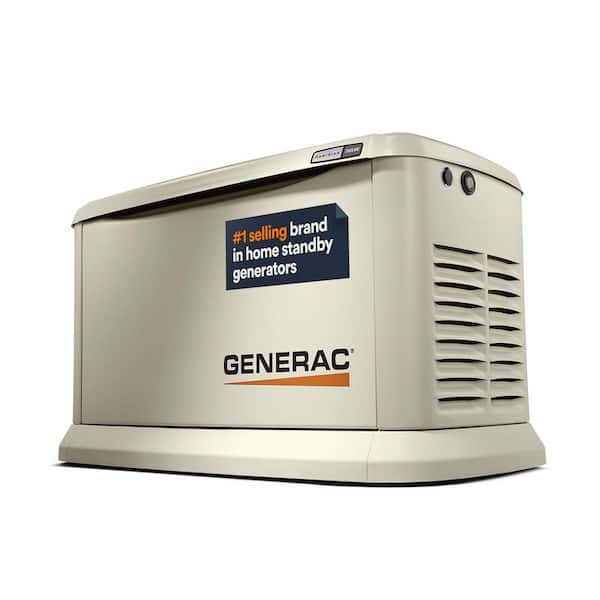
Generac: the network is the product
Generac holds roughly three-quarters of the U.S. home standby market, and that share is self-reinforcing. It means the most dealers, the deepest parts inventory, the largest pool of technicians who know the platform, and — a point people miss — the most third-party knowledge. Search any Generac fault code and you’ll find a forum thread and a video. That ecosystem is a form of reliability.
Build. The 999cc V-twin in the 22–26 kW units is a durable engine; the 460–816cc engines in the smaller units are adequate and long-lived when serviced. Aluminum enclosures. The alternator produces clean output (under 5% THD). The Evolution controller — refreshed for the 2025 “Next Generation” units — is the best interface in the category and now includes cellular, Wi-Fi and Bluetooth without a bolt-on module.
Warranty. Five years, but read the structure: parts, labor and travel in years one and two; parts in year three; major components in four and five. Extended coverage to seven and ten years is sold through dealers and is, in my view, worth buying on a 22 kW-class unit.
What I see fail. Batteries (universal). Controller boards, occasionally, usually after lightning-season surges. Valve lash on units that skipped the 25-hour break-in service — the 999cc engine wants that early adjustment. Stepper motors on the throttle assembly on older units. None of it is exotic, all of it is fixable same-week almost anywhere in the country.
Reliability verdict: average-to-good hardware, best-in-class supportability. If you don’t want to think hard about the dealer question, Generac is the safe default.
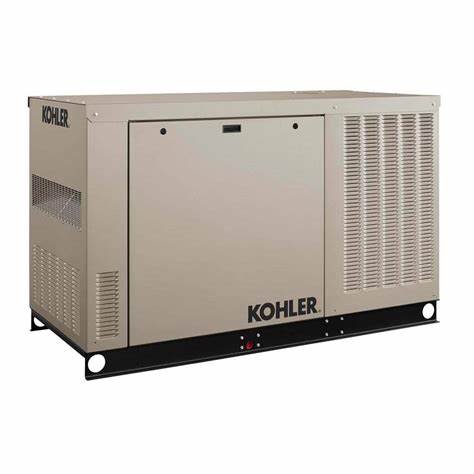
Kohler: the best-built air-cooled unit
Kohler’s RCA series is what I’d buy for myself if a strong dealer were nearby. The enclosure is heavier and more corrosion-resistant, the wiring is tidier, and the units tolerate real-world abuse a little better. PowerBoost handles motor-start surges (central AC, well pumps) better at the same nameplate kW. Kohler runs the engines at 3,600 rpm like everyone else in the air-cooled class, so don’t expect a longevity miracle — but the assembly quality shows.
Warranty. Five years or 2,000 hours, covering parts, labor and travel for the whole period. That’s the term that costs extra elsewhere. Extended to ten years through dealers.
What I see fail. Fewer calls per hundred units than Generac, and when I do get one it’s disproportionately fuel-supply related — a marginal natural-gas pressure that a Generac tolerates will trip Kohler’s protection first. That’s the controller doing its job; it just means the gas fitter has to size the line properly. OnCue Plus is a solid app but depends on Wi-Fi or Ethernet reaching the unit.
Reliability verdict: best hardware in the class; supportability depends entirely on your local dealer.
Briggs & Stratton: the warranty story of 2026
Briggs has become the answer to “what if it breaks?” Every PowerProtect unit carries a seven-year comprehensive warranty — parts, labor and travel — and the PowerProtect+ line launched in May 2026 (18, 22 and 26 kW) adds a dealer-exclusive ten-year option. Symphony II power management (up to eight managed loads) is mature and genuinely useful for running a large house on a smaller unit.
Build. Vanguard-derived engines with no pattern of trouble in my experience. The enclosure is powder-coated galvanneal steel — durable inland, but I’d choose aluminum within a couple of miles of salt water. Sound levels are competitive with the best.
What I see fail. Not much hardware. Controller firmware quirks on early units, and monitoring lapses when the InfoHub subscription expires — which is a billing issue that presents as a reliability issue, because a generator nobody is watching is a generator nobody knows has faulted.
Reliability verdict: good hardware, best warranty terms of the big three, and a network big enough to honor them in most metros.
Cummins: excellent where it’s supported
Cummins’ QuietConnect RS units (13, 17 and 20 kW air-cooled) trade on the company’s engine reputation and they earn it. The RS20A is rated 65 dBA at 23 feet, handles a 5-ton AC start, and Connect Cloud cellular monitoring is included. The 5-year/2,000-hour warranty mirrors Generac’s structure: labor and travel for two years, parts for five.
What I see fail. Rarely the generator. The problem is that in many regions the “Cummins dealer” is a truck-engine shop that took on residential standby as a sideline. Where a real residential Cummins dealer exists — the Southeast has several — these are as reliable as anything on the list.
Reliability verdict: top-tier hardware; verify the dealer before you buy.
Honeywell: a Generac in different clothes
Honeywell home standby generators are manufactured by Generac under license — same engines, controllers, enclosures and Mobile Link monitoring, warranted by Generac. What differs is the channel: warehouse clubs, big-box and online, usually at aggressive prices with installation arranged separately. Reliability is Generac reliability. The only extra risk is the installation you arrange yourself, and the coordination when the unit (from Costco) and the installer (from town) point at each other over a warranty question. If you have a trusted installer, it’s a legitimate way to save; read the Costco Honeywell review for the full picture.
Champion: the value tier grew up
Champion’s aXis 12.5 kW and 14 kW units are quiet (62 dBA), inexpensive, and carry a ten-year limited warranty — the longest standard term of any brand here. The aXis controller talks to its transfer switch over the house wiring, which simplifies installation. The limits are size (nothing above 14 kW) and a still-thin dealer network. For a modest home with a good independent installer, it’s a rational buy; for a large home, it isn’t an option.
Others you’ll see, and how to think about them
- Westinghouse entered home standby in the last few years with 12–24 kW units at low prices; the hardware is reasonable, but the service network is very thin — you are betting on your local electrician.
- Winco and Gillette are small American builders with long histories, sold mostly through regional dealers. Fine machines, limited support.
- Big-box house brands and imports appear and disappear. A generator is a 20-year purchase; buy from someone who’ll still answer the phone in year eight.
What actually causes failures (it’s mostly not the brand)
Across all six brands, the service calls I ran clustered around the same short list:
- Batteries — the single largest cause of no-start, on every brand. Outdoor, weekly cycling, three-to-four-year life.
- Fuel supply — undersized gas lines, low utility pressure, propane tanks that can’t vaporize fast enough in the cold. The unit runs at the startup test and starves under real load.
- Skipped break-in and annual service — the first oil change at 25 hours matters; the 200-hour/2-year Schedule A after that matters more.
- Siting — units under decks, against walls, in snow drifts, or where sprinklers hit the intake.
- Surge damage — lightning season is controller-board season. A whole-house surge protective device at the panel is cheap insurance.
If you want a reliable generator, the highest-leverage decisions are the installer, the gas-load calculation, and the maintenance contract. The brand is fourth.
How to choose, practically
- List the authorized dealers within an hour of you for Generac, Kohler and Briggs. Our directory shows authorization tier and customer ratings by city.
- Call the top two or three and ask about their service department — how many techs, how many units in the field, average time to a repair visit.
- Get installed quotes and compare the warranty labor/travel terms in writing.
- Pick the strongest dealer among the brands you’d be happy with. That is the reliability decision.
If a strong dealer exists for more than one brand, my personal order is Kohler, then Briggs & Stratton (for the warranty), then Generac — but I’d take a great Generac dealer over an indifferent Kohler dealer every day of the week.
Current models from the brands comparedAd
One listing from each brand, across the size range.
Paid links · As an Amazon Associate, GenDealers earns from qualifying purchases.