
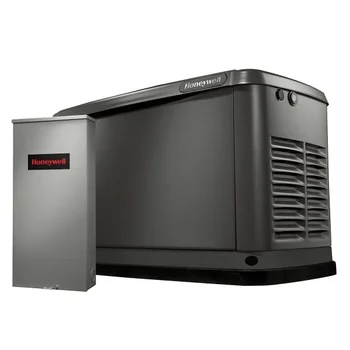
Every few months a customer would call me holding a Costco flyer. “There’s an 18 kW Honeywell for thousands less than your quote. What’s the catch?”
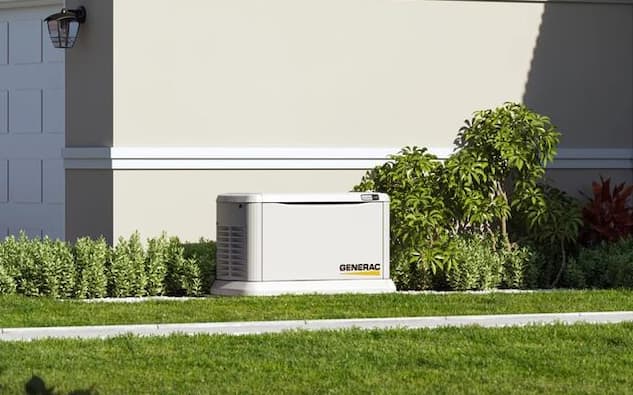
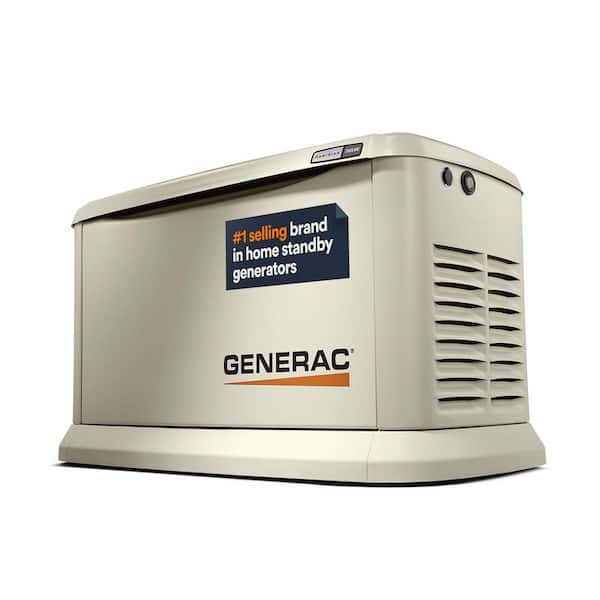
The honest answer took me about two minutes to give, and it surprised people: there is no catch in the machine. Honeywell-branded home standby generators are manufactured by Generac under a brand licence. Open the enclosure and you’re looking at a Generac: the same air-cooled V-twin, the same alternator, the same controller architecture, the same aluminum housing, monitored by the same Mobile Link platform and serviced by the same Generac dealers using the same parts.
The catch — and it is a real one, just not the one people expect — is in everything around the machine. Let’s go through it properly.
What you’re actually buying
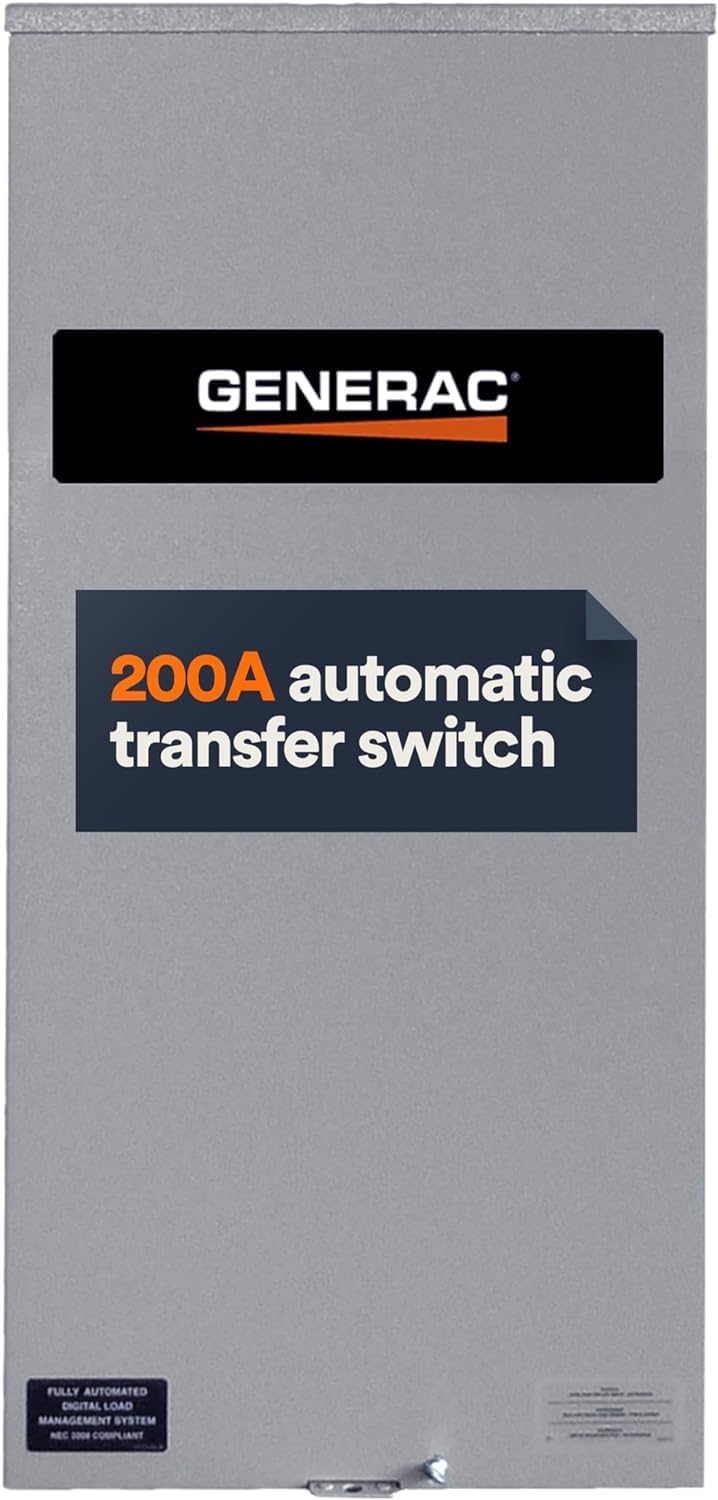
The Honeywell home standby line spans roughly 10 kW to 26 kW, mirroring Generac’s Guardian range. The 18 kW model is the one that shows up most in warehouse-club and online channels, usually bundled with a 200-amp service-entrance-rated automatic transfer switch.
| Spec | Honeywell 18 kW (typical) |
|---|---|
| Output | 18 kW on propane, ~16 kW on natural gas |
| Engine | Generac air-cooled V-twin, 3,600 rpm |
| Enclosure | Aluminum, corrosion-resistant |
| Transfer switch | 200 A service-entrance rated, whole-house |
| Noise | ~66 dBA at 23 ft during exercise |
| Monitoring | Mobile Link (Wi-Fi / cellular depending on generation) |
| Warranty | 5-year limited (parts, labor, travel yrs 1–2; parts yr 3; major components yrs 4–5) |
| Fuel | Natural gas or LP, field convertible |
| Weekly exercise | Yes, programmable |
That derate from 18 kW to about 16 kW on natural gas isn’t a defect — it’s physics, and it applies to every brand. Natural gas carries less energy per cubic foot than propane, so the same engine makes roughly 8–10% less power on it. Size around the natural-gas number if that’s your fuel.
Is 18 kW the right size?
This is the question I’d rather you spend your energy on than the brand debate.
Eighteen kilowatts, managed sensibly, covers a 2,500–3,500 square foot home with one central air conditioner — the AC, furnace blower, refrigerator, freezer, well pump, sump pump, kitchen, lighting, internet and the usual electronics. It will not simultaneously run two 4-ton compressors, an electric range, an electric water heater and a hot tub, and no honest salesperson will tell you otherwise.
Where 18 kW is a strong fit:
- Gas heat, gas water heater, gas range, one AC compressor
- A well pump under 1.5 HP, or a larger one with a soft starter
- Households willing to accept load management on the biggest loads
Where you should size up to 22–26 kW:
- Two AC compressors, or one very large one
- Electric range and electric water heater and electric dryer with no willingness to shed
- A 5,000+ sq ft house
Where 14 kW is plenty:
- Under about 2,200 sq ft with gas appliances
- Essentials-focused backup
Run your actual appliance list through the sizing calculator rather than guessing from square footage — square footage is a proxy, and a bad one.
The money: where the savings are real and where they aren’t
Here’s the part that actually decides this purchase. The generator is roughly a third of the job.
| Line item | Typical 2026 cost, 18 kW |
|---|---|
| Generator + 200 A transfer switch (club/online) | $4,200–$5,200 |
| Generator + switch (dealer-supplied) | $5,500–$6,800 |
| Electrical labor, wiring, disconnect | $2,500–$4,000 |
| Gas line: tap, piping, sizing, fitter labor | $800–$2,500 |
| Concrete pad or composite base | $300–$900 |
| Permits and inspections | $150–$800 |
| Startup, commissioning, first service | $200–$500 |
| All-in, natural gas, straightforward site | $9,500–$13,500 |
Propane instead of natural gas adds a tank (a 500-gallon buried tank is $2,000–$4,500 installed, or lease it from the supplier). A long trench, a panel upgrade, or a difficult meter location can each add thousands.
So the warehouse-club route saves roughly $1,000–$2,000 on the equipment, which is real money — about 10–15% of the total job. What it costs you is coordination.
The real trade-off: who owns the problem
When you buy from an authorized dealer, one company sells the unit, installs it, pulls the permit, commissions it, and handles warranty claims. If the controller fails in month seven, you make one phone call and it is unambiguously their problem.
When you buy the box yourself, you become the general contractor. You are:
- sourcing an electrician who is comfortable with standby generators and transfer switches (not all are),
- sourcing a licensed gas fitter, and making sure someone does a gas load calculation so the line and meter can actually deliver full-load demand,
- pulling or coordinating permits and being present for inspections,
- registering the warranty yourself, on time,
- arranging a Generac-authorized dealer to do the startup and the annual service — and finding out before you buy whether one nearby will service a unit they didn’t sell.
That last point is the one that bites people. Most Generac dealers will service a club-bought Honeywell, and warranty work is paid by Generac either way. But a busy dealer in the middle of hurricane season prioritizes their own customers, and I have watched a homeowner wait three weeks for a startup visit that a dealer customer would have gotten in three days.
My rule of thumb
- You already have an electrician you trust, and you’re comfortable coordinating trades → the club route is a legitimate $1,000–$2,000 saving.
- You want one throat to choke → buy through a dealer and treat the difference as insurance.
- You’re in a hurricane or ice-storm region → lean dealer. Service priority matters when everyone needs service at once.
What ownership is actually like
I’ve serviced plenty of these. Living with an 18 kW Honeywell is living with a Generac Guardian:
The weekly exercise. It runs itself for five to twelve minutes on a schedule you set. Pick a mid-morning weekday. People who set it for Saturday at 8 a.m. hear about it from neighbors.
Maintenance. The first oil change comes at 25 hours or the first year — that break-in service matters, and skipping it is the most common way owners shorten an engine’s life. After that, Generac’s Schedule A (oil, oil filter, air filter, plugs inspection, battery check, test run) is due every 200 hours or 2 years, though most dealers do it annually and I think that’s the right habit. Budget $300–$500 a year done professionally, or $60–$90 in parts if you do the basics yourself.
The battery. Three to four years, then replace it before storm season. This is the number one cause of “my generator didn’t start.”
Monitoring. Register Mobile Link and actually enable the notifications. A generator that faults silently in April is a generator that fails you in September.
Cold-weather kit. North of roughly the Mason–Dixon line, add the battery warmer and oil heater. It’s a couple hundred dollars against the exact failure the system exists to prevent.
Honest complaints
Three things I’d flag before you buy:
- Brand confusion at resale and service. Some independent shops don’t immediately know Honeywell equals Generac. Keep your model and serial documentation handy; it’s a Generac serial and it will pull up Generac parts.
- The warranty structure. Five years sounds strong until you read it: parts, labor and travel in years one and two, then parts only, then major components only. In year four, the part is free and the two hours of labor aren’t. If that bothers you, price the extended coverage, or look at Briggs & Stratton’s 7-year comprehensive warranty.
- Stock and model churn. Club inventory rotates. The exact 18 kW SKU on the flyer this season may not exist next season, which complicates matching a second unit or specific accessories later.
The verdict
The Costco/warehouse-club Honeywell 18 kW is a good generator at a good price, because it is a Generac at a good price. If your load calculation lands near 18 kW and you have a competent installer lined up, it’s one of the better values in home standby power in 2026.
If you don’t have an installer — or if you’d rather one company be accountable from quote to warranty claim — spend the extra $1,000–$2,000 with an authorized dealer and sleep better. That is a completely defensible choice, and it’s the one I’d make for my own parents.
Either way: get the gas load calculation in writing, register the warranty, do the 25-hour service, and replace the battery every three years. Those four habits matter far more than which badge is on the enclosure.
Honeywell and Generac equivalents on AmazonAd
Honeywell home standby units are built by Generac — these are the closest current listings.
Paid links · As an Amazon Associate, GenDealers earns from qualifying purchases.