
Here's the thing about a standby generator that makes it different from every other machine you own.
When your car breaks, you find out immediately. When your standby generator breaks, it sits in the side yard looking exactly the same as it did the day before. You find out at 2 a.m. in a storm, four months later, when it doesn't start.
Every recommendation in this guide follows from that single fact.
The failure mode that defines everything
In two decades of service calls, the pattern is remarkably consistent. The generator that failed during the outage had failed weeks or months earlier, and nobody knew. And the specific causes cluster tightly:
- Dead or weak battery — by a wide margin the most common.
- Controller left in OFF after a service visit or a curious hand.
- Deferred maintenance — old oil, clogged air filter, fouled plugs.
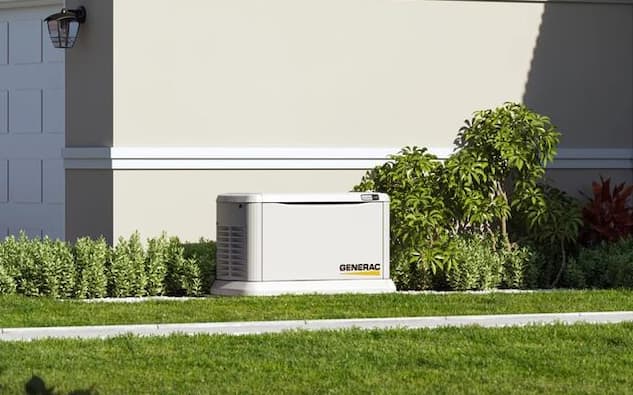
- Blocked airflow — shrubs, snow, stored items in the clearance envelope.
- Fuel supply problems — an empty propane tank, a closed valve, insufficient gas capacity.
Notice that four of those five are trivially preventable, and none of them require mechanical skill to catch. That's the encouraging part: reliable standby power is mostly about attention, not expertise.
The schedule at a glance
| Interval | What |
|---|---|
| Weekly | The exercise cycle runs itself. Confirm it happened. |
| Monthly | Two-minute walk-around: status light, clearances, leaks, debris. |
| Annually (or 100–200 hrs) | Oil + filter, air filter, battery test, plugs on schedule, load test. |
| Every 2–4 years | Replace the battery on schedule, not on failure. |
| Every 2–3 years / 400 hrs | Spark plugs, valve adjustment at manufacturer interval. |
| Seasonally | Before storm season and before winter — full readiness check. |
| After any outage over 24 hrs | Check oil, inspect, note run hours. |
Air-cooled units are typically on a 100–200 hour or annual cycle; liquid-cooled units go 250–500 hours between services but the service is more involved. Always follow your manual over any general schedule — including this one.
Weekly and monthly: five minutes
Weekly — the exercise cycle. Your generator runs itself for 10–20 minutes once a week. Its purpose is exactly this: circulate oil, charge the battery, keep seals from drying, burn off moisture, and prove the machine still works.
Your job is simply to know it happened. If you have monitoring, the app tells you. If not, be home for it once a month and listen.
Monthly — the walk-around. Two minutes:
- Check the controller. It should show ready/AUTO. Anything else needs investigating today.
- Look at the clearance envelope. Leaves, snow, mulch, shrubs, stored items, a bicycle leaned against it. Clear all of it.
- Look underneath for oil or coolant drips.
- Check the oil level if it's easily accessible (many units have an accessible dipstick).
- Glance at the battery terminals for corrosion.
- Listen during the next exercise. You learn your machine's normal sound quickly, and changes in it are the earliest warning you'll get.
That's the whole monthly program, and it catches most of the top-five failures above.
The annual service
Once a year or at the hour interval in your manual, whichever comes first:
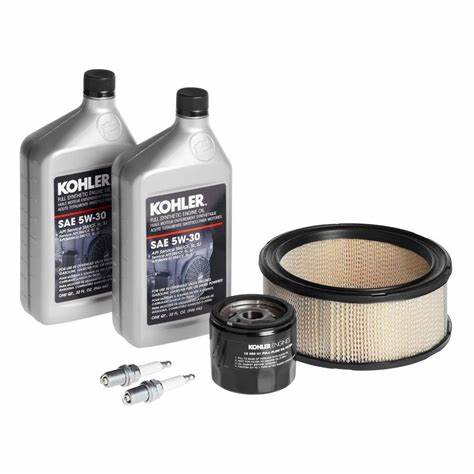
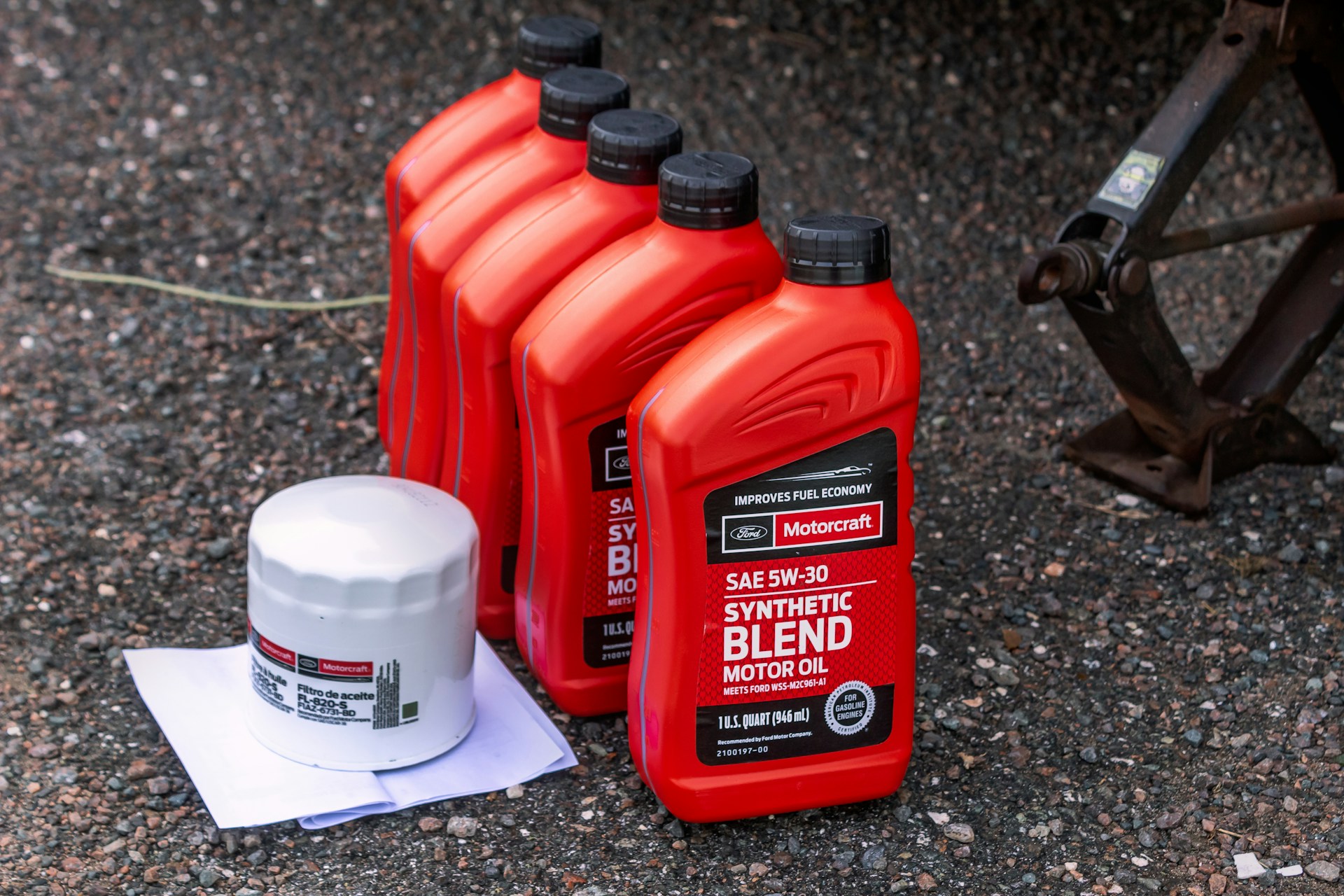
Oil and filter. The core of the service. Use the manufacturer-specified oil — usually a specific synthetic weight, and it varies by ambient temperature. Old oil is acidic and loses film strength; running on it is how engines wear out early.
Air filter. Inspect and replace. Cheap, and a restricted filter causes rich running, carbon buildup, hard starting and reduced output. In dusty or wildfire-smoke regions, inspect monthly during the season rather than annually.
Spark plugs. At the manufacturer's interval — commonly every 2–3 years or 400 hours rather than annually. Gap to spec.
Battery test. Under load, not just a voltage reading. A battery can show 12.6 V at rest and still be incapable of cranking. See below.
Visual inspection. Wiring, connections, mounts, enclosure condition, corrosion, rodent damage. Mice in a generator enclosure are common and destructive — nesting material in the airflow path and chewed wiring insulation.
Clean the enclosure interior and cooling fins. Debris here directly raises operating temperature.
Load test. The step that separates a real service from a start-and-listen. Running the unit under actual load proves it can deliver, which a no-load run does not.
Check the exercise schedule and settings are still what you want.
Confirm the unit is left in AUTO. Yes, again. It's the most common way a serviced generator becomes a non-functional one.
Dealer cost: $200–$500 depending on region and unit. DIY on an air-cooled unit: $60–$120 in parts.
The battery — read this section twice
If you take one thing from this guide: the battery is the weak link, and it fails predictably.
A standby generator's battery does one job — crank an engine — and it does it a handful of times a year. Meanwhile it sits outdoors through summer heat and winter cold on a float charger. That's a hard life.
The rules:
- Replace every 2–4 years on a schedule. Not when it fails. Write the install date on the battery with a marker.
- Two to three years in hot climates. Heat kills batteries faster than cold does; cold just reveals the damage heat did.
- Test annually, under load. Resting voltage tells you almost nothing.
- Keep terminals clean. Corrosion adds resistance exactly where you can't afford it.
- Treat a low-battery alert as urgent, not as a reminder.
- In cold climates, add a battery warmer ($60–$120). Battery capacity falls roughly 50% at 0°F while cold oil makes the engine harder to turn — the two worst factors arriving together. See winterizing.
A battery costs $80–$200. An emergency service call during a regional outage costs considerably more and may take days to arrive. This is the cheapest reliability you can buy.
Every 2 to 3 years
- Spark plugs at the manufacturer's interval.
- Valve adjustment — commonly around every 200–400 hours on air-cooled units. This one belongs to a technician.
- Battery replacement as above.
- Coolant on liquid-cooled units, per manual.
- Fuel system inspection — regulator, connections, leak check by a qualified person.
- Thorough enclosure cleaning including the interior.
What you can do yourself, and what you can't
I'm not precious about this. A mechanically comfortable homeowner can do real maintenance on an air-cooled unit and save meaningful money.
Reasonable DIY:
- Oil and filter change
- Air filter replacement
- Spark plugs
- Battery replacement
- Cleaning the enclosure and clearing the clearance envelope
- Checking and setting the exercise schedule
- Visual inspection
Leave to a technician:
- Valve adjustment — specialized, and getting it wrong damages the engine.
- Anything requiring the gas line opened — regulators, fuel valves, piping. Gas work is licensed for good reason.
- Alternator, voltage regulator and controller diagnosis — these involve live high-current components.
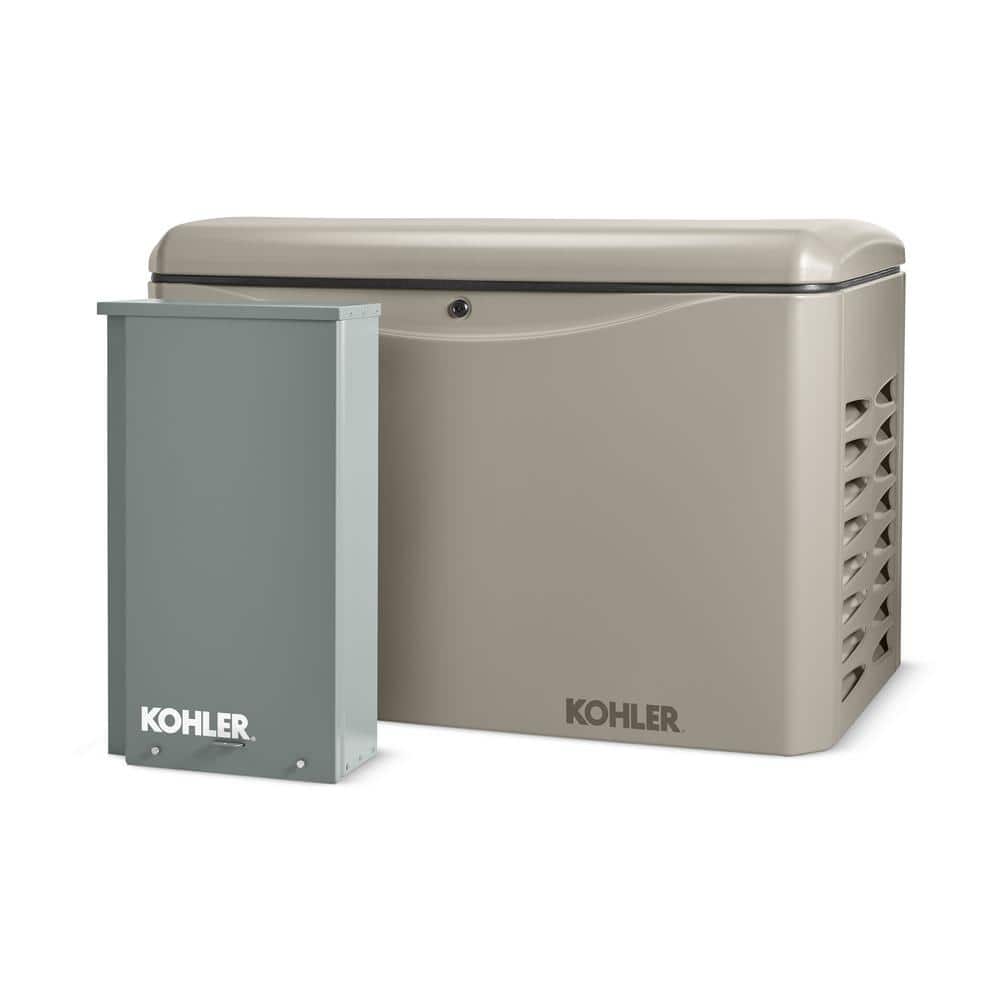
- Transfer switch work — utility-side conductors are present, and a mistake here can be fatal.
- Warranty-period work, if DIY would void coverage. Check your terms first; some manufacturers accept owner-performed maintenance with documented records, others don't.
Two safety rules for any DIY work: put the unit in OFF and disconnect the battery before touching anything, and let it cool first — exhaust components stay hot long after shutdown.
Full detail on the line between the two: DIY generator maintenance.
Seasonal preparation
Before storm season (spring in most of the country, early summer on the coasts):
- Battery tested or replaced.
- Annual service current, with records.
- Clearance envelope cleared; vegetation cut back to mature-size allowance.
- Propane topped off; natural gas supply verified.
- Exercise cycle confirmed running.
- Monitoring alerts on and reaching a phone you carry.
- Oil, a filter and a funnel in the garage for a multi-day outage.
- Dealer's service number saved.
Before winter, add: manufacturer-specified synthetic oil changed before the cold, battery warmer and oil heater if you're north of roughly the Mason–Dixon line, propane above 30% with vaporization capacity confirmed, and a plan for clearing snow from the intake and exhaust. See winterizing.
Coastal properties need a compressed schedule — salt air is relentless. See coastal and saltwater maintenance.
Troubleshooting the common faults
Won't start. Check, in order: is it in AUTO? Is the battery good? Is the fuel valve open and the tank not empty? Is the circuit breaker on the unit set? Is there a fault code on the controller? Four of those five you can check in two minutes.
Starts then stops. Usually fuel delivery (insufficient gas pressure or volume, or low propane vaporization in cold), or overheating from blocked airflow, or a low-oil shutdown. Check oil level and clearances first.
Runs but won't transfer. Transfer switch or controller issue. Do not attempt this yourself — the transfer switch has utility-side conductors in it.
Overheating or high-temperature shutdown. Blocked airflow is the leading cause: shrubs, debris, snow, stored items, or a screening wall built inside the clearance envelope. Clear it, then check the cooling fins.
Low oil pressure. Stop. Check the level. If the level is correct and it still faults, call a technician — running it will destroy the engine.
Exercise cycle not running. Check the schedule setting, whether the unit is in AUTO, and the battery.
Unusual noise or vibration. Note when it started and call for service. New noises are early warnings.
When to call a technician immediately
- Any fuel smell. Leave the area, shut off the fuel at the source if you can do so safely, and call the gas supplier or fire department before the generator dealer.
- Smoke or burning smell.
- The unit ran after a flood or was submerged — never start a flood-exposed generator without inspection.
- Repeated faults you've cleared more than once.
- Low oil pressure with a correct oil level.
- Sparking, arcing, or scorching at any connection.
- Anything involving the transfer switch.
What a service contract is worth
Dealers offer annual maintenance agreements, typically $200–$500 a year, sometimes with priority service during outages.
Worth it if: you won't DIY, you want the priority response after a regional storm (this is the real value — post-hurricane, contract customers get served first), you want documented records for warranty and resale, or you own a liquid-cooled unit.
Skip it if: you're comfortable doing air-cooled maintenance yourself, you'll actually keep to the schedule, and you'll keep your own records.
Either way, the records matter. Warranty claims ask for them, and a buyer at resale reads them as proof the machine works.
Getting twenty years out of it
A well-maintained standby generator commonly lasts 15–25 years at residential run hours. A neglected one is often finished in eight to twelve. The difference isn't luck and it isn't the brand.
What actually determines it:
- Maintenance on schedule. Oil is the single biggest lever.
- Batteries replaced proactively.
- Airflow kept genuinely clear. Heat is the enemy of every component.
- The exercise cycle left alone — it's the machine's self-test.
- Faults addressed when they appear, not after the third one.
- Correct sizing — a unit chronically running near capacity wears faster.
- Monitoring, so silent failures don't stay silent.
Everything on that list is attention rather than expertise, which is the good news. See how long generators last, and for the working document, the maintenance checklist.
Maintenance and cold-weather partsAd
Manufacturer service kits, a battery warmer and an oil heater for northern installations.
Paid links · As an Amazon Associate, GenDealers earns from qualifying purchases.