
A standby generator spends 99.9% of its life doing nothing. That's the problem. Equipment that sits idle and then must perform perfectly, on demand, in bad weather, is exactly the equipment that needs a maintenance discipline — and it's exactly the equipment homeowners forget about.
Here's the honest schedule, what each item costs, and which ones actually matter.
The schedule at a glance
| Interval | Tasks | DIY? | Time |
|---|---|---|---|
| Weekly (automatic) | Exercise cycle runs itself — just confirm it happened | Yes | 0 min |
| Monthly | Visual inspection, check for alarms, clear debris, check oil level | Yes | 10 min |
| Quarterly | Battery terminals, enclosure interior, look for rodents and leaks | Yes | 20 min |
| 25 hours or 1st year | Break-in oil and filter change | Yes | 45 min |
| Annually / 200 hours | Oil, oil filter, air filter, spark plugs, battery test, full inspection | Partly | 1–2 hr |
| Every 2 years | Valve lash adjustment (air-cooled) | No | Tech |
| Every 3–4 years | Battery replacement | Yes | 20 min |
| Every 5 years | Coolant (liquid-cooled only), full load-bank test | No | Tech |
Weekly: the exercise cycle
Your generator starts itself once a week and runs five to twenty minutes depending on how it's programmed. This isn't a formality:
- It circulates oil over bearings and cylinder walls that would otherwise sit dry.
- It charges the battery — the trickle charger helps, but a run charges properly.
- It burns off condensation in the crankcase and exhaust.
- It's a self-test: if the unit can't start, you learn on a Wednesday morning rather than during an ice storm.
Set it for a weekday mid-morning. Around 10 or 11 a.m. is ideal: you're likely to be around occasionally to hear it, and neighbors are least bothered. The people who leave the factory default of Saturday 8 a.m. are the people who end up in an HOA dispute.
Full-load vs no-load exercise. Most residential units exercise unloaded, which is fine for an air-cooled gas engine. Some newer controllers offer a periodic loaded exercise. If yours does, use it — light-load-only running promotes carbon buildup over the years.
What to actually do weekly: nothing, except notice it happened. If you have monitoring, that's automatic. If you don't, glance at the controller display once in a while.
Monthly: ten minutes
- Look at the controller. Is there an alarm or a "maintenance due" message? Is it in AUTO? A surprising number of no-starts are units someone left in OFF after a service.
- Walk around the unit. Clear leaves, grass clippings, snow, mulch and anything else within the clearance envelope. Air-cooled means air-cooled.
- Check the oil level. Air-cooled engines consume some oil; low oil triggers a shutdown at the worst time.
- Look underneath for oil or fuel drips.
- Check for nests. Mice, wasps and squirrels love a warm, dry enclosure. This is not a rare problem — it's a regular one.
Quarterly: twenty minutes
Everything monthly, plus:
- Battery terminals — clean corrosion, confirm tightness. A corroded terminal reads fine on a meter and fails under starter load.
- Inside the enclosure — cobwebs, rodent damage, chewed insulation, loose wiring.
- Air intake and exhaust — clear.
- The pad — settling, cracking, washout at the edges.
The break-in service: 25 hours or first year
This is the one people skip, and it's the one that matters most for engine life.
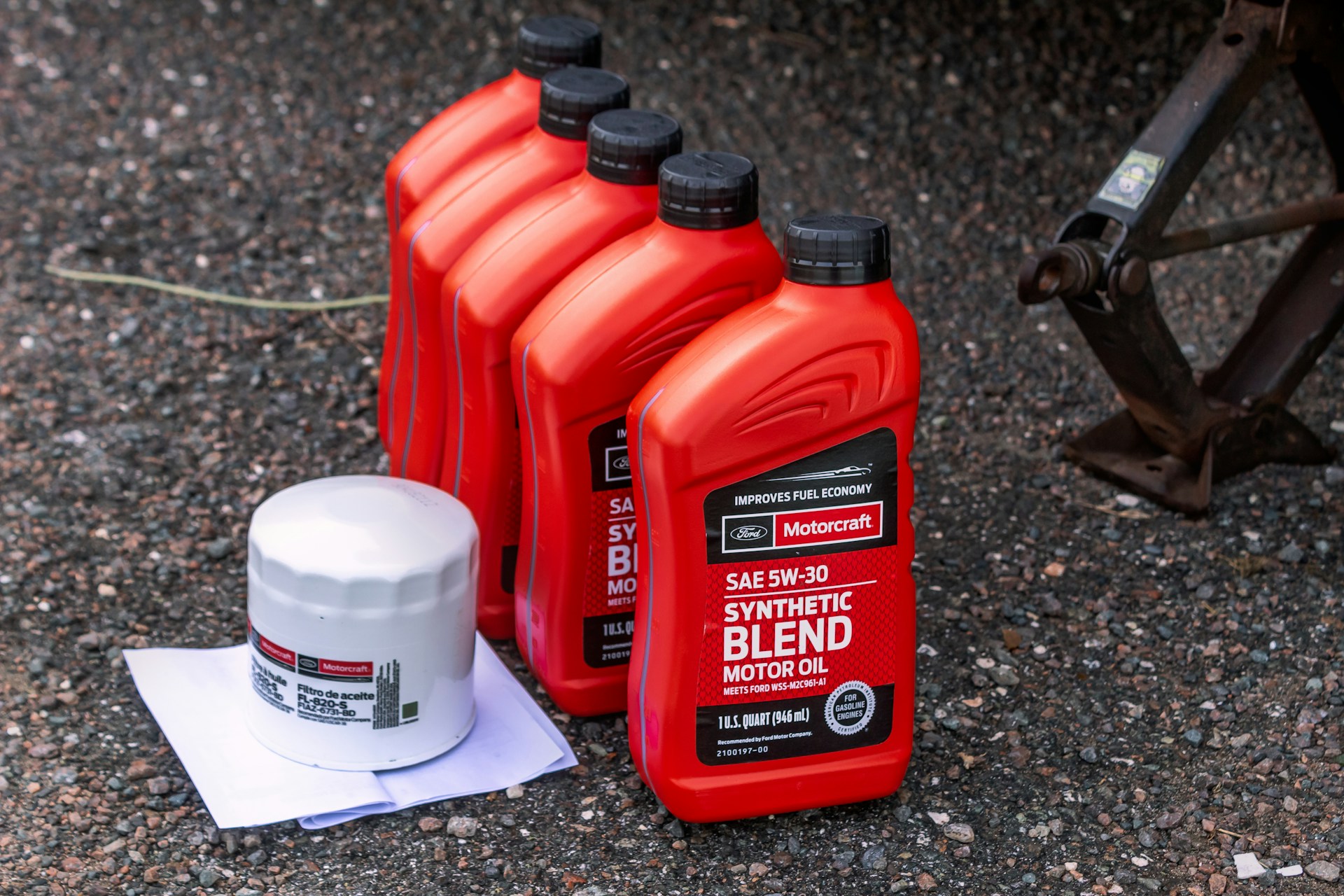
New engines shed metal during break-in. That material ends up in the oil, and leaving it there for two years grinding through bearings is exactly as bad as it sounds. Manufacturers specify an early first change — Generac ships units with conventional 5W-30 for break-in and directs against synthetic until after that period.
When: roughly 25 hours of run time, or the first year, whichever comes first. On weekly 10-minute exercise cycles, 25 hours takes about three years — so for most homeowners the calendar trigger is what applies. Do it at the end of year one.
What: oil, oil filter. Inspect the air filter. Check the battery.
If your dealer's installation package includes the first service, confirm the date and put it on your calendar. If it doesn't, budget for it.
Annual service (Schedule A)
Generac calls this Schedule A and specifies every 200 hours or 2 years. Most dealers do it annually, and I think annually is right for a machine you're depending on. Here's what a proper service covers:
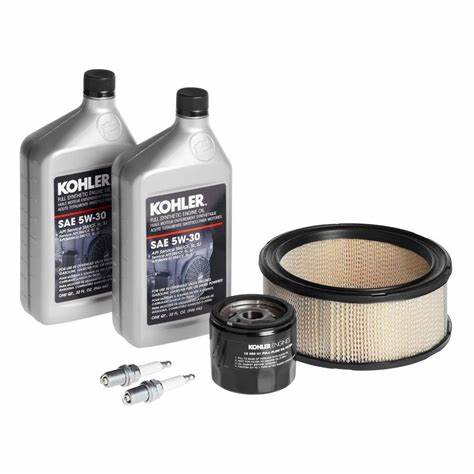
Oil and oil filter. After break-in, most manufacturers approve full synthetic; Generac recommends 5W-30 synthetic for its air-cooled units across the temperature range. Roughly 1.5–2 quarts for a small unit, more for larger. Warm the engine briefly first so the oil carries contaminants out with it.
Air filter. Inspect and replace as needed — more often in dusty or agricultural environments.
Spark plugs. Inspect annually, replace per the manual (typically every 200 hours or two years). Gap them correctly; the wrong gap causes hard starting.
Battery test. Not just a voltage reading — a load test. A battery can read 12.6 V and still collapse under the 200+ amps a starter demands.
Enclosure and hardware. Clean, check fasteners, inspect wiring, look at the enclosure for corrosion.
Fuel system. Inspect connections, verify pressure under load, check the regulator.
Controller check. Verify settings, exercise schedule, clear stored fault codes, confirm firmware.
Transfer test. A proper service tests an actual transfer, not a simulated signal.
Valve lash (every 2 years). Air-cooled engines need valve clearance checked and adjusted. It requires feeler gauges and knowing the spec, and getting it wrong causes hard starting or burnt valves. This is the item I'd leave to a tech even if you do everything else.
What it costs
| Approach | Annual cost | What you get |
|---|---|---|
| Dealer maintenance agreement | $300–$500/yr | Everything above, priority service, records for warranty |
| Dealer service, à la carte | $350–$600/visit | Same work, no priority |
| DIY basics + tech for valve lash | $60–$90 parts/yr + ~$200 biennial | You do oil, filters, plugs, battery |
| Nothing | $0 | A generator that may not start, and warranty exposure |
A maintenance agreement usually pays for itself in the priority alone. During a regional outage, contract customers get served first — that's not a scam, it's how every service business triages.
The battery: the most important paragraph here
If you take one thing from this article: replace the battery every three to four years, on a schedule, before it fails.
A standby generator battery lives outdoors through temperature extremes and cycles every week. Three to four years is its realistic life, and it does not fail gracefully — it reads normal voltage right up until the moment it can't turn the engine over.
- Use the manufacturer-specified group size and type.
- Keep terminals clean and tight.
- In cold climates, add a battery warmer (see winterizing).
- Replace it in spring or early fall — before storm season, not during it.
- Write the installation date on the battery with a marker. You will not remember otherwise.
Seasonal items
Before winter: battery test or replacement, cold-weather kit check (battery warmer, oil heater), clear snow-drift paths, verify the exercise cycle still runs, confirm propane levels if applicable.
Before hurricane/storm season: full service if it's due, battery test, fuel supply verification, and — for propane — top the tank. Everyone tops tanks after the forecast; suppliers run out.
Spring: clear winter debris, inspect for rodent damage (nests get built in cold months), check the pad for frost heave.
Summer: keep vegetation trimmed back from the clearance envelope, check that airflow is unobstructed for hot-weather operation.
Keeping records
Keep a folder — paper or digital — with:
- Service dates and what was done
- Oil type and quantity used
- Battery installation dates
- Fault codes seen and how they were resolved
- Hour-meter readings at each service
- The commissioning report, load calculation and permits
This matters for three reasons: warranty claims often require proof of maintenance; a service tech diagnoses faster with history; and when you sell the house, a documented maintenance record turns "there's a generator" into a demonstrable asset. See property value.
What happens when you skip it
Not theoretical — the actual sequence:
- Year 1–2: nothing visible. The generator exercises and appears fine.
- Year 3: battery weakens. Maybe a hard start nobody notices because nobody's listening at 10 a.m. Wednesday.
- Year 4: first real outage in a while. Battery can't crank. House is dark next to a $12,000 machine.
- Year 5–6: old oil, carbon buildup, valve lash out of spec. Hard starting, reduced output, possible valve damage.
- Year 8: repair that a $400 annual service would have prevented — and a warranty claim that gets questioned for lack of maintenance records.
The math isn't close. A maintenance agreement over ten years costs $3,000–$5,000 on a $12,000 system that should last twenty-five. Do the service, replace the battery on schedule, and keep the records.
Kits and cold-weather add-onsAd
Generac kits for smaller units, plus the two accessories the seasonal section recommends.
Paid links · As an Amazon Associate, GenDealers earns from qualifying purchases.