
I'm generally in favor of homeowners doing their own maintenance. It costs less, it means the work actually happens on schedule, and people who change their own oil notice things — a chewed wire, a weeping gasket — months before a once-a-year visitor would.
But a standby generator is not a lawnmower. It is wired to your electrical service, plumbed to a gas line, and — this is the part that gets people hurt — it can start itself without warning. Some of it is genuinely DIY. Some of it isn't, and the line matters.
Before you touch anything: the shutdown sequence
Every single time. No exceptions, including "I'm just going to look."
- Set the controller to OFF. Not AUTO, not MANUAL. OFF. This prevents an automatic start.
- Open (turn off) the generator's circuit breaker at the unit or the disconnect.
- Disconnect the negative battery cable. This is what actually makes it safe. The controller can be in OFF and a fault can still crank the starter.
- Close the fuel shutoff valve if you'll be working near the fuel system.
- Let it cool. An engine that just exercised has a 300°F+ exhaust.
Reverse the order to put it back in service, and verify the controller returns to AUTO when you're done. A generator left in OFF after maintenance is the most self-inflicted no-start there is — I've been called out for exactly this more than once.
What you can reasonably do yourself
Oil and filter change — the core job
Time: 45 minutes. Parts: $25–$45. Difficulty: easy if you've changed car oil.
Warm the engine for a few minutes first (then shut down properly) so contaminants suspend and drain with the oil. Then: drain via the hose or plug, replace the filter (hand-tight plus three-quarters of a turn after the gasket contacts), refill with the specified oil, run briefly, recheck level.
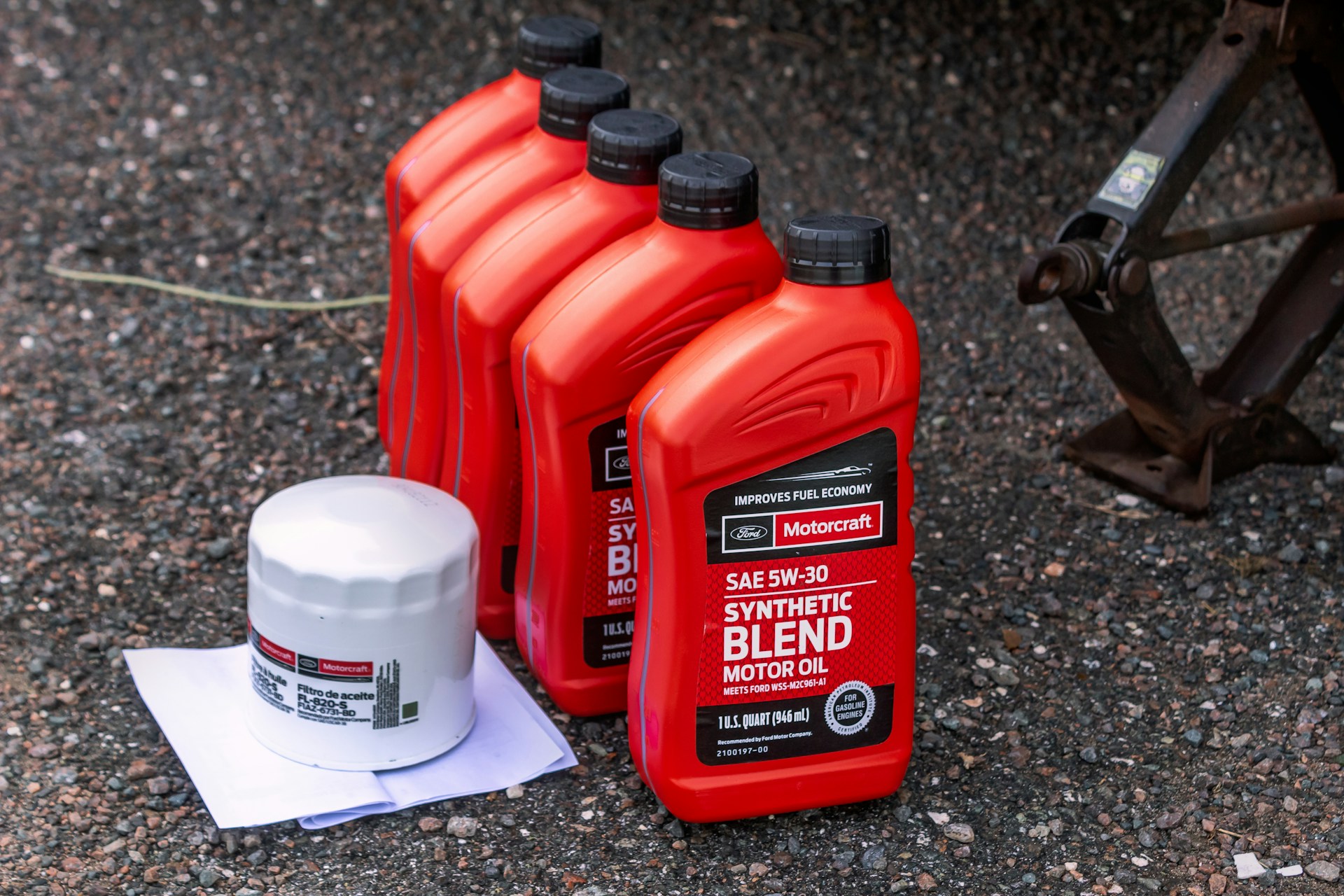
Oil specification matters. Generac ships units with conventional 5W-30 for break-in and directs against synthetic during that period; after break-in it recommends synthetic 5W-30 for its air-cooled units. Kohler, Briggs and Cummins each publish their own spec. Use the manual's, not the internet's.
Capacity varies by engine — roughly 1.5 to 2 quarts on small air-cooled units. Overfilling is as harmful as underfilling.
Air filter
Time: 10 minutes. Parts: $10–$20. Inspect annually, replace when dirty. More often in dusty or agricultural settings. Most are a clip-off cover and a drop-in element.
Spark plugs
Time: 20 minutes. Parts: $8–$20. Check the gap against the manual with a feeler gauge — plugs are not reliably gapped from the box. Torque to spec; over-tightening into an aluminum head is an expensive mistake.
Battery replacement
Time: 20 minutes. Parts: $80–$200. Negative off first, positive off second; positive on first, negative on last. Match the manufacturer's group size and type. Write the date on it with a marker.
Cleaning, clearance and inspection
Time: 20 minutes quarterly. Cost: free. Clear vegetation, leaves, snow and mulch from the clearance envelope. Open the enclosure and look for rodent nests, chewed insulation, corrosion and drips. This is the highest-value unpaid work you can do.
Exercise schedule and controller settings
Set the day and time (weekday mid-morning), confirm AUTO, note any maintenance reminders. Read the manual section on your controller — it's fifteen minutes that pays off.
What to leave to a technician
I say this as someone who likes doing his own work.
Valve lash adjustment. Air-cooled engines need valve clearance checked every two years. It requires the engine at a specific position, feeler gauges, the correct spec, and knowing what "correct" feels like. Set it wrong and you get hard starting, lost power, or burnt valves and a cylinder head. Cost to have done: $150–$300. Worth every dollar.
Anything on the transfer switch. This is live service-entrance equipment. The conductors ahead of the switch are energized even with your main breaker off, because they come from the utility. People die doing this. It's also permitted work in most jurisdictions.
Gas line and pressure work. Requires a licensed gas fitter in nearly every jurisdiction, plus a manometer and knowing what pressure the unit needs under full load. A leak is a fire; low pressure is a generator that starves during the outage.
Controller diagnostics and firmware. Dealers have manufacturer software and service bulletins you can't get. Chasing an intermittent fault without them is guessing with expensive parts.
Alternator, stator, rotor and voltage regulation faults. Specialized testing, specialized parts.
Anything under warranty where documentation matters. If the unit is in its warranty period and something significant fails, have the authorized dealer handle it. A self-attempted repair that goes wrong can turn a covered failure into a denied claim.
The warranty question, answered properly
Doing your own routine maintenance does not void your warranty. Under the Magnuson–Moss Warranty Act, a manufacturer generally can't require you to use their dealer for routine maintenance, or require branded parts, as a condition of warranty coverage.
What they can do is deny a claim if:
- required maintenance wasn't performed, or
- you can't document that it was, or
- improper maintenance caused the failure, or
- non-conforming parts or fluids caused the failure.
So if you DIY, protect yourself:
- Keep every receipt — oil, filters, plugs, battery — with dates.
- Log the work: date, hour-meter reading, what was done, what parts and fluids.
- Use parts meeting the manufacturer's specification. Equivalent aftermarket filters are legally fine; the burden is on you if one causes a failure.
- Photograph the hour meter at each service.
- Still have a tech do the biennial valve adjustment, and keep that invoice — it's evidence the machine has had professional eyes on it.
The honest cost comparison
| Full DIY | Hybrid (recommended) | Full service contract | |
|---|---|---|---|
| Annual parts | $60–$90 | $60–$90 | included |
| Annual labor | $0 | $0 | $300–$500 |
| Biennial valve lash | risky if self-done | $150–$300 every 2 yrs | included |
| Priority during outages | none | none | yes |
| Documentation quality | your discipline | good | best |
| 10-year total | ~$800 | ~$2,000 | ~$4,000 |
The hybrid is what I'd do and what I recommend: handle oil, filters, plugs, battery and inspection yourself; pay a tech every two years for valve lash and a proper diagnostic once-over. You capture most of the savings and none of the real risk.
The full service contract still makes sense for two groups: people who won't reliably do the work, and people in storm-prone regions who value priority service when everyone needs it at once.
Ten tools that cover the DIY jobs
Socket set · torque wrench · feeler gauges (for plug gap) · oil drain pan · funnel · shop rags · wire brush (battery terminals) · multimeter · work light · the manufacturer's manual (download the PDF for your exact model)
Total investment maybe $150, most of which you probably own.
The three habits that matter most
- The 25-hour / first-year break-in oil change. More engine life than anything else on this list.
- The battery, replaced every three to four years on a schedule. More prevented no-starts than everything else combined.
- Quarterly eyes on the machine. Rodents, leaks and blocked airflow are cheap to catch and expensive to discover during an outage.
Do those three and you're ahead of most generator owners, whoever turns the wrench. The full schedule is in the maintenance checklist.
Maintenance kits by generator sizeAd
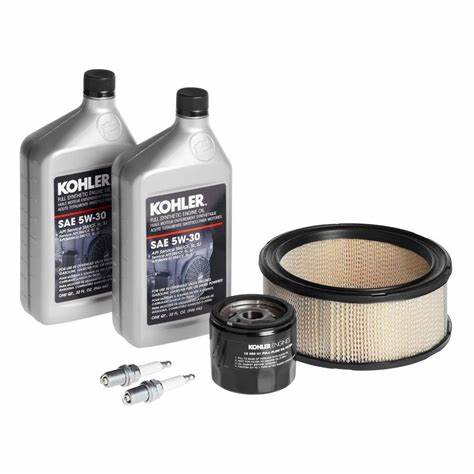
Genuine kits for Generac and Kohler units, plus the battery pad that prevents most winter no-starts.
Paid links · As an Amazon Associate, GenDealers earns from qualifying purchases.