
Let me start with the conclusion, because it saves people a lot of agonizing.
The thing that matters more than the brand
Every one of these six brands makes an air-cooled standby generator that will reliably run your house. They all use similar architecture — a V-twin engine, an alternator, a controller, an acoustic enclosure — and they all work.
What varies more than the machines is who installs and services them where you live.
A Kohler installed by an excellent local dealer who answers the phone after a hurricane will serve you better than a Generac installed by whoever was cheapest. And the reverse is equally true. The generator sits in your yard for twenty years; the relationship with the person who services it is the part you actually experience.
I've serviced all six of these brands, and I could not tell you which one produced the most failed units — because the failures I get called to are overwhelmingly about maintenance and batteries, not about badges.
So: pick two or three brands you're comfortable with, then choose based on the dealer. How to evaluate a dealer.
With that said, the brands do differ, and here's how.
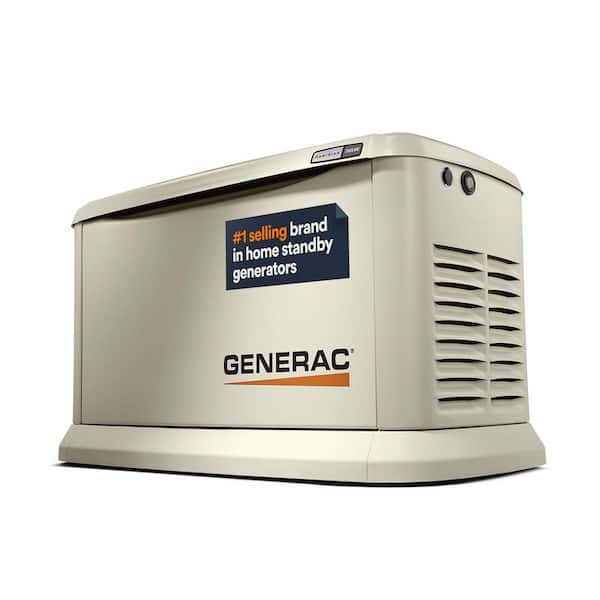
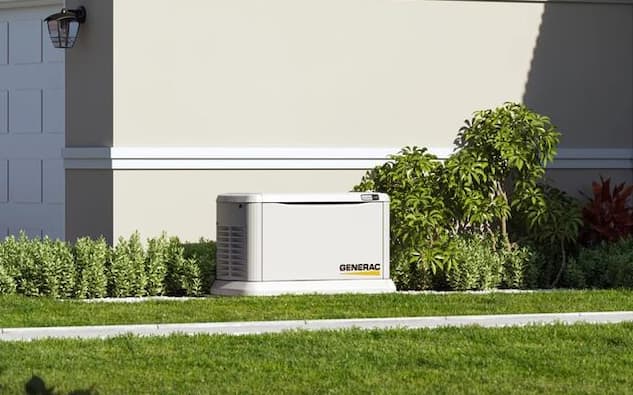
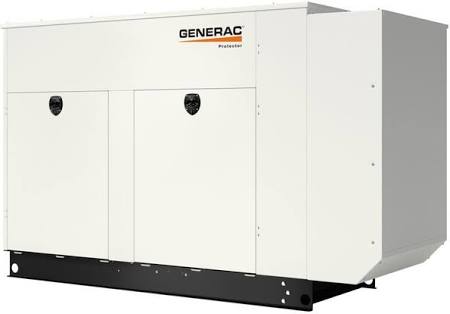
Generac
The market leader in North America by a wide margin, and the brand most people mean when they say "whole house generator."
Range: 7.5–26 kW air-cooled (Guardian), plus liquid-cooled Protector series above that.
What's genuinely good:
- The dealer and parts network. This is Generac's real advantage and it's not close. After a regional storm, the difference between a brand with dense local coverage and one without is measured in days.
- Mobile Link monitoring is the most mature app in the category, and the current Next Generation Guardian units build cellular, Wi-Fi and Bluetooth into the controller — no add-on module.
- Aluminum enclosures on most models, which resist corrosion better than steel.
- Broadest model range, so there's usually a unit that fits exactly.
- Widest retail availability, which keeps pricing competitive.
What to weigh:
- 5-year limited warranty on most Guardian models — shorter than Briggs or Champion on paper.
- Market dominance means the most units in the field and therefore the most complaints online; judge that in proportion.
- Sound levels around 66–67 dBA on many models are middling for the class.
Right for: most people, most places. If you want the safest choice on service availability, this is it. Honeywell is the same platform at a different price.
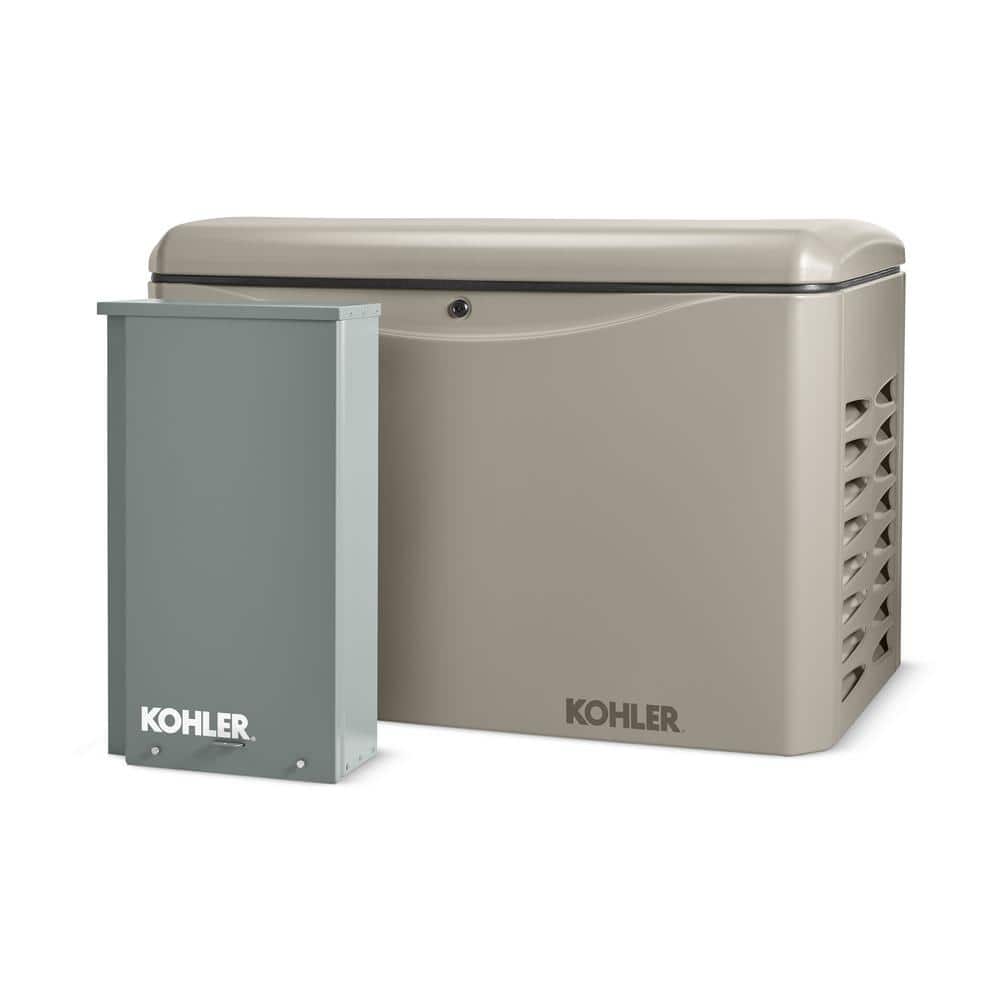
Kohler
The premium alternative, with a genuine reputation for build quality.
Range: 10–26 kW air-cooled, plus liquid-cooled models.
What's genuinely good:
- Build quality and finish. Kohler's engines and enclosures feel like premium equipment, and the corrosion-resistant enclosures hold up.
- OnCue Plus monitoring with Wi-Fi or Ethernet — the wired option is genuinely useful where you can run a cable.
- Fast response times on transfer.
- Strong reputation in the trade among installers who work on both.
What to weigh:
- Smaller dealer network than Generac. Check local service coverage carefully before buying — this is the main practical tradeoff.
- Typically higher price for comparable output.
- No cellular in OnCue Plus, so monitoring depends on your home network — and your router is off during an outage unless it's on a backed-up circuit.
Right for: buyers who value build quality and have a strong local Kohler dealer.
Briggs & Stratton
The warranty story, and a serious product.
Range: 13, 18, 22, 26 kW (PowerProtect).
What's genuinely good:
- 7-year comprehensive warranty, with a 10-year option through dealers — among the strongest terms in the category, and comprehensive is the important word.
- Galvanneal steel, powder-coated enclosures — durable, though steel rather than aluminum matters in coastal air.
- Symphony II load management integrates well.
- InfoHub cellular monitoring, independent of your home network.
- Around 62–66 dBA on several models — competitive.
What to weigh:
- InfoHub is typically a paid subscription after an initial period. Calendar the renewal; a lapsed subscription is an unmonitored generator.
- Smaller dealer network than Generac.
- Steel enclosures need more attention in salt air than aluminum. See coastal maintenance.
Right for: buyers who prioritize warranty coverage and have a capable local dealer.
Cummins
The commercial engine name, applied to residential standby.
Range: 13, 17, 20 kW air-cooled (QuietConnect), plus a large liquid-cooled line.
What's genuinely good:
- Engineering pedigree. Cummins is a serious industrial engine company and it shows.
- 65 dBA on the RS20A — quiet for the class.
- Aluminum enclosure, good for coastal.
- Connect Cloud cellular monitoring included.
- 5-year / 2,000-hour warranty with labor and travel in years 1–2 — read that as genuinely strong, because labor coverage is what you actually claim.
What to weigh:
- Smallest residential dealer network of the six in many regions. The brand's strength is commercial; residential support varies a lot by area.
- Higher price — commonly $11,000–$15,000 installed.
- Fewer residential model options.
Right for: buyers with a strong local Cummins dealer, or those who already have a Cummins relationship.
Champion
The value entrant, and more serious than the price suggests.
Range: 12.5 and 14 kW (aXis) in the whole-home standby line, plus a large portable and inverter range.
What's genuinely good:
- 62 dBA on the 14 kW aXis — the quietest in class. If noise is your constraint, this is a real advantage.
- 10-year limited warranty, the longest headline term here.
- Lowest price of the six — roughly $8,000–$11,000 installed for the 14 kW.
- aXis controller with power-line-carrier communication to the transfer switch, which simplifies wiring.
What to weigh:
- Narrow standby range — no large air-cooled options.
- Steel enclosure.
- Newest to the standby category, with the least field history at twenty-year timescales.
- Smallest service network for standby specifically.
- The warranty is limited, not comprehensive — read the terms.
Right for: budget-conscious buyers, and anyone whose primary constraint is noise.
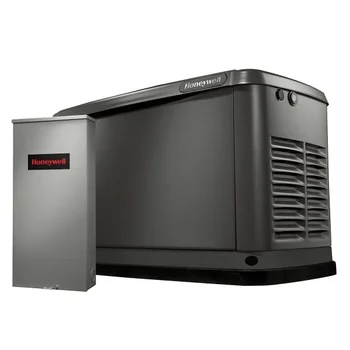
Honeywell
Honeywell-branded home standby generators are built by Generac. Same platform, same engines, same parts, and monitoring through Generac's Mobile Link.
Range: 10–26 kW.
What's genuinely good:
- Generac engineering with Generac parts availability.
- Often lower priced than the equivalent Generac-badged unit — commonly $9,500–$13,500 installed.
- Aluminum enclosures.
- Widely sold through warehouse clubs, which is where the price advantage usually comes from.
What to weigh:
- 5-year limited warranty.
- Service goes through Generac dealers; confirm your local dealer supports Honeywell-badged units (most do).
- Around 66–67 dBA — same as the Generac equivalents.
Right for: buyers who want Generac's platform and network at a lower price. See the Costco Honeywell 18 kW review.
The full comparison table
| Generac Guardian | Kohler | Briggs PowerProtect | Cummins QuietConnect | Champion aXis | Honeywell | |
|---|---|---|---|---|---|---|
| Air-cooled range | 7.5–26 kW | 10–26 kW | 13, 18, 22, 26 kW | 13, 17, 20 kW | 12.5, 14 kW | 10–26 kW |
| Warranty | 5 yr limited | 5 yr limited | 7 yr comprehensive (10 yr dealer option) | 5 yr / 2,000 hr, labor + travel yrs 1–2 | 10 yr limited | 5 yr limited |
| Sound at 23 ft | ~66–67 dBA | ~65 dBA | ~62–66 dBA | 65 dBA | 62 dBA | ~66–67 dBA |
| Enclosure | Aluminum | Corrosion-resistant | Galvanneal steel | Aluminum | Steel | Aluminum |
| Monitoring | Mobile Link (cellular + Wi-Fi + BT) | OnCue Plus (Wi-Fi / Ethernet) | InfoHub (cellular, subscription) | Connect Cloud (cellular) | aXis app (Wi-Fi) | Mobile Link |
| Dealer network | Largest | Moderate | Moderate | Smallest residential | Small | Via Generac |
| Typical installed | $9,500–$14,000 | $10,000–$15,000 | $10,000–$14,000 | $11,000–$15,000 | $8,000–$11,000 (14 kW) | $9,500–$13,500 |
Installed prices are 2026 ranges for a natural-gas installation with a 200-amp service-rated transfer switch, permits and a standard gas run. Long trenches, panel upgrades and propane tanks push all of them up — see the real cost.
Warranty, read properly
Headline warranty years are the most misleading number in this category. Three questions matter more:
Comprehensive or limited? A comprehensive warranty covers the whole unit. A limited warranty covers specified components on a declining schedule — often engine and alternator for the full term, but other parts for less. Briggs' 7-year comprehensive and Champion's 10-year limited are not the same kind of promise.
Does it include labor and travel? This is the practical one. Parts are often the cheap half of a repair; the service call is what costs. Cummins including labor and travel in years 1–2 is a meaningful, concrete benefit.
What voids it? Missed maintenance is the common one. Some manufacturers accept owner-performed maintenance with documented records; others require dealer service. Ask before you plan to DIY — see DIY maintenance.
And ask whether the warranty is transferable to a subsequent owner. It's a real benefit at resale — see does a generator increase home value.
Noise, compared honestly
The full field spans 62–67 dBA at 23 feet — about 5 dBA. That's audible but modest.
What actually determines how loud your generator seems:
- Distance. Sound falls about 6 dBA every time distance doubles. Moving a unit from 15 to 30 feet from a bedroom window beats any brand difference on this list.
- When it exercises. Most noise complaints are about the weekly cycle, not outages. A weekday mid-morning schedule resolves most of them at no cost.
- What's between it and the listener. The house itself is the most effective barrier available.
So: if you're in a tight lot with an unavoidable placement near a neighbor, Champion's 62 dBA is a genuine advantage. Otherwise, placement and scheduling matter more than the badge. See noise levels and sound enclosures.
Monitoring compared
The functional difference is cellular versus Wi-Fi, and it matters more than it sounds.
A generator sits 40+ feet from the house, behind an exterior wall, inside a metal enclosure — a hostile Wi-Fi environment. And your router is off during an outage unless it's on a backed-up circuit, so Wi-Fi monitoring goes dark exactly when you want it.
Cellular: Generac (current Next Gen units), Briggs InfoHub, Cummins Connect Cloud. Wi-Fi or Ethernet: Kohler OnCue Plus, Champion aXis.
If you choose a Wi-Fi-monitored unit, put your modem and router on a UPS or a backed-up circuit. It's a $100 fix that makes the monitoring work and keeps you online during outages — worth doing regardless. Full comparison: monitoring systems compared.
Which brand is right for you
Choose Generac if you want the widest service network and parts availability, mature cellular monitoring, and the safest choice on support. This is the default recommendation for most homeowners.
Choose Kohler if build quality matters to you and you've confirmed a capable local dealer. Verify service coverage before you commit.
Choose Briggs & Stratton if warranty terms are your priority — 7 years comprehensive is the strongest real coverage here — and you have a good dealer. Budget for the InfoHub subscription.
Choose Cummins if you have a strong local Cummins dealer, or you value the engineering pedigree and the labor-inclusive early warranty, and the price premium is acceptable.
Choose Champion if budget is the binding constraint, or noise is — 62 dBA and a 10-year term at the lowest price is a genuine value proposition. Accept the narrower range and smaller service network.
Choose Honeywell if you want Generac's platform and network at a lower price, and you've confirmed your local Generac dealer services the Honeywell badge.
And in every case: get three itemized quotes, confirm each includes a real load calculation, check what transfer switch is in each, and weight the dealer heavily. The machine is the easy part.
Next: installation and sizing for how to read those quotes, and top standby generators for 2026 for specific model recommendations.
Units from the brands comparedAd
Current whole-home listings across Generac, Kohler and Honeywell.
Paid links · As an Amazon Associate, GenDealers earns from qualifying purchases.