

The most uncomfortable conversation in this business is the one where a homeowner has read "$5,000 generator" online and I'm explaining why the quote in their hand says $12,400.
Nobody is being dishonest. The equipment price is real — you can buy the generator for that. But a standby generator is not an appliance you plug in. It's a permanent addition to your home's electrical service and its gas system, and both of those have to be done by licensed trades, to code, with permits and inspections.
Here's the whole picture, with the line items that don't appear on any product page.
What you're actually buying
A complete installed system in 2026, natural gas, 14–22 kW, typical suburban home:
| Component | Typical range | Notes |
|---|---|---|
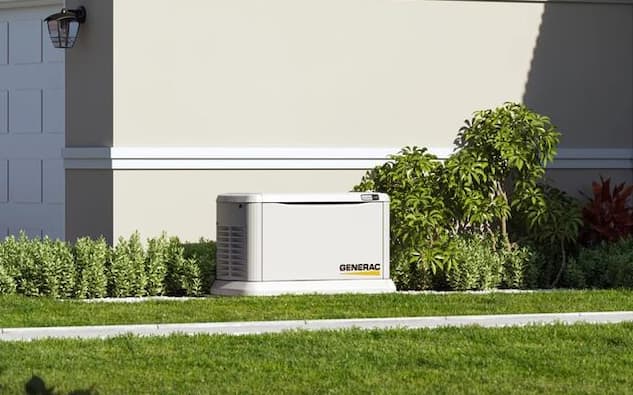
| Generator | $3,500–$6,500 | 30–40% of the project |
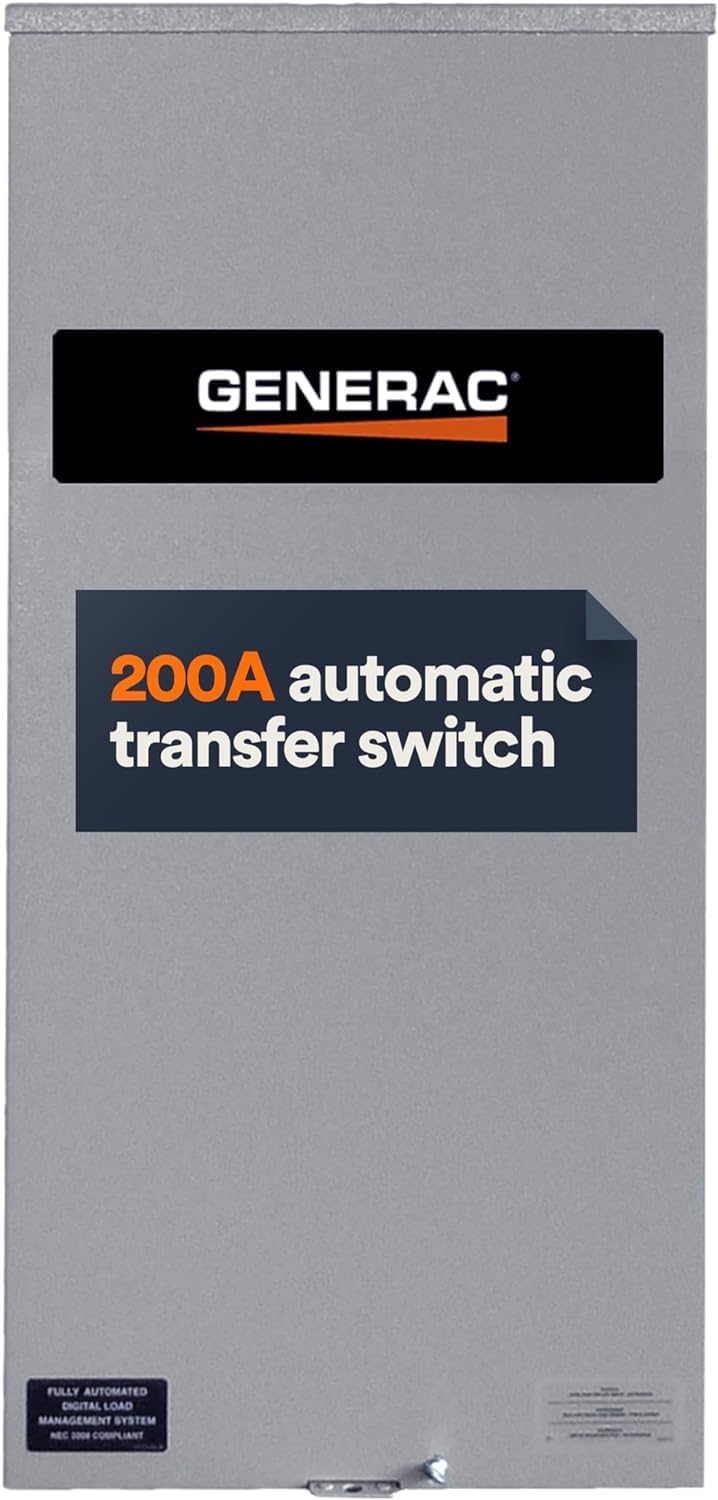
| Automatic transfer switch | $700–$1,800 | Whole-home service-rated costs more than a load-center switch |
| Electrical labor and materials | $1,800–$3,500 | Conduit, conductors, grounding, connection |
| Gas piping and connection | $800–$2,500 | Depends heavily on distance and existing capacity |
| Concrete pad or composite base | $300–$900 | Composite pads are common now |
| Permits and inspections | $150–$800 | Wildly jurisdiction-dependent |
| Typical installed total | $9,500–$15,000 | 14–22 kW, standard conditions |
"Standard conditions" is doing a lot of work in that last row. Here's what breaks it.
The line items that surprise people
Gas line upsizing — $800 to $3,000
The single most common surprise. Your existing gas service was sized for a furnace, water heater, range and dryer. A 22 kW generator adds a load comparable to all of them combined, and it has to run simultaneously with them.
If the existing pipe can't deliver the volume, it gets upsized — sometimes back to the meter, occasionally requiring the utility to upgrade the meter itself. A good installer does this calculation during the site visit. An installer who doesn't ask about your existing gas load is one to be wary of.
Long runs and trenching — $500 to $3,000
Every foot between the generator and the panel is conduit, conductors and labor. Every foot between the generator and the gas meter is pipe. If the run crosses a driveway, a patio or mature landscaping, add restoration.
The math is simple and unforgiving: a unit 15 feet from the panel is a routine install. A unit 90 feet away across a paver patio is a different project.
Electrical service or panel upgrade — $1,500 to $4,000
Older homes with 100-amp service, full panels, or panels from manufacturers no longer considered safe often need work before a transfer switch can be installed. This is a real cost and it isn't the installer inventing scope — you can't land new equipment on a panel that has no room or shouldn't be energized.
The upside: it's an upgrade you'd likely need eventually anyway, and it improves the house.
Propane tank — $1,000 to $3,500 to buy, or rental terms
If you don't have natural gas, you need propane, which means a tank. Two paths:
- Buy the tank ($1,000–$3,500 for a 250–500 gallon tank, installed): you own it, you can shop suppliers on price.
- Lease from a supplier (often low or no upfront cost): but you're generally locked into buying propane from them, at their price.
Over fifteen years, ownership usually wins on total cost if you have competitive suppliers locally. And burying a tank costs meaningfully more than setting one above ground.
Site work — $300 to $2,000
Grading, drainage, a retaining detail, elevating the pad above flood elevation. In flood-prone areas elevation is not optional — see placement in flood-prone areas.
Load management modules — $300 to $800 installed
Often saves money by letting you buy a smaller generator. See sizing myths. Listed here because it's real cost that appears on a quote and surprises people who didn't know what it was.
Permits, inspections and HOA — $150 to $1,500
Electrical permit, mechanical or gas permit, sometimes a zoning or setback review. Some jurisdictions are $150 and a week; others are $800 and two months. HOA architectural review adds time and occasionally a fee. See permits and code requirements.
Concrete and finish work — $300 to $1,500
Composite pads have made this cheaper than it used to be, but a poured pad, a screening wall or restoration of disturbed landscaping is real money.
The recurring costs
This is the half that people genuinely don't budget for, because the sales conversation is about the purchase.
Annual maintenance — $200 to $500
An annual dealer service visit covers oil and filter, air filter, spark plugs on schedule, battery test, valve adjustment at interval, and a load test. DIY on an air-cooled unit is realistic for a mechanically comfortable owner and cuts this to $60–$120 in parts — see DIY generator maintenance.
Whether you do it yourself or not, do it. Deferred maintenance is the leading cause of the generator that doesn't start.
Battery — $80 to $200 every 2 to 4 years
Batteries cause more no-starts than any other single component. Budget for a replacement every three years and don't wait for it to fail.
Exercise-cycle fuel — $30 to $120 a year
A weekly 10–20 minute exercise cycle burns a modest amount of fuel — commonly a few dollars a month on natural gas, somewhat more on propane. It's cheap and it's not optional; the exercise cycle is what keeps the unit healthy.
Monitoring subscription — $0 to $200 a year
Included on many current units, a paid subscription on some. Check before you assume — see monitoring systems compared.
Insurance — $0 to $75 a year
Most homeowner's policies treat a permanently installed generator as part of the dwelling. Confirm with your insurer and check that your coverage limit reflects the added value; some policies see a small premium adjustment.
Repairs outside warranty — averages $100 to $300 a year over the long run
Controllers, voltage regulators, starters and gas valves all eventually fail. In years 1–5 warranty usually covers it; in years 8–15 it's on you. Averaged across ownership, budget a few hundred a year.
Outage fuel — the wild card
This is the one nobody can quote, because it depends on outages you can't predict.
A 22 kW generator at meaningful load burns roughly 2–3 gallons of propane per hour, or the natural-gas equivalent. Over a 24-hour outage that's real money:
| Fuel | Rough cost per day at moderate load |
|---|---|
| Natural gas | $30–$60 |
| Propane | $150–$400 |
| Diesel | $100–$250 |
Natural gas is dramatically cheaper to run and never runs out. Propane is more expensive and finite. That difference compounds over years and it's the strongest practical argument for natural gas where it's available — covered in depth in gas vs propane vs diesel.
For context on how often you'll actually be running: U.S. customers averaged about 11 hours without power in 2024, roughly double the previous decade, with hurricanes driving about 80% of it. Most homeowners run their generator for hours per year, not days — but the years with a major storm are the outliers that justify owning one.
Fifteen-year total cost of ownership
Putting it together for a typical 18–22 kW natural gas installation:
| Conservative | Typical | Higher | |
|---|---|---|---|
| Installed cost | $9,500 | $12,500 | $16,000 |
| Annual maintenance × 15 | $3,000 (DIY-assisted) | $5,250 | $7,500 |
| Batteries (4–5 over 15 yr) | $400 | $600 | $900 |
| Exercise fuel × 15 | $600 | $1,050 | $1,800 |
| Monitoring × 15 | $0 | $600 | $2,000 |
| Out-of-warranty repairs | $800 | $2,000 | $4,000 |
| Outage fuel (15 years) | $500 | $1,500 | $5,000 |
| 15-year total | ~$14,800 | ~$23,500 | ~$37,200 |
Call it $17,000–$26,000 for most homes — meaningfully more than the purchase price, and roughly $1,100–$1,750 a year of ownership.
That's the honest number. It's also, for many households, defensible: a single frozen-pipe event or a freezer of spoiled food during a multi-day outage runs into the thousands, and for anyone with medical equipment or a sump pump the calculation isn't financial at all.
The tax credit is gone
An important 2026 update: the Section 25D Residential Clean Energy Credit terminated for property placed in service after December 31, 2025. Standby generators were never broadly eligible anyway, but the credit did apply to battery storage — which was the more relevant path for homeowners weighing solar-plus-storage against a generator.
If you were counting on a federal credit to offset a backup power project, that math has changed. Check current state and utility incentives instead; several states and utilities still offer storage rebates.
How to control the cost
- Get three quotes, and require each one to be itemized. Equipment, transfer switch, electrical, gas, pad, permits, load management, as separate lines. This is the single most effective thing you can do.
- Ask specifically about gas capacity early. If the answer requires upsizing, better to know at quote stage.
- Minimize the distance from panel and gas meter, within code clearances. Every foot is money.
- Size honestly, with load management. Most homes don't need 26 kW. See sizing myths.
- Buy off-season. Quotes and lead times in February are better than in September.
- Consider DIY maintenance if you're comfortable — it's the largest controllable recurring cost.
- Prefer natural gas where it's available. The fuel-cost difference over fifteen years dwarfs most equipment differences.
- Don't buy the cheapest install. An installer who is $3,000 under everyone else is either omitting scope you'll pay for later, or cutting corners you'll pay for worse.
The bottom line
Budget $12,000–$15,000 for a typical whole-home installation and $500–$900 a year to own it. If your quote is much lower, find out what's missing. If it's much higher, find out what's unusual about your site — it may be legitimate (a long run, a service upgrade, a buried propane tank), and if so it's better to understand it than to shop for someone who'll pretend it isn't there.
Financing options and whether leasing ever makes sense: financing a standby generator.
Equipment costs for comparisonAd
Current pricing on whole-home units and a service-rated transfer switch.
Paid links · As an Amazon Associate, GenDealers earns from qualifying purchases.