
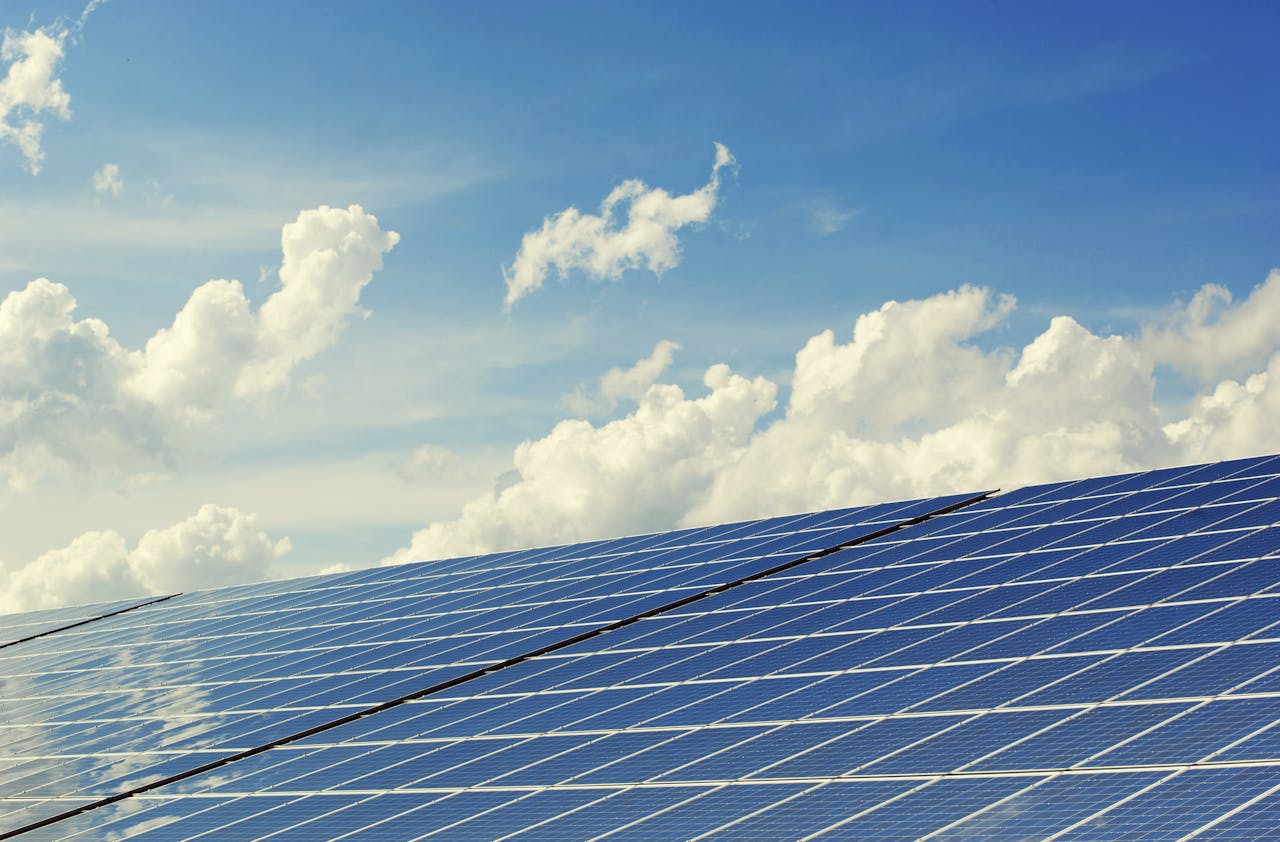
I get asked this more every year, and the honest answer has changed as batteries got better and cheaper. It is no longer a silly question. Solar with storage is a real backup solution, and for some households it’s the better one.
But it fails in a specific, predictable way that salespeople gloss over, and the failure mode is exactly the outage you most need to survive: the multi-day one, in winter, with snow on the panels. So let’s do the arithmetic rather than the vibes.
The one number that decides it
A generator is a power device with effectively unlimited energy. A battery is an energy device with limited capacity.
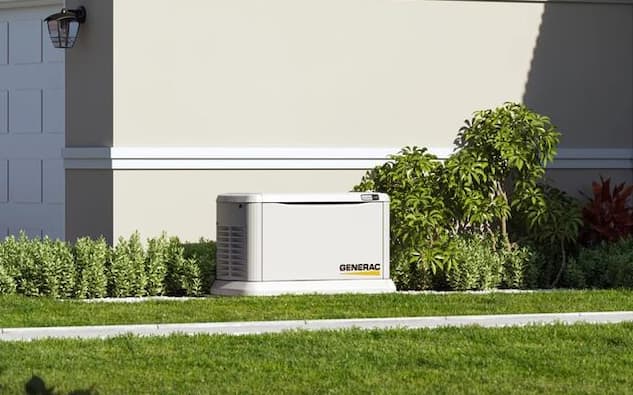
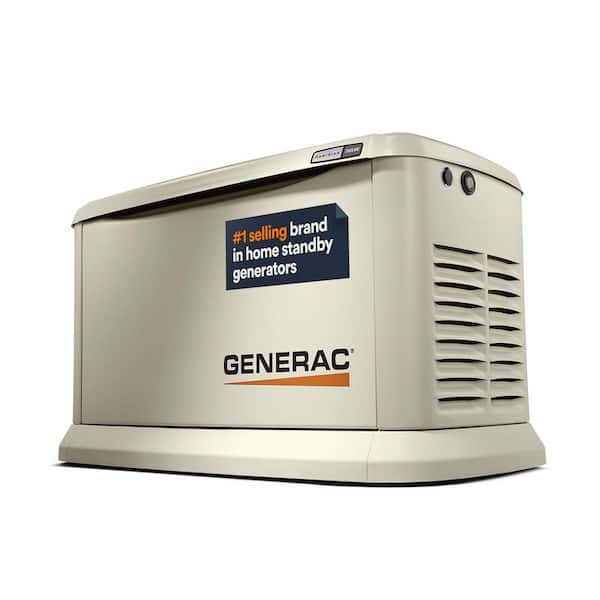
- A 22 kW standby generator on natural gas delivers up to 22 kilowatts, continuously, for as long as the gas keeps flowing — days, weeks, whatever the outage lasts.
- A 13.5 kWh home battery delivers roughly 5–11 kW of power (depending on model) and holds 13.5 kilowatt-hours of energy. When it’s empty, it’s empty until the sun comes back.
So: how long does 13.5 kWh last? A typical American home uses about 30 kWh a day. Backing up the whole house, that battery is gone in 10 to 11 hours. Cut to essentials — refrigerator, freezer, furnace blower, well pump, internet, lights, phones — and you’re at 8–12 kWh a day, so roughly 24 hours. Two batteries, two days.
With sun, the equation changes completely. A 8 kW solar array in decent conditions produces 30–45 kWh on a clear summer day, which refills the battery and runs the house at the same time. That’s the indefinite-outage scenario people are sold, and in July in Arizona it’s true.
Now put snow on the panels in a January ice storm, when your heating load is highest and daylight is shortest. Production may be near zero for days. That is precisely when the generator does not care.
The 2026 tax change nobody should miss
This is the single most important update to this article, and a lot of what you’ll read online is now wrong.
The Residential Clean Energy Credit (Section 25D) — the 30% federal credit homeowners claimed on purchased solar and battery systems — was terminated for systems placed in service after December 31, 2025, under the legislation signed on July 4, 2025. There is no step-down from 30% to 26% to 22% as in previous expirations; it ended outright.
What that means in practice:
- If your system was completed and placed in service in 2025, you claim it on your 2025 return, and unused credit can generally carry forward.
- If you buy a solar-plus-battery system in 2026 as a homeowner-owned purchase, there is no federal 25D credit.
- Systems installed under a lease or power purchase agreement can still qualify for the commercial investment credit (Section 48E), which remains available for standalone storage — the benefit flows to the system owner, and may or may not be passed to you in the pricing.
- State and utility incentives still exist and in some states are substantial. Check your state energy office and your utility before assuming anything.
A $40,000 solar-plus-storage system that effectively cost $28,000 after the credit in 2025 costs $40,000 in 2026. That swing is larger than the entire price of a standby generator, and it changes the comparison materially.
Cost per outage-hour: an honest comparison
| Solar + 2 batteries | Standby generator (22 kW) | |
|---|---|---|
| Typical installed cost, 2026 | $30,000–$55,000 | $10,000–$14,000 |
| Federal credit (homeowner-purchased) | None in 2026 | None (never had one) |
| Backup capacity | ~27 kWh stored + daytime generation | Unlimited on natural gas |
| Winter storm, panels covered | 1–2 days at essentials | Indefinite |
| Runs central AC | Depends on inverter surge rating | Yes |
| Runs deep well pump | Often needs a soft starter | Yes, with correct sizing |
| Noise | Silent | 62–67 dBA |
| Fuel cost during outage | $0 | ~$20–$40/day natural gas |
| Everyday value when the grid is up | Real: bill savings, possible arbitrage | None |
| Maintenance | Essentially none for 10–15 years | ~$300–$500/year |
| Lifespan | 10–15 years (battery), 25+ (panels) | 20–30 years |
Notice the row that decides it for a lot of people: everyday value. A generator does nothing 364 days a year. Solar shaves your electric bill every single day. If you were buying solar anyway, adding storage to get backup is a much smaller marginal decision than buying storage purely for outages.
And notice the row that decides it for everyone else: winter storm, panels covered.
Where solar-plus-storage genuinely wins
I want to be fair here, because the generator industry tends not to be.
- Frequent short outages. If your utility drops for 20 minutes twice a month, a battery is a vastly better experience: instant, silent, no engine start, no exercise cycle, no maintenance.
- Summer outage regions. Hurricane-season Florida with a clear sky the day after the storm is close to the best case for solar backup.
- Noise-sensitive sites. Dense neighborhoods, HOAs with noise covenants, homes where a 65 dBA machine 20 feet from a bedroom window is a genuine problem.
- No gas service. If you’d otherwise need a propane tank, permits and a trench, the cost gap narrows.
- Air-quality and emissions priorities. A battery emits nothing at the house.
- Homes with modest loads. A well-insulated house with a heat pump, no well pump and no giant AC compressor is exactly the load profile batteries handle well.
Where the generator still wins
- Multi-day outages. The 2024 hurricane season pushed the U.S. average to about 11 hours of interruption per customer — nearly double the prior decade — and in the hardest-hit states it was far worse. South Carolina averaged 53 hours. Batteries don’t cover 53 hours without sun.
- Winter. Short days, snow cover, and peak heating load at the same time.
- Big motor loads. Central AC compressors and deep well pumps have starting surges that many battery inverters can’t supply without a soft starter or careful staging.
- Cost per delivered kilowatt-hour. It isn’t close.
- You’re not home. Both work unattended, but the generator doesn’t run out.
The hybrid: what I’d actually build
If the budget allows, the best backup system I know is a battery for the first hours and a modest standby generator for the long haul:
- The battery covers every short outage silently and instantly — no engine, no neighbors, no exercise cycle running while you’re on a call.
- Solar recharges the battery daily when weather permits, stretching the generator’s fuel and runtime.
- The generator handles the multi-day event, the winter storm, and the heavy motor loads.
- Because the battery and solar carry the base load, you can often size the generator smaller — a 14 kW instead of a 22 kW — which trims cost and fuel.
This needs coordinated design: the battery inverter, the transfer switch and the generator have to be configured to work together rather than fight over the same circuits. Not every installer can do it. Ask specifically whether they’ve commissioned a generator-plus-storage system before, and ask to see one.
A word on portable power stations
Jackery, EcoFlow, Anker and Bluetti sell lithium “solar generators” from 1 to 5 kWh. They are excellent for phones, laptops, CPAP machines, a modem and some lights — genuinely useful, silent, safe indoors, and worth owning. They are not house backup. A 2 kWh unit holds about one-fifteenth of what a home battery holds, and won’t run a well pump or a central AC compressor at all. Buy one as a supplement, not as a plan.
So — can solar replace a standby generator?
Yes, if: your outages are short and frequent, you live somewhere sunny, your loads are moderate, you value silence and everyday bill savings, and you can absorb the 2026 price without the federal credit.
No, if: you face multi-day outages, live where winter storms take the grid down, need to run central air or a deep well pump, or want the cheapest reliable coverage per hour of outage.
Best of both: battery for the common case, generator for the bad one. If you’re building new or doing a major renovation, plan for both even if you only install one now — running the conduit and leaving the panel space costs almost nothing today and thousands later.
Want to know what size generator would fit your loads? Run the numbers in our sizing calculator, then compare what a battery would have to store to cover the same house.
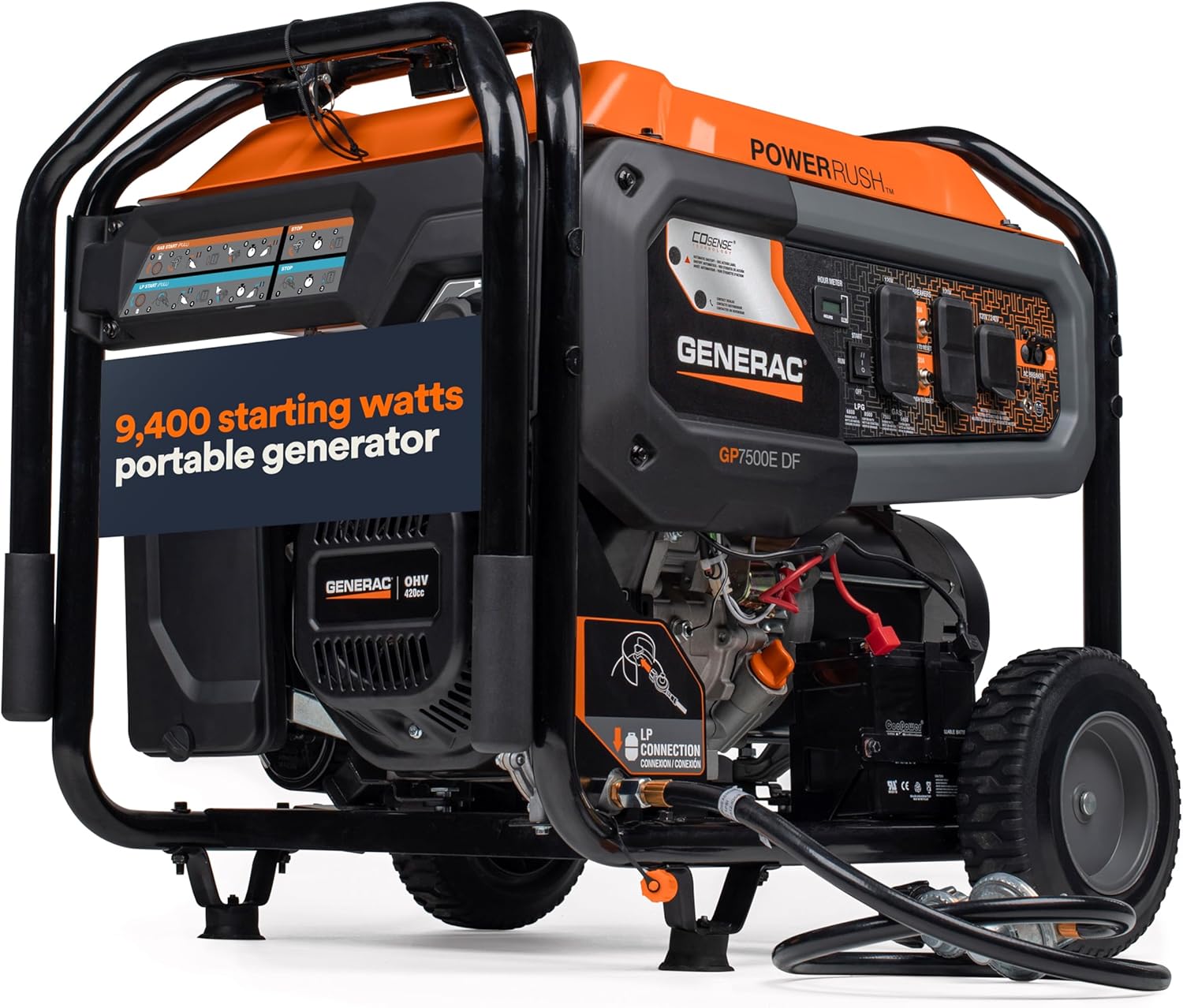
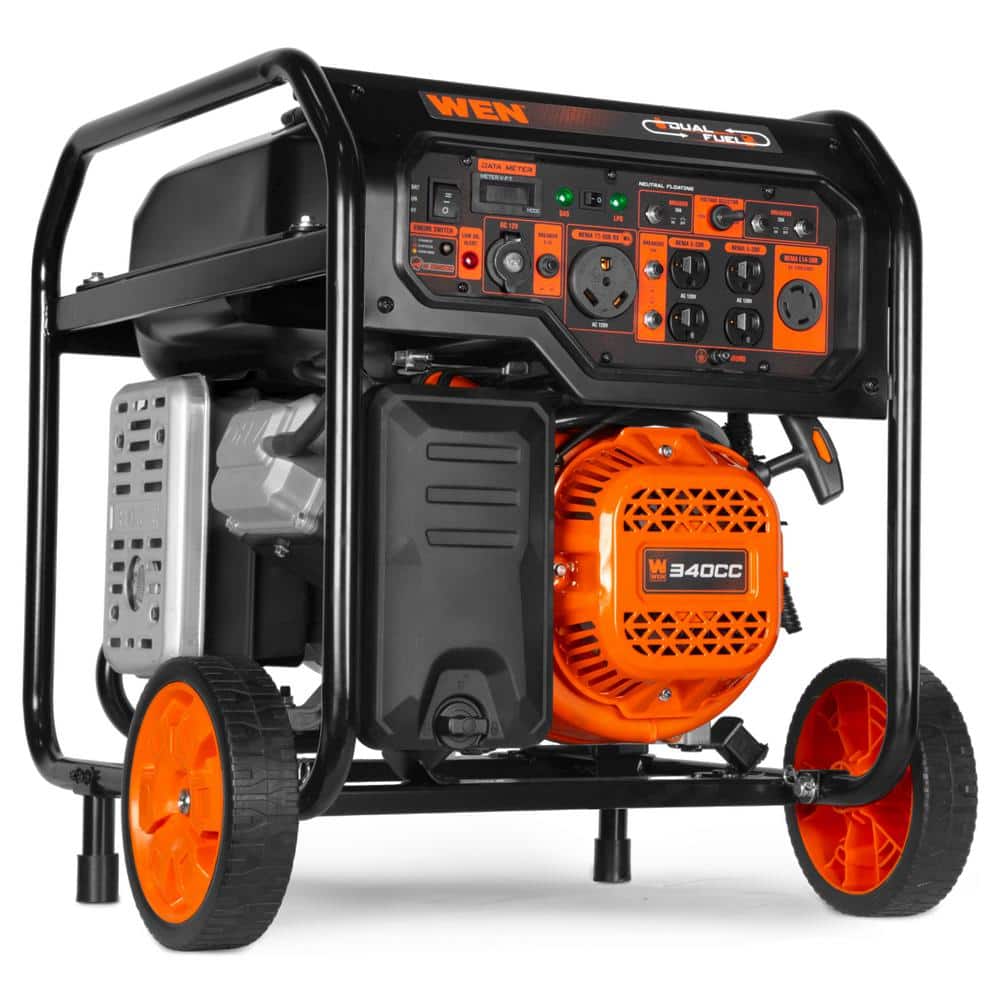
Solar, portable and standby optionsAd
From a folding panel to a whole-home unit — the pieces this comparison covers.
Paid links · As an Amazon Associate, GenDealers earns from qualifying purchases.