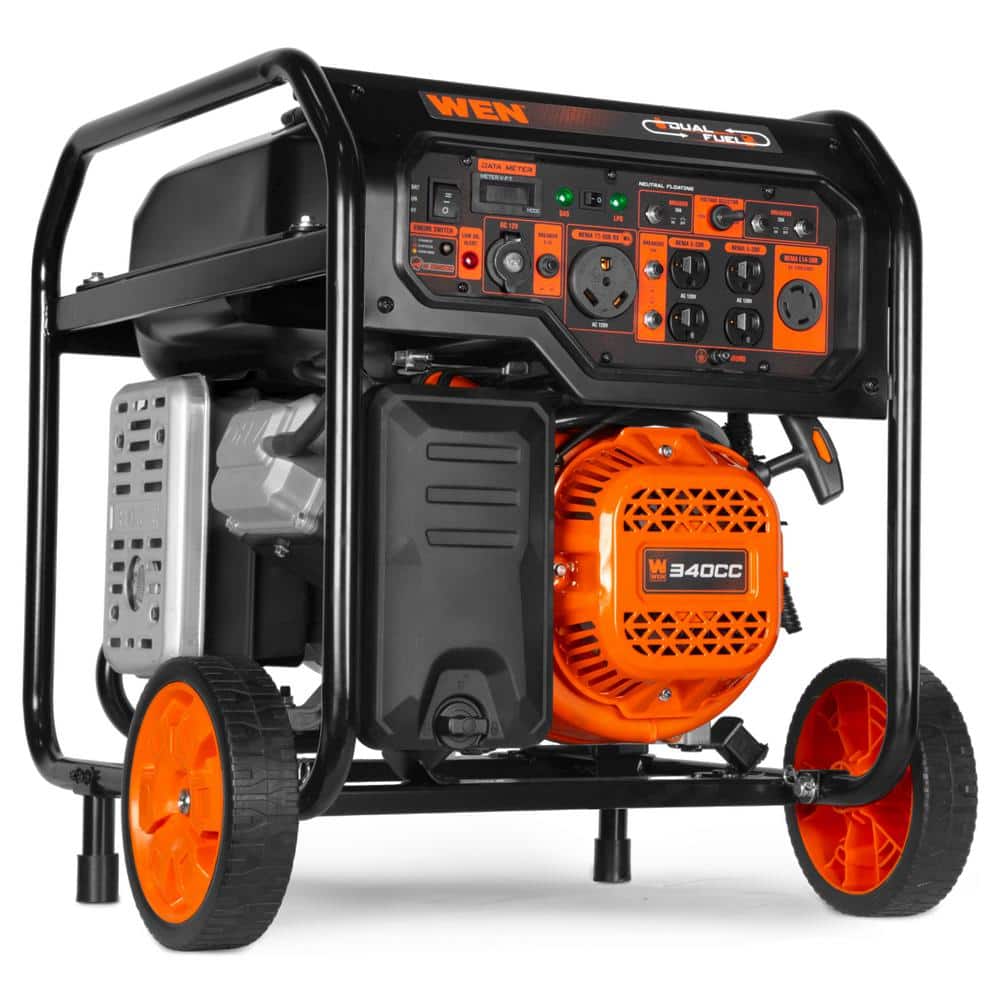

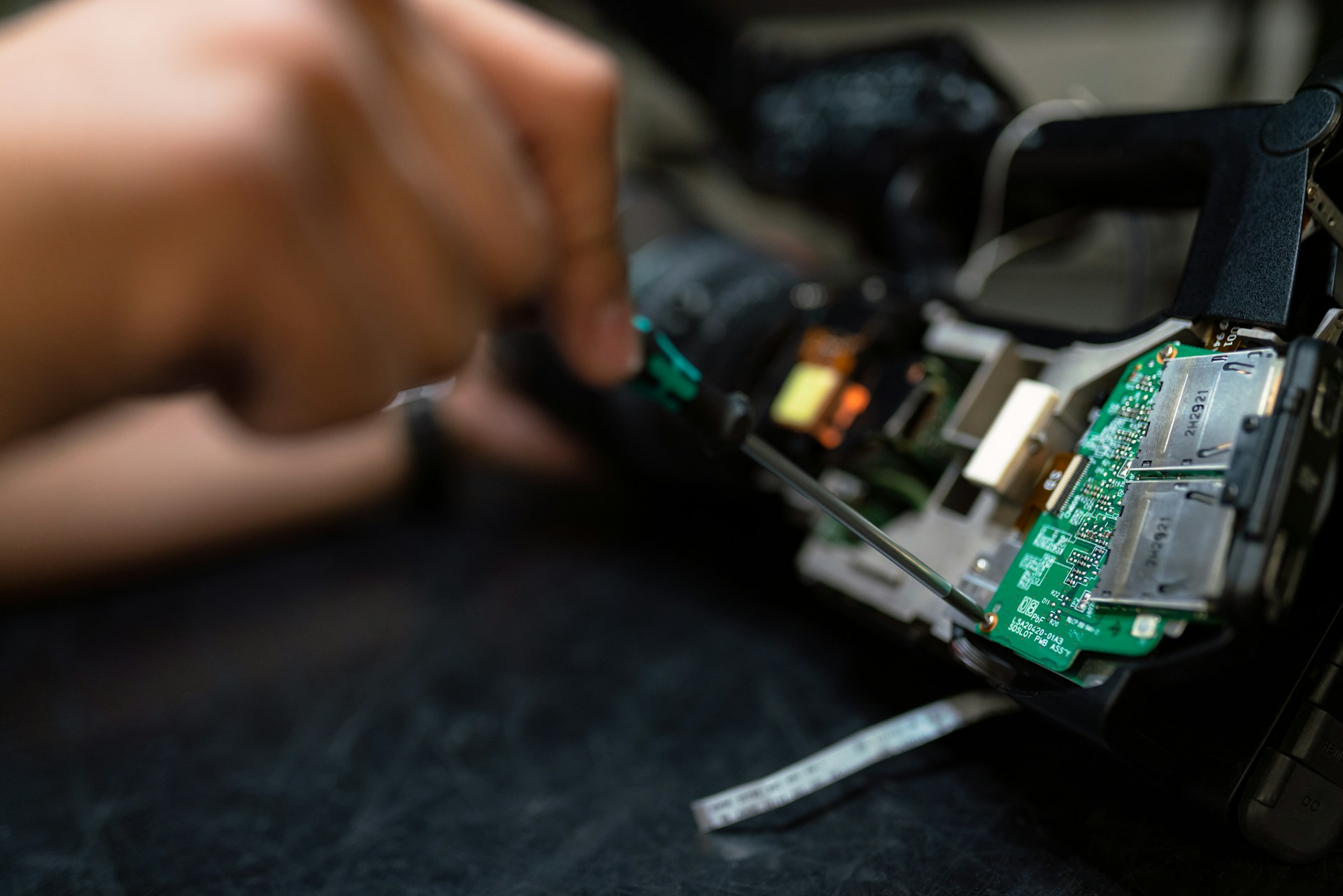
I once replaced a furnace control board that a homeowner had killed with a $600 portable generator during a three-day outage. He'd done everything else right — proper transfer switch, correct sizing, safe placement. The generator just made bad power, and the furnace's variable-speed board didn't tolerate it.
That's what this article is about: what "clean power" actually means, which generators make it, and what to do if yours doesn't.
What power quality means
Utility power arrives as a smooth sine wave: 120 volts RMS per leg, 60 hertz, alternating direction 60 times a second. Household electronics are designed around that assumption.
Generators produce AC by spinning a rotor inside an alternator, and how closely the output resembles a clean sine wave depends on the alternator design, the voltage regulation system, and how steady the engine speed is. Three numbers describe it:
Total harmonic distortion (THD) — how much the waveform departs from a pure sine, expressed as a percentage. Distortion appears as harmonics: multiples of 60 Hz riding on top of the fundamental. Under 5% is generally considered safe for household electronics; under 3% is excellent; above 8% is where trouble starts.
Voltage regulation — how well output voltage holds steady as load changes. When your well pump starts, does the voltage sag to 100 V for a moment? Sags and the recovery overshoot are hard on switching power supplies.
Frequency stability — how well the engine holds 3,600 rpm (which produces 60 Hz) as load varies. Frequency wander affects motor speed and anything using line frequency for timing.
What the different generator types deliver
| Type | Typical THD | Voltage regulation | Suitable for sensitive electronics? |
|---|---|---|---|
| Standby, air-cooled (major brands) | Under 5% | Good | Yes |
| Inverter generator | Under 3% | Excellent | Yes — best available |
| Conventional portable | 8–15% | Fair to poor | Risky |
| Very cheap portable | 15–25% | Poor | No |
| Utility grid (reference) | 2–5% | Excellent | Yes |
Notice that standby generators are in the same territory as the grid. This is one of the underappreciated advantages of a permanent installation: you don't have to think about it. Generac markets its alternator as "True Power" with under 5% THD; the other major brands publish comparable figures.
Inverter generators achieve their sub-3% figures differently: the engine's raw output is rectified to DC and then electronically re-synthesized into a very clean AC waveform. That's also why they can throttle down at light load — the engine speed no longer has to hold 3,600 rpm to produce 60 Hz.
Conventional portables are the problem category. The alternator output goes to the outlets more or less directly, so waveform quality depends on engine speed stability, and distortion in the 8–15% range is normal.
What's actually vulnerable
Not everything cares. Resistive loads — incandescent bulbs, toasters, resistance heaters, older water heaters — are essentially immune to distortion. Simple induction motors are fairly tolerant.
What's vulnerable, roughly in order:
Variable-speed HVAC and furnace control boards. The most expensive common casualty, and the one I saw most. Modern furnaces and heat pumps use electronically commutated motors and sophisticated control boards. Replacing one runs $400–$1,200.
Appliances with inverter compressors. Newer refrigerators, heat-pump water heaters, and mini-split systems all use variable-frequency drives that can be intolerant of distortion.
Medical equipment. Oxygen concentrators, CPAP machines, home dialysis. If anyone in the house depends on this, don't run it from a conventional portable.
Computers and networking gear. Switching power supplies are somewhat tolerant but degrade with sustained poor input. Add a UPS regardless.
Anything with a microprocessor and a wall-wart power supply. Modern TVs, game consoles, smart home hubs, LED drivers.
Well pump VFDs and constant-pressure systems. These are specifically sensitive — check the manufacturer's requirements before running one from a portable. See powering well pumps.
The transfer moment
Separate from steady-state quality, there's the transfer itself.
When an automatic transfer switch moves your house from utility to generator, there's a gap of roughly ten seconds with no power, then power returns. That's a hard restart for everything in the house, and it happens again when utility power comes back.
For most equipment this is fine. For a few things it isn't:
- Computers lose whatever wasn't saved. Add a UPS.
- Network equipment reboots, and some routers take minutes to reconverge. A small UPS on the modem and router is cheap and keeps you online through transfers.
- Some HVAC equipment has anti-short-cycle timers that delay restart by several minutes. That's protective, not a fault.
- Clocks and timers on older appliances reset.
A UPS on your computer and network gear is a $100–$250 purchase that makes both transfers invisible. Get a line-interactive model with automatic voltage regulation; those handle marginal generator power better than the cheapest standby models.
Protecting your electronics
Layer 1 — panel-level surge protection. A Type 2 whole-house surge protective device at the main panel, $150–$400 installed. Protects against lightning-induced surges, utility switching transients, and the transfer event itself. This is the highest-value item here and it protects the generator's own controller too.
Layer 2 — point-of-use protection. Good-quality surge strips for electronics clusters. Replace them every few years; they degrade as they absorb energy.
Layer 3 — UPS for the critical few. Computer, network gear, medical equipment. Bridges the transfer gap entirely.
And a maintenance point: poor power quality can also come from the generator being unhealthy. A failing voltage regulator, a worn alternator or an engine that can't hold speed under load produces worse power than the same unit did when new. If your lights flicker noticeably under generator power and they didn't used to, that's a service call, not a normal characteristic.
If you're running a conventional portable
You don't have to replace it. Manage it:
- Don't run sensitive electronics from it if you can avoid it. Refrigerator, freezer, sump pump and lights are all tolerant. Run those.
- Use a UPS as a buffer for anything with a microprocessor — the UPS's regulation smooths what the generator delivers.
- Watch for symptoms: flickering lights, buzzing from transformers or ballasts, equipment behaving oddly, unusual warmth in power supplies. Shut down affected equipment.
- Keep the generator maintained. Clean air filter, correct oil, fresh fuel — an engine holding steady speed produces meaningfully better output than a struggling one.
- Don't overload it. Power quality degrades as a generator approaches capacity.
- Consider an inverter generator for the next purchase if electronics matter to you. See generator types compared.
The short version
If you have a standby generator from any major brand, your power quality is fine — comparable to the grid — and you don't need to think about this beyond adding surge protection and a UPS on the computer.
If you're running a conventional portable, be selective about what you plug in, add a UPS as a buffer for anything sensitive, and keep the engine well-maintained.
And if you're buying: sub-5% THD is the number to look for, it's published, and every serious standby unit meets it.
Whole-home and inverter optionsAd
Standby units for the house; inverter units for the cleanest portable power.
Paid links · As an Amazon Associate, GenDealers earns from qualifying purchases.