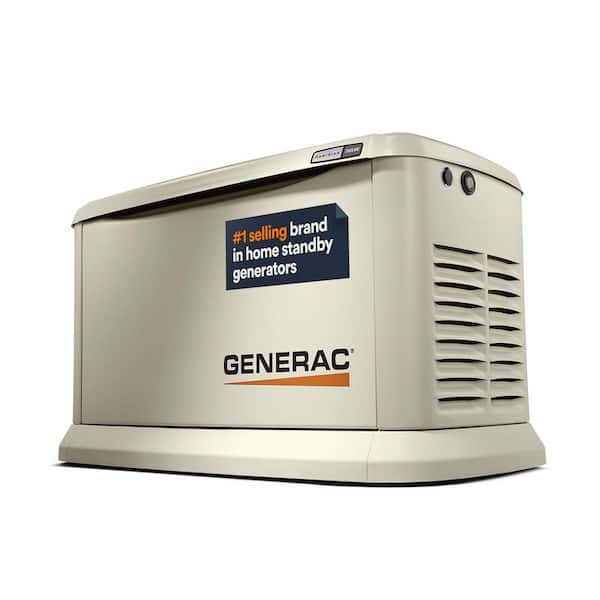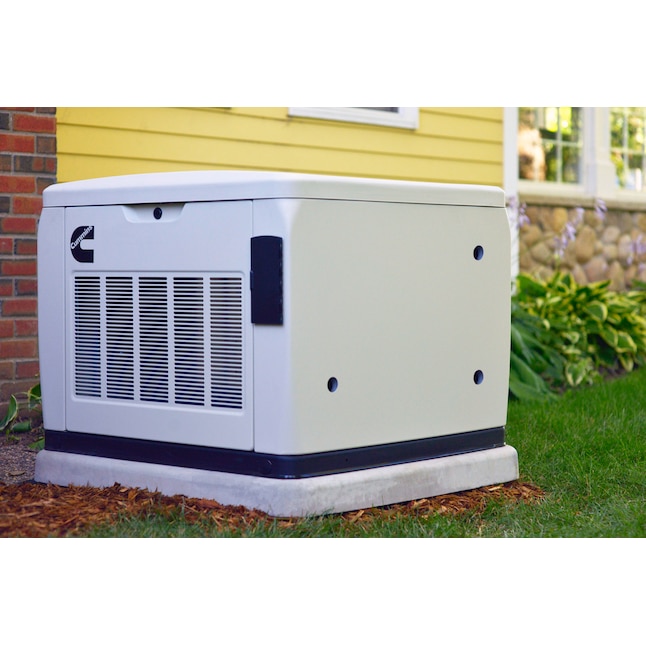

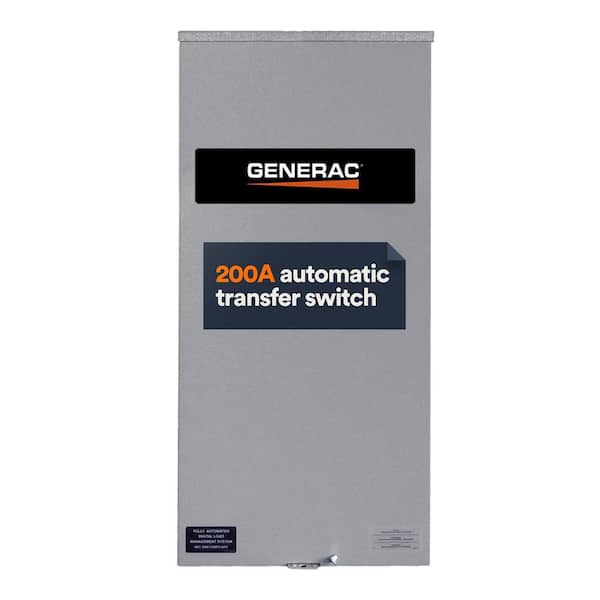
Nobody shops for a transfer switch. People shop for generators, and the switch arrives as a line item they don’t read. Then two years later they discover their “whole-house generator” only backs up eleven circuits, or that they have to go outside in an ice storm to make it work.
The transfer switch determines what your backup power actually does. It’s worth ten minutes.
What it does, and why it isn’t optional
A transfer switch is a mechanical interlock. It connects your house to exactly one power source at a time — utility or generator — and makes it physically impossible to connect both.
That matters for two reasons, one of them fatal.
Backfeeding kills people. If a generator energizes your house wiring while the utility is still connected, current flows backward through your service drop into the neighborhood transformer, which steps it up to several thousand volts on lines that a utility crew believes are dead. Lineworkers have died this way. The classic version is a "suicide cord" — a double-male cable plugged from a generator into a dryer outlet. Never. Under any circumstances.
It also protects your equipment. When utility power returns while your generator is still connected, the out-of-phase collision destroys the generator's alternator and can damage everything plugged in.
A transfer switch removes both possibilities by design, and it's required by the National Electrical Code (Article 702) for any permanently connected optional standby system. It's also what your inspector is looking for.
Manual vs automatic
Manual transfer switches
A manual switch requires a human. When the power fails you go outside, start the generator, plug it into a power inlet box, walk to the switch and move circuits from utility to generator one at a time (or throw a single main-style interlock).
Cost: $300–$900 for the switch and inlet box, $600–$1,600 installed. Total typically $900–$2,500.
Good for: portable generators, occasional short outages, tight budgets, homes where someone is always around.
The catch: it does nothing while you’re at work, asleep or away. Your sump pump doesn't care that you were at the office.
Two flavors worth knowing:
- Circuit-selecting switches (e.g. the classic 10-circuit designs) let you choose which of a fixed set of circuits gets generator power, and include watt meters so you can balance the load.
- Interlock kits are a metal slide on your existing panel that makes it impossible to have the main breaker and the generator breaker on simultaneously. Cheapest legitimate option ($150–$500 installed), keeps all circuits available, but you must manage load manually — turn things off before you turn things on.
Automatic transfer switches
An ATS monitors utility voltage continuously. On loss, it waits a few seconds (to ignore momentary blinks), signals the generator to start, waits for it to stabilize, then transfers. When utility returns and holds steady, it transfers back and lets the generator run a cool-down cycle before shutting off.
Cost: $1,500–$3,500 installed, usually bundled with the standby generator.
Good for: anyone with a permanently installed standby generator — which is to say, anyone who wants backup power to work unattended.
Service-entrance rated vs standard
This distinction shows up on quotes and changes the price.
A service-entrance rated (SE-rated) switch includes a utility disconnect, so it can be installed as the first device after the meter and serve as the service disconnecting means. Fewer boxes on the wall, cleaner install, and it's what most whole-house configurations use.
A standard (non-SE) switch installs downstream of the main panel and requires a separate service disconnect. Sometimes cheaper on the switch, sometimes more expensive once the extra hardware and labor are counted.
If your quote says "200 A ATS," ask whether it's service-entrance rated. The answer affects both the installation and the inspection.
Whole-house vs essential-circuits
This is the decision that most changes your experience.
| Whole-house (200 A ATS) | Essential circuits (100 A, 10–16 circuits) | |
|---|---|---|
| What's backed up | Everything in the panel | Only circuits moved to the sub-panel |
| Typical cost | $1,500–$3,500 installed | $900–$2,000 installed |
| Generator size needed | Larger, or load management | Smaller |
| Homeowner experience | Outage is nearly invisible | You notice what isn't backed up |
| Flexibility later | Full | Adding a circuit means an electrician |
| Best for | Standby installs, 18 kW+ | Budget installs, smaller generators |
I lean whole-house with load management for most standby installations. The reason is human: with a circuit-selecting setup, the day comes when you want the outlet that didn't make the list — the freezer in the garage, the home office, the second fridge — and that's an electrician visit. Whole-house plus a load-shed module gives you everything, with the generator deciding in real time what to prioritize.
Essential-circuit switches are the right answer when the budget is genuinely tight, or with a portable generator where you're limited to 30–50 amps anyway.
Sizing the switch
The switch amperage should match your electrical service, not your generator.
- 200 A service → 200 A switch. The most common residential configuration.
- 100 A service → 100 A switch.
- 400 A service → either a 400 A switch (expensive) or two 200 A switches, or back up one panel.
This confuses people: why a 200 A switch if the generator only makes 92 amps? Because the switch also carries utility power to the whole house during normal operation. It has to be rated for everything the service can deliver, not just what the generator can.
For portable-generator setups, the switch matches the generator outlet instead — typically 30 A (L14-30, ~7,200 W) or 50 A (~12,000 W).
Load shedding and power management
Load management is what lets a smaller generator run a bigger house, and it's the most underused option in residential standby.
The modules watch generator output and shed designated loads when capacity gets tight:
- Generac Smart Management Modules (SMM) — up to eight, each controlling one 240 V load.
- Kohler load-shed — integrated in the RXT switches, prioritized in the controller.
- Briggs & Stratton Symphony II — manages up to eight loads.
- Champion aXis — demand control built into the switch, communicating over house wiring.
In practice: your AC compressor and electric water heater are managed. When the well pump kicks on and the generator nears capacity, the water heater drops out for two minutes. You never notice — water heaters hold heat for hours.
The economics are compelling. A load-management module is $200–$500. Stepping from 14 kW to 22 kW costs $2,000–$4,000 more installed, plus more fuel every hour it runs.
Installation: what it involves and what it costs
For an automatic switch on a standby install:
- Utility coordination — most jurisdictions require the meter to be pulled, which means scheduling a brief planned outage with the utility.
- Mounting the switch, usually beside the meter or main panel.
- Reworking service conductors so the switch sits between meter and panel.
- Running the generator feeder and control wiring.
- Grounding and bonding — and getting the neutral-bonding configuration right, which is a genuinely common defect.
- Load-management modules on selected circuits.
- Inspection and commissioning under real transfer conditions.
Typical cost: $1,500–$3,500 installed as part of a standby package; higher if the panel is far from the meter, if the service needs upgrading, or if the panel is full and needs a sub-panel.
Timeline: most installs are one day for the electrical work, plus inspection.
Five things I'd check before signing
- Is it service-entrance rated? Affects the install and the inspection.
- Whole-house or how many circuits? If it's a sub-panel, get the circuit list before work starts and walk the house thinking about outages.
- Is load management included? If the generator is sized tight, it should be.
- Who handles the utility disconnect? Scheduling this is a common source of delay.
- Is surge protection included? A whole-house SPD at the panel is cheap and protects against both lightning and the transfer event itself.
Common failure modes
From service calls, in order of frequency:
- Battery dead → generator never starts → switch never transfers. The switch gets blamed for a battery problem far more often than it deserves.
- Utility-sensing settings too sensitive, so the system starts on every momentary blink. Adjustable in the controller.
- Neutral bonding wrong, which trips GFCI devices or produces odd voltage readings. An installation defect, and the reason permits and inspections matter.
- Contactor wear after many years and many transfers — the genuine end-of-life failure, usually well past year fifteen.
- Rodents. Seriously. Warm enclosure, chewable wiring. Ask about sealing.
The transfer switch is a twenty-year component. Buy the configuration you'll still be happy with in year ten, not the one that shaves $600 off a quote today.
More transfer switches and load managementAd
For 100-amp services, circuit-selective setups, load shedding, and Kohler systems.
Paid links · As an Amazon Associate, GenDealers earns from qualifying purchases.