
Homeowners ask me about this more than they used to, and the honest answer starts with a number that reframes the whole discussion.
A typical home standby generator runs about 20 hours a year.
Weekly exercise cycles account for roughly 10–17 hours annually — twelve minutes, fifty-two times. Actual outage operation adds a handful of hours in a normal year, and considerably more in a bad one. U.S. customers averaged about 11 hours without power in 2024, and that was the worst year in a decade.
Compare that to a car (200–400 hours), a furnace (700–1,500 hours), or the constant background of grid electricity. A machine running 20 hours a year is a small environmental object.
That's not a reason to ignore the question — it's the context for answering it accurately.
Emissions by fuel
The engine is a combustion engine, so the fuel determines most of the answer.
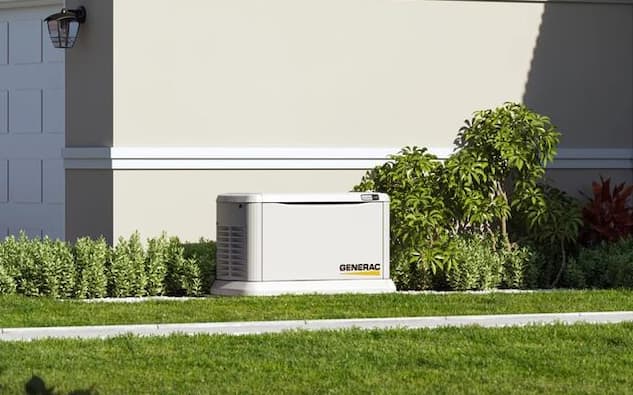
Natural gas — cleanest of the combustion options
- Lowest CO₂ per unit of energy of the fossil fuels, because methane has the highest hydrogen-to-carbon ratio.
- Very low particulate matter and sulfur.
- Lower carbon monoxide than gasoline.
- Burns cleanly, so less unburned hydrocarbon.
- One genuine caveat: methane is a potent greenhouse gas, and upstream leakage in production and distribution offsets part of the combustion advantage. That's a supply-chain issue rather than a generator issue, but it belongs in an honest accounting.
Propane — close behind
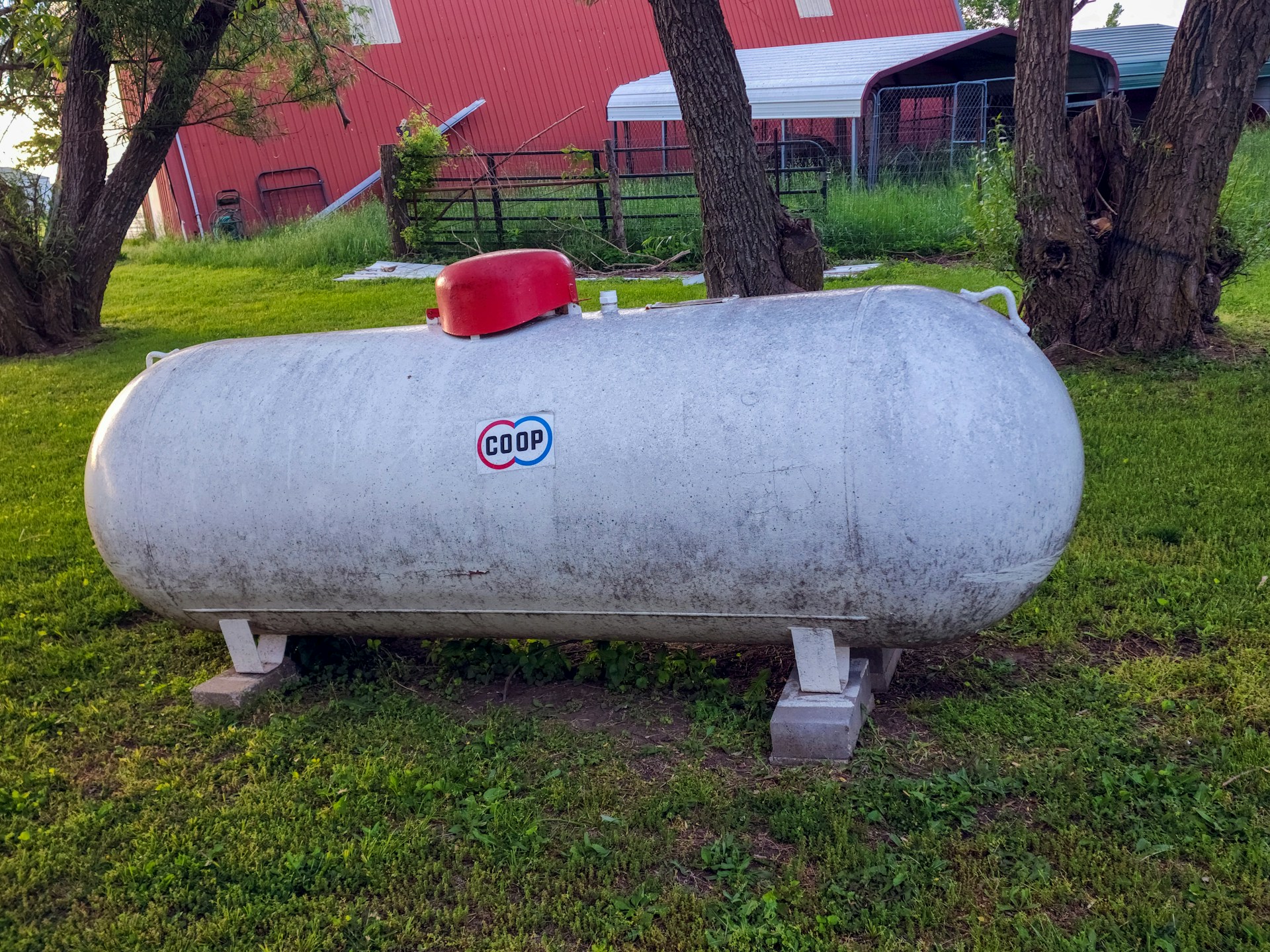
- Slightly more CO₂ per unit energy than natural gas, still well below diesel or gasoline.
- Very low particulates.
- No spill risk to soil or groundwater — propane vaporizes.
- No methane leakage concern in the same way.
Diesel — the highest-impact residential option
- Highest particulate matter and NOx of the group. Diesel particulates are a documented respiratory concern.
- More CO₂ per unit of energy than the gaseous fuels, partially offset by better engine efficiency under load.
- Spill and contamination risk from stored fuel.
- Modern units with aftertreatment are dramatically cleaner than older ones, but they remain the dirtiest common choice for a residential site.
Gasoline — worst on emissions, and dangerous to people
- High carbon monoxide, high hydrocarbons.
- Evaporative emissions from the fuel system and storage cans.
- Small engines are far less clean per unit of output than large ones.
- And the human hazard is the headline: portable gasoline generators dominate generator-related carbon monoxide fatalities. This is not a marginal statistical point — it is the single most dangerous thing about backup power, and it kills people every storm season. See carbon monoxide safety.
What the regulations actually cover
EPA sets emission standards for the engines used in generators, under the nonroad spark-ignition and compression-ignition programs. Manufacturers certify engines against these standards, which is why a 2026 unit is meaningfully cleaner than a 2006 one. Standards have tightened repeatedly, particularly for small spark-ignition engines.
CARB — the California Air Resources Board — sets stricter requirements, and California's Small Off-Road Engine regulations are moving toward zero-emission standards for new small off-road equipment. This is the reason you'll see "not available in California" on some portable generator listings, and why CARB-compliant versions of many models exist as separate SKUs.
If you're in California, check compliance before you buy. If you're not, understand that a CARB-compliant unit is a cleaner unit and often the same price.
Local rules add another layer: noise ordinances, HOA restrictions, and permit conditions on exercise-cycle timing. Covered in permits and code requirements.
Solar plus storage
The genuinely zero-emission option, with real limits.
What it does well
- No emissions at the point of use. No exhaust, no CO risk, no fuel.
- Silent. No noise ordinance, no neighbor conversation.
- No fuel cost during an outage.
- Daily value. Unlike a generator, a solar-plus-storage system does something every day — which changes the economics considerably.
- Instant transfer. No ten-second gap; properly configured systems ride through seamlessly.
- No maintenance in the oil-change sense.
What limits it
- Capacity. A typical home battery holds 10–20 kWh. That's essential loads for most of a day, not a whole house for a week. Air conditioning and electric heat drain it fast.
- Recharge depends on sun. A hurricane's aftermath is often overcast; a winter storm is short on daylight and long on load.
- Cost per usable hour of backup is high relative to a generator.
- The federal credit is gone. Section 25D terminated for property placed in service after December 31, 2025 — which materially changed the storage math for 2026 buyers. Check state and utility incentives instead.
The full comparison is in solar plus battery vs standby generator.
Hybrid: the setup I'd actually recommend
For a household that cares about emissions and wants genuine multi-day resilience, the strongest configuration is both:
- Battery storage handles short outages — which are the overwhelming majority. Most outages are under a few hours, and the battery covers them silently with zero emissions. The engine never starts.
- Natural gas standby handles the multi-day events the battery can't.
- Solar recharges the battery when there's sun, extending both.
The environmental payoff is specific and real: the generator's run hours drop toward zero, because the battery absorbs all the short events. You keep the multi-day capability without burning fuel for a forty-minute outage.
It's more expensive than either alone, and it's the technically best answer.
Reducing the impact of the generator you have
Concrete things that actually move the number:
Size it correctly. An oversized generator running at 25% load is less efficient per kilowatt-hour delivered and, over time, suffers from wet stacking on some engines. Load management lets you buy smaller. See sizing myths.
Choose natural gas where available — cleanest combustion option and lowest running cost. See gas vs propane vs diesel.
Maintain it. A well-maintained engine burns cleaner. Clean air filter, correct oil, plugs on schedule. A neglected engine runs rich and emits more. Maintenance checklist.
Shed load during outages. Running only what you need means less fuel burned and longer runtime — the same behavior serves both goals.
Don't over-exercise. The weekly cycle is necessary, and the factory interval is enough. Some controllers offer a shorter or reduced-speed exercise; if yours does, it's slightly less fuel for the same benefit.
Keep it long enough to matter. A generator that lasts 20 years spreads its manufacturing footprint across two decades. Maintenance is an environmental measure as well as a reliability one — how long they last.
Dispose of consumables properly. Used oil and filters to a recycling center; lead-acid batteries are almost universally recyclable and most retailers take them back with a core charge.
Putting it in perspective
Twenty hours a year of natural gas generator operation is a genuinely small environmental footprint — smaller than a single long flight, smaller than a season of heating, smaller than most households' weekly driving.
What it buys is a freezer that doesn't thaw, pipes that don't freeze, a sump pump that keeps running, and medical equipment that stays on. Frozen and burst pipes cause enormous water damage and waste; spoiled food is wasted food; and a household forced into a hotel for four days has its own footprint.
I'm not claiming a generator is an environmental good. I am saying the honest accounting is closer than the question implies, and that the meaningful choices are which fuel, how big, how well maintained, and whether storage can take the short outages — not whether to have backup power at all.
If emissions are your priority: natural gas, sized honestly with load management, paired with battery storage. That's the lowest-impact configuration that still works on day four of a hurricane outage.
Lower-impact backup gearAd
A natural gas standby unit, a solar panel, a clean inverter generator, and a propane-tank monitor.
Paid links · As an Amazon Associate, GenDealers earns from qualifying purchases.