

Let me set expectations before we spend any money.
In twenty years of installing and servicing standby generators, I have never had a customer lose a whole permanently installed unit to theft. Not once. A 400-pound machine bolted to a concrete pad, hard-piped to a gas line and hard-wired into a service panel is a genuinely bad target: it takes tools, time, gas-fitting knowledge and a truck, and the resale market for a used 22 kW Guardian is small and traceable.
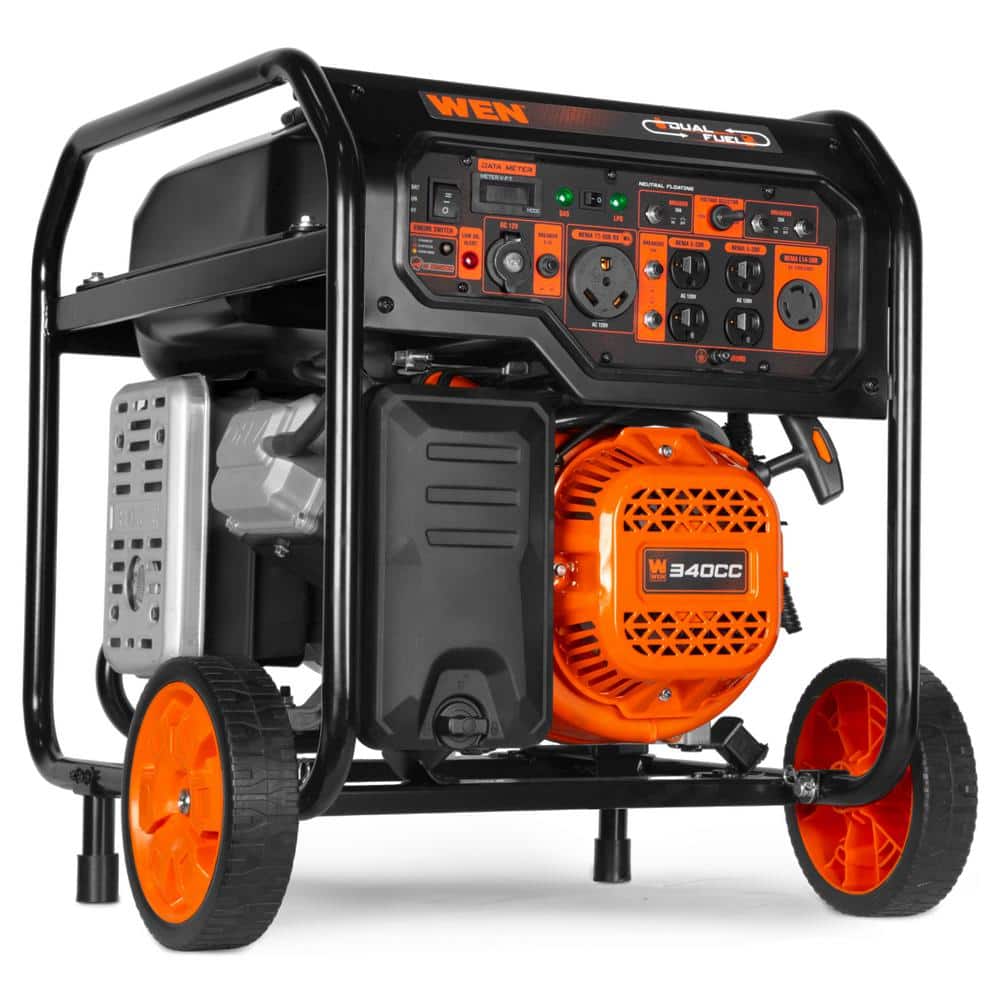
Portable generators are the ones that get stolen — off job sites, out of open garages, and off driveways during outages, when they're running outside in plain view and the neighborhood is dark. If you own a portable, that's your real exposure, and the answer is a heavy cable lock, a locked enclosure, and never leaving it unattended in the front yard.
For a permanent standby unit, the risks are narrower and more mundane:
- Battery theft. A 12 V group-26 battery sitting in an unlocked enclosure is the single most stealable part on the machine — worth a small amount of money, gone in ninety seconds, and it renders the generator inoperable.
- Copper. Wire theft is opportunistic and regional. Conduit runs and grounding conductors are the target.
- Vandalism. Dents, spray paint, broken louvers. Annoying, occasionally expensive, rarely disabling.
- Tampering. The one that actually catches people out: someone — a curious kid, a contractor, a disgruntled neighbor — flips the controller to OFF. The generator then sits there looking perfectly normal and does nothing during the next outage.
- Catalytic material. Very rare on residential air-cooled units, but worth knowing about if you have a larger liquid-cooled installation with accessible exhaust components.
The rule that governs every measure
Before any of the recommendations below: whatever you add must preserve the manufacturer's clearances and airflow.
The enclosure is the cooling system's air duct. A steel cage that restricts intake, a fence built inside the clearance envelope, or a cover thrown over the unit will overheat the engine — and heat damage costs far more than a stolen battery. Every security measure here is written to be airflow-neutral. See preventing overheating and sound enclosures for the same principle applied to noise.
Measures that work, cheapest first
1. Lock the enclosure — $0 to $40
Most standby enclosures have latch points that accept a padlock or a keyed latch. This alone addresses battery theft and casual tampering.
Two cautions: use a weather-rated lock (an outdoor padlock, not a hardware-drawer padlock, and lubricate it annually), and make sure your service technician can get in. A locked unit whose key nobody can find turns a routine service call into a rescheduled one. Keep a key with the unit's paperwork and tell your dealer it's locked.
2. Motion-activated lighting — $30 to $150
Cheap, effective, and useful for you as well. A lit side yard removes the cover that opportunistic theft depends on. Solar-powered motion lights need no wiring and work fine here.
3. A camera with a view of the unit — $50 to $300
If you already run cameras, add the generator to the coverage. If you don't, one camera pointed at the side yard is a modest add-on that also documents storm damage, service visits and delivery traffic.
Battery-and-Wi-Fi cameras are fine, with one caveat: they're offline during an outage unless your router is backed up. Which brings us to the measure I'd actually rank first.
4. Remote monitoring — often already included
This is the security measure most people don't recognize as one.
Monitoring tells you the generator's state changed. A "not in AUTO" alert is exactly what you'd get if someone flipped the controller off — and it's the same alert that catches a technician who forgot to switch it back. A utility-loss notification tells you the unit engaged. Run history tells you if it started when it shouldn't have.
Against tampering — the most likely real incident — this is worth more than a fence. Most current units include it; see remote monitoring systems compared.
5. Landscaping and sight lines — varies
Screening the unit from the street reduces its visibility as a target, and looks better. The constraint is the same as always: plant outside the clearance envelope, and plan for mature size. Screening that grows into the intake over three seasons trades a small security benefit for a guaranteed hot-weather shutdown.
6. Fencing — $500 to $3,000
A fenced side yard or a gated enclosure around the unit is real deterrence, and often serves other purposes (pets, kids, pool code). Build it outside the clearance envelope on every side, leave the service side accessible, and never enclose the unit so tightly that airflow is restricted or a technician can't work.
7. Security bollards — $200 to $800
Worth considering only where a vehicle could realistically reach the unit — a generator near a driveway, an alley, or a parking area. Accidental vehicle strikes are more common than deliberate ones.
What not to do
- Never cover or wrap a unit in service. Tarps and covers are for stored portables. On a standby unit they're a fire and overheating hazard.
- Don't build a solid enclosure with small vents. Guaranteed overheating.
- Don't disable the controller or remove the disconnect to "secure" it — you'll defeat the generator's entire purpose and likely violate code.
- Don't obstruct the service disconnect. It has to remain accessible; NEC requires it, and your electrician will need it.
- Don't hide the key. Fake rocks and lockboxes near the unit are the first place anyone looks.
Portable generators: a different problem
If you own a portable, the risk profile inverts — and outages are when it peaks, because the machine is outside, running, visible and audible while the block is dark.
- Heavy chain or cable lock through the frame to something immovable.
- Never run it in an unlocked open garage — and never inside a garage at all, open or not. That's a carbon monoxide fatality risk, which is a far bigger danger than theft. See carbon monoxide safety.
- Record the serial number and photograph the unit.
- Consider a lockable storage enclosure for between-outage storage.
- Don't advertise it. A portable running at the curb during a multi-day outage tells everyone on the street exactly where the working generator is.
Insurance and documentation
Worth ten minutes of your time:
- Call your homeowner's insurer. Many policies treat a permanently installed generator as part of the dwelling structure, which is generally good news. Confirm rather than assume, and ask whether the coverage limit reflects a $10,000–$15,000 installed system.
- Photograph the installation — the unit, the nameplate, the transfer switch, the pad.
- Record the model and serial number somewhere that isn't the garage.
- Keep the purchase and installation invoices with your policy documents. They're also what a warranty claim will ask for.
- Ask about deductibles. For most homeowners, a stolen battery is well under the deductible and not worth a claim; a vandalized unit may not be.
What I'd actually do
For a typical suburban home with a standby generator:
- Padlock the enclosure, and tell the service company. (About $25.)
- Confirm remote monitoring is active with alerts going to a phone you carry. (Usually free.)
- Add a motion light covering the side yard. (About $60.)
- Photograph and file the serial number, nameplate and invoices. (Free.)
- Confirm coverage with your insurer. (Free.)
That's under $100 and an hour, and it addresses every failure mode that's actually likely.
Fencing, cameras and bollards are worth it if you're in a high-theft area, if the unit is exposed to a street or alley, or if you've already had an incident. Otherwise you're spending money to solve a problem that, for permanently installed standby generators, is genuinely uncommon.
The far more likely reason your generator doesn't start during the next outage isn't a thief — it's a dead battery or a missed service. Put your money there first: the maintenance checklist.
Monitoring and protection gearAd
A Wi-Fi-monitored standby unit, an LTE tank monitor, a storage cover for portables, and panel surge protection.
Paid links · As an Amazon Associate, GenDealers earns from qualifying purchases.