
"How long can it run?" gets two completely different answers depending on what's feeding it, and the natural-gas answer has an asterisk most people never hear about until day three of an outage.
Natural gas: effectively unlimited, until the oil says otherwise
A standby generator on natural gas has no tank to empty. The pipeline keeps delivering, and utility gas service usually stays up during electrical outages because it isn't dependent on the electrical grid in the same way. I've had customers run continuously for a week during ice storms.
The real limits are three:
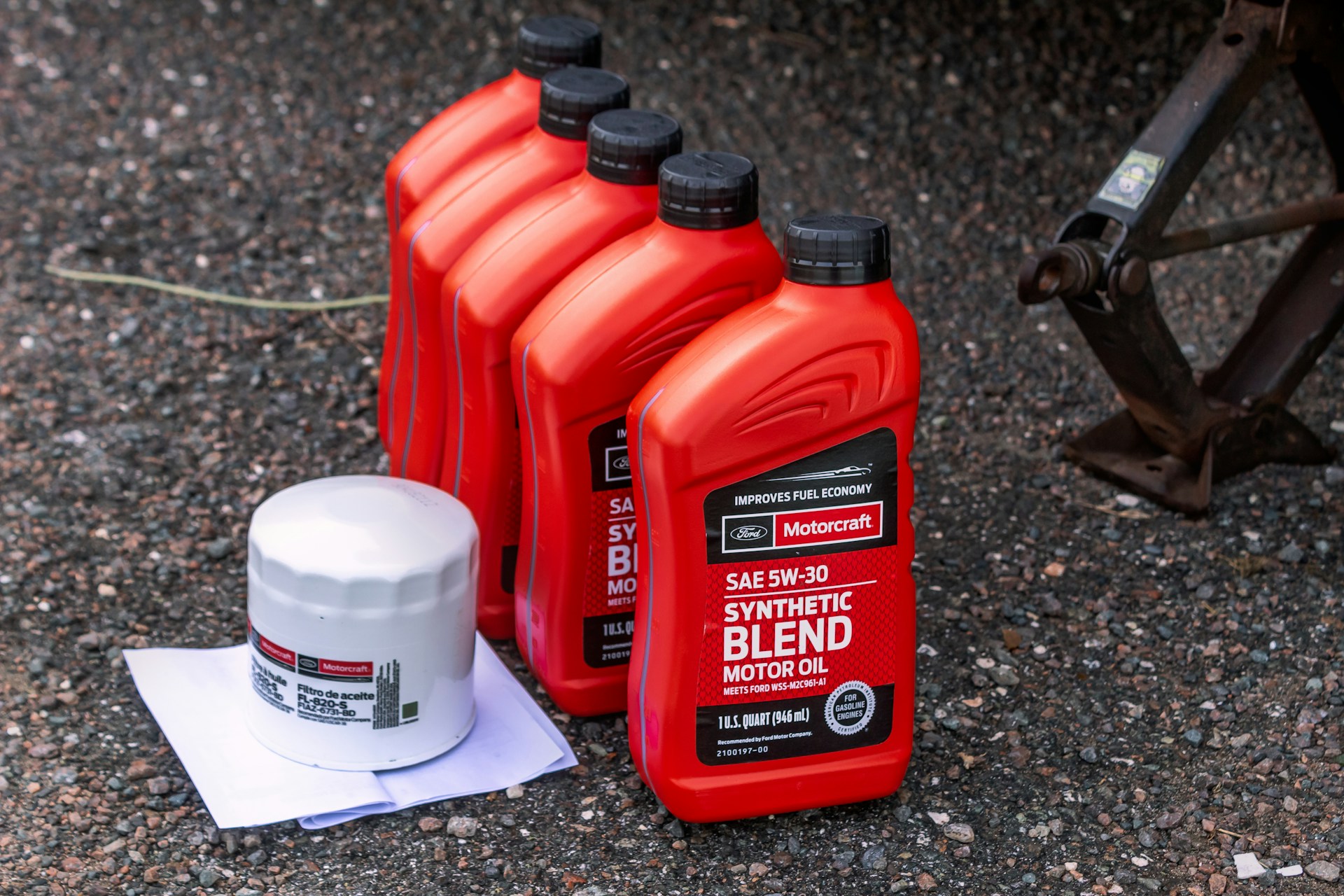
1. Oil. This is the asterisk. Manufacturers generally want the oil level checked every 24 hours of continuous operation, and the engine serviced at its normal interval — Generac's air-cooled Schedule A is 200 hours or 2 years. A week of continuous running is 168 hours, which is essentially a full service interval consumed in one outage.
Air-cooled engines also consume some oil in normal operation. Running low on oil during an extended outage triggers a low-oil-pressure shutdown — which is the generator protecting itself, but it means your power goes out at hour 60 because nobody topped it up.
2. Cool-down cycles. Some units are programmed to shut down briefly at intervals for a cool-down. Normal, brief, and you'll notice the transfer switch clicking.
3. Gas supply interruptions. Rare, but earthquakes and major storms can affect gas distribution. Nothing you can do about it beyond knowing it's possible.
What to actually do during a long outage on natural gas
- Check the oil every 24 hours. Shut down properly (controller OFF, breaker open), let it cool a few minutes, check, top up with the specified oil.
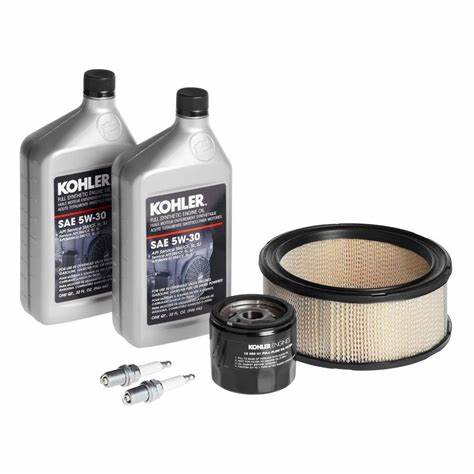
- Keep oil, a spare filter and a funnel in the garage. Buying them during the outage is not a plan.
- Listen for changes. A change in engine note or a new vibration is worth investigating between cycles.
- After the outage, if the run exceeded the service interval, get a service — regardless of what the calendar says.
Propane: pure arithmetic
Propane runtime is a calculation, and it's worth doing before you need it.
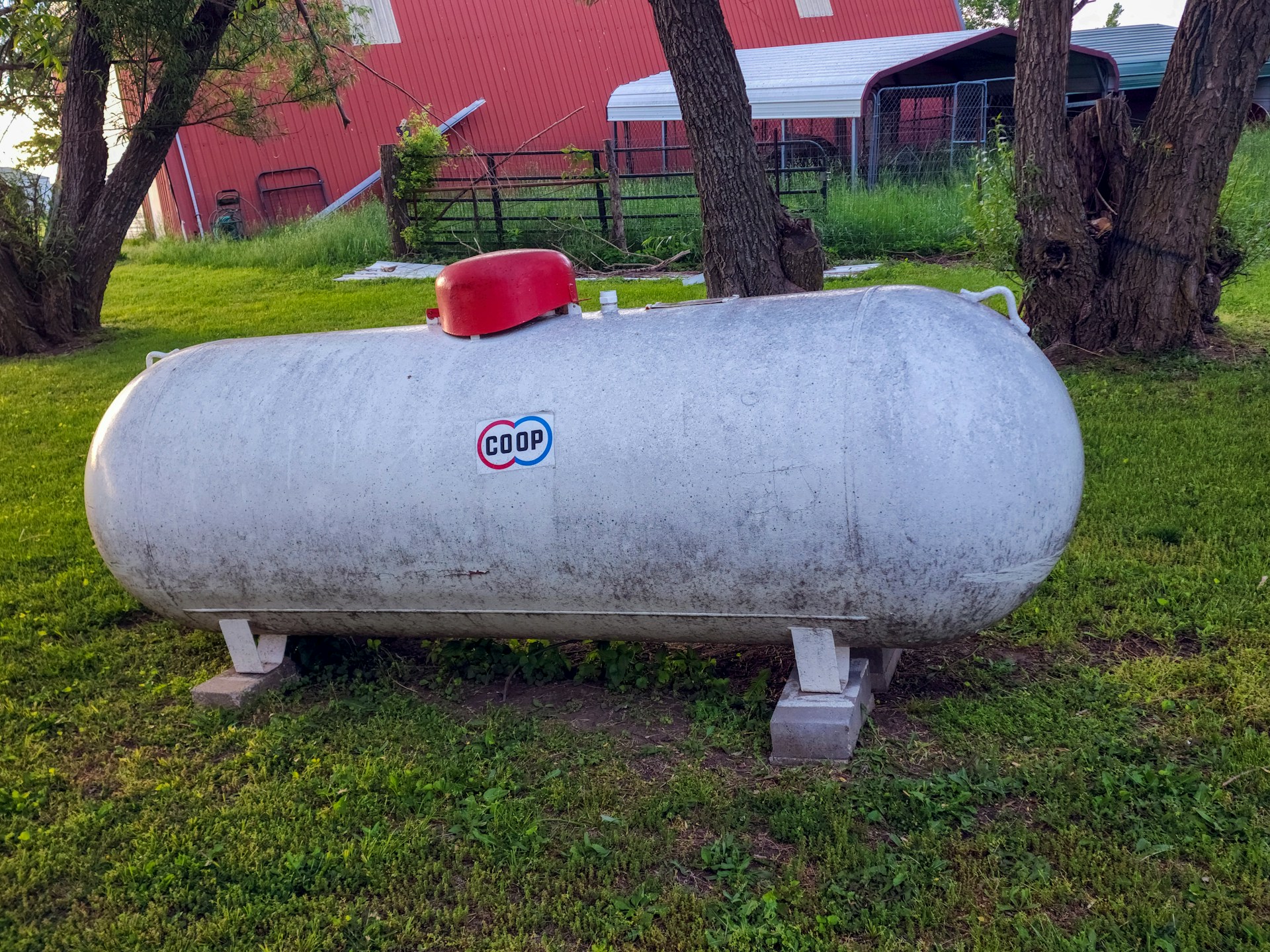
Step 1: know your usable fuel. Propane tanks are filled to about 80% for thermal expansion. So:
| Tank size | Usable gallons (~80%) |
|---|---|
| 120 gal (420 lb) | ~96 |
| 250 gal | ~200 |
| 500 gal | ~400 |
| 1,000 gal | ~800 |
Step 2: know your burn rate. Approximate propane consumption for air-cooled standby units:
| Generator | Half load (gal/hr) | Full load (gal/hr) |
|---|---|---|
| 10 kW | 1.1 | 1.8 |
| 14 kW | 1.6 | 2.4 |
| 18 kW | 2.0 | 3.1 |
| 22 kW | 2.5 | 3.7 |
| 26 kW | 2.9 | 4.3 |
Step 3: divide. A 22 kW unit at half load on a full 500-gallon tank: 400 ÷ 2.5 = 160 hours ≈ 6.6 days. At full load: 400 ÷ 3.7 = 108 hours ≈ 4.5 days.
Most homes run closer to half load than full, so the honest planning number for that setup is five to six days.
Load is the lever you control
Fuel burn tracks load closely, which means turning things off directly buys days.
Take the 22 kW unit on a 500-gallon tank:
| Operating mode | Approx. load | Burn rate | Runtime |
|---|---|---|---|
| Whole house, AC running | ~75% | 3.2 gal/hr | ~5 days |
| Whole house, AC off | ~45% | 2.3 gal/hr | ~7 days |
| Essentials only (fridge, freezer, furnace, well, lights, internet) | ~25% | 1.5 gal/hr | ~11 days |
Shutting off the air conditioning roughly doubles your runtime. In a multi-day outage that's the difference between running out and riding it out.
Practical version: in a long outage, decide early whether you're in comfort mode or endurance mode. If the utility says three days, run normally. If they say "we don't know," shed the AC, the electric water heater and anything else large, and stretch the tank.
Cold weather and vaporization
Propane must vaporize to burn, and vaporization rate depends on temperature and how much liquid surface is in the tank. As it gets colder and the tank empties, the tank's ability to deliver vapor falls — even though there's fuel in it.
A 22 kW generator under load draws a lot of vapor. At −10°F with a tank at 20%, you can have gallons remaining and still see pressure sag, rough running, or a low-fuel-pressure shutdown.
What to do:
- Keep tanks above 30% in winter.
- Have your supplier calculate the required vaporization rate for your generator's BTU demand at your design temperature — a bigger tank or a second tank may be required, independent of how many gallons you want to store.
- Buried tanks vaporize better in deep cold than above-ground ones.
More on this in winterizing your generator.
Sizing the tank for the outages you actually get
The 2024 hurricane season pushed U.S. customers to about 11 hours of interruption on average, but averages are useless for planning — hardest-hit states saw far more, with South Carolina averaging 53 hours.
A reasonable planning framework:
| Your typical worst outage | Recommended propane capacity (22 kW class) |
|---|---|
| Under 24 hours | 250 gal is comfortable |
| 1–3 days | 500 gal |
| 3–7 days | 500–1,000 gal, or plan a refill |
| Over a week, rural | 1,000 gal, or natural gas if available |
And a note on refills: after a regional storm, propane delivery is exactly as disrupted as everything else. Roads are blocked, suppliers are overwhelmed, and you're in a queue. Do not plan on a mid-outage refill. Size the tank for the whole event, and top it before the storm rather than after the forecast — everyone calls after the forecast.
Diesel, briefly
Residential diesel standby units are uncommon but exist, mostly in larger liquid-cooled sizes. Runtime is straightforward tank arithmetic, but diesel adds obligations: fuel goes stale (12 months is a reasonable planning life, less with poor storage), it grows microbial contamination if water gets in, and it needs treatment and eventually polishing. If you have a diesel set, ask your service provider about fuel testing at the annual service.
The bottom line
- Natural gas: run indefinitely; check oil every 24 hours; service after a long event.
- Propane: do the arithmetic in advance, keep the tank above 30% in winter, and know your endurance-mode load plan.
- Either way: the generator will almost always outlast your patience. What ends runs early is oil that nobody checked, or a propane tank sized for gallons rather than for days.
Extended-outage essentialsAd
Know your propane level, keep oil and filters fresh, and start reliably in the cold.
Paid links · As an Amazon Associate, GenDealers earns from qualifying purchases.